
Unlock the Editor’s Digest for free
Roula Khalaf, Editor of the FT, selects her favourite stories in this weekly newsletter.
The best way to treat cancer, and many other health conditions, is to discover them early. Almost all women diagnosed with stage one breast cancer survive for five years or more, according to Cancer Research UK. That survival rate drops to only three in 10 if diagnosed at the latest stage four. Swift detection saves lives.
To that end, routine screening of asymptomatic patients is offered in many countries. In Britain this week, the NHS announced it was enlisting Edith (early detection using information technology in health) as part of an £11mn trial to speed up its national breast-screening service. From April, five different artificial intelligence-enabled platforms will be deployed at 30 sites to help radiologists interpret scans. The aim is that 700,000 women will sign up to the voluntary scheme designed to cut waiting times.
But consumers, who are nowadays accustomed to devices that measure their every step, nap and heartbeat, are increasingly taking their health into their own hands and signing up for private scanning services. Venture capital investors sniff an opportunity to make money from these health-conscious consumers and are investing heavily in the sector. Last month, the Swedish start-up Neko raised $260mn at a $1.7bn valuation to fund its expansion in the US. The company’s modest ambition is to become the Apple of healthcare.
“I think we have a shot of changing the biggest industry on earth and accomplish a win-win-win where we reduce costs for society, we reduce suffering and we can create a fantastic business,” Daniel Ek, the Swedish entrepreneur of Spotify fame who co-founded Neko, told the Financial Times.
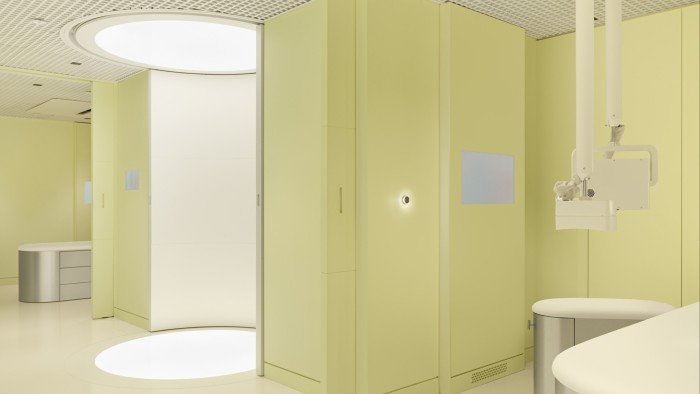
In luxurious spa-like surroundings, Neko checks for cardiovascular issues, skin cancer, blood abnormalities and diabetes risks followed by a consultation with a doctor. Other more expensive health start-ups offer MRI scans that pick up structural and anatomical abnormalities and are more likely to detect subcutaneous cancers. Ezra and Prenuvo, two US companies offering MRI scans, are launching in the UK. Scan.com, a British start-up that focuses on MRI diagnostics, has already headed the other way. The company, which has raised $66mn to date, is rapidly expanding in the US with the ambition of becoming “the world’s largest medical imaging platform”.
Scan.com’s customers include insurance companies as well as individual patients. The company books slots for MRI scans at about 200 private clinics across the UK, increasing their utilisation rates. “We are finding sinister health problems earlier than through other systems,” says Charlie Bullock, Scan.com’s chief executive and co-founder.
The benefits of private health scanning are clear for those who can afford them. But there are also concerns: they can be expensive, ineffective and inequitable, their critics say. A 2022 study of 14 health scanning services in Singapore concluded that “screening is not always healthy”. Many health tests can result in a false positive or a false negative, leading to unnecessary anxiety or dangerous complacency. They can also lead to over-diagnosis resulting in overtreatment. That creates risk for the individual and can skew resources in healthcare delivery.
But trustworthy private scanning providers should still be a welcome addition to overburdened health services in many countries. That is especially true given that governments rarely win credit for prioritising preventive care. Politicians are happy to cut ribbons to open new hospitals; they win fewer votes for preventing problems that never materialise.
For that reason, Anita Charlesworth, an economic adviser at the Health Foundation, argues that the UK’s fiscal rules need to change to treat spending on preventive services as capital investment not a day-to-day expense. Investing in a healthier population will not only save lives, it will also lead to more diffuse, longer-term societal benefits and will help boost economic growth.
The optimal solution is to combine the best of private and public health provision. “If a private sector company can innovate to make effective screening techniques easier for individuals and cheaper for the NHS that is really a great win,” Charlesworth tells me. A £10 cervical smear test at a private clinic may appeal to a worker on a zero-hours contract more than spending half a day queueing for a test at an NHS hospital.
But even the best early detection services also require effective treatment, in either the private or public sector, if a problem is found. There is no escaping the capacity crunch in healthcare that affects all ageing societies.
john.thornhill@ft.com
