
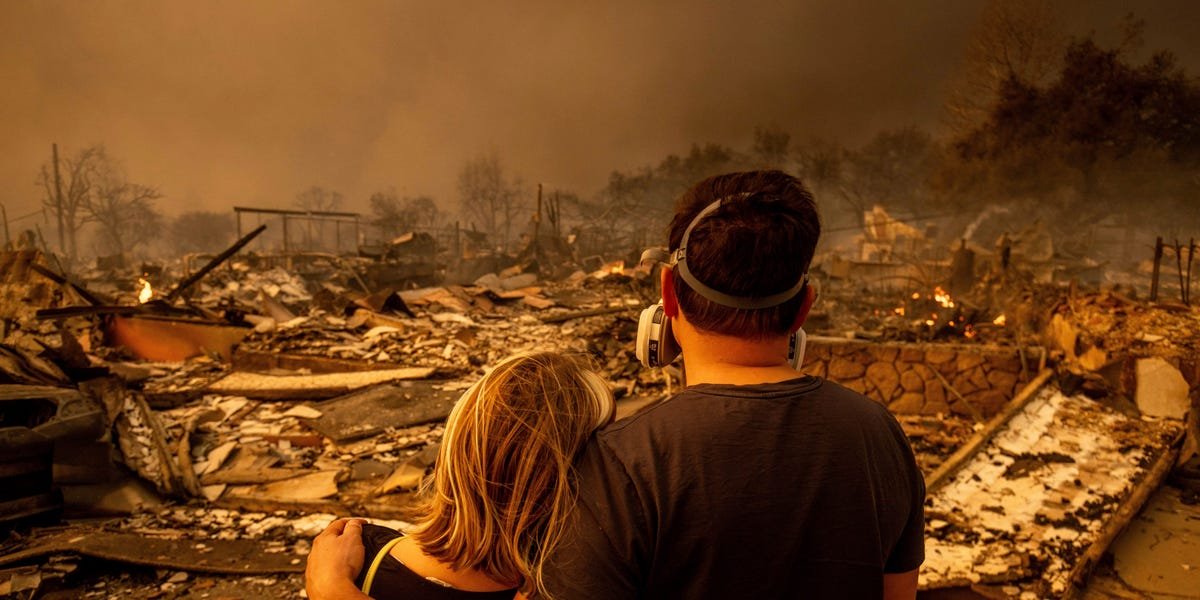
- Wildfires have devastated California in early 2025, and climate change may be to blame.
- Real-estate analyst Ivy Zelman warned of rising property insurance costs last summer.
- Here are five other states that homeowners could flee as climate risk rises.
Six months ago, Ivy Zelman made a bold, unpopular call, as she’s done throughout her career.
The venerated real-estate analyst and founder of research firm Zelman & Associates said there was a looming threat to property values that only a few of her counterparts were talking about.
Climate change, which some have dismissed as merely a boogeyman, would become an increasingly big headache for homeowners, Zelman had told Business Insider. Her thesis was that rising global temperatures, which are correlated with natural disasters like floods and fires, would cause home insurance prices to soar over time, which would weigh on property values.
Those who agree with this thinking, like analyst David Burt of “The Big Short” fame, warned that this dynamic could cause property prices in certain markets to fall up to 60% in extreme cases.
Though they’d love to be proven wrong, Zelman and Burt seem to be onto something.
Devastating wildfires have ravaged California in January, killing dozens and displacing thousands, and scientists say climate change is partially to blame. This could go down as the costliest natural disaster in US history. And those whose homes haven’t gone up in smoke may face exorbitant insurance cost increases — assuming insurers are willing to cover them at all.
In a recent interview, Zelman refused to take a victory lap but is still concerned about this trend.
“I never want to be someone to say, ‘Oh, I was right,'” she told Business Insider. “I just think we all have to be realistic. How many times — it’s the definition of insanity — how many times are people going to be evacuated, and then, ‘Wow, we were lucky our house didn’t burn down,’ and they then say, ‘OK, well, let’s just go back home, and we’re OK.'”
Zelman continued: “I think it’s got to [get] some people to rethink whether they want to keep doing this.”
The California exodus could continue due to high insurance prices, climate risks
California had the second-largest outbound moving rate among US states last year, according to data from Atlas Van Lines, and Zelman thinks that could only accelerate after the fire crisis.
“Bigger picture, does the state of California have more outbound migration because people are concerned about getting their home insured?” Zelman asked rhetorically.
Atlas Van Lines
Insurance companies are reconsidering whether homes in high-risk markets are worth insuring. If the risks of insuring a home against fires, earthquakes, and floods outweigh what they can charge, they may decide it’s not profitable to stay in markets like California.
“It’s very preliminary, but the insurance industry is in complete turmoil,” Zelman said. “And part of that has been driven by the commissioners not allowing premiums to rise fast enough to accommodate the risk.”
If insurance costs surge by thousands of dollars per year to account for climate risk, prospective homebuyers could take note and make lower offers, driving prices down over time, as Burt pointed out. And that assumes buyers are still comfortable with living in California long term.
“One gentleman friend, who we’ve been friends with forever, reached out and said, ‘I was near the evacuation site, but I fortunately didn’t have to evacuate. But I’m actually wondering, should I just sell and get the hell out of here? I’m worried about home values going down,'” Zelman said.
In the near term, Zelman said California homeowners like her friend shouldn’t fret. Ironically, she said property values could surge in the next year since tons of home supply just got wiped out.
But in the coming years, Zelman suspects that buyers will gravitate toward cities that may be warm but have less risk of natural disasters, like Phoenix or Las Vegas. And those looking to get distance from Los Angeles but stay nearby could go south to Newport Beach or Orange County.
5 states that could have long-term climate risk
California isn’t the only state with housing markets at risk from natural disasters that may be influenced, at least in part, by climate change.
Property values could also come under pressure in a handful of Sun Belt states, Zelman said. Elevated risks of hurricanes and uncomfortably high temperatures could eventually reduce demand for homes in the region that Zelman’s colleagues had jokingly called the “Sun Melt.”
Although the Sun Belt was home to some of the hottest housing markets last year, Zelman noted that existing home listings have risen rapidly in Florida and Texas, and to a lesser extent in North and South Carolina, and Tennessee. Those states each saw neutral to positive net migration flows in 2024, and new-home construction rates suggest that they’re still in demand. In fact, the South is the only US region that has more inventory now than before the pandemic.
However, rising rates of homeowners looking to move could be an ominous sign. If there was a major uptick in existing listings, Zelman said it could put prices under pressure. At the very least, she thinks owners in those states should keep an eye on this trend in the coming years.
Zelman & Associates
“The reason why home prices are under pressure is because there’s more competition, whether it be builders opening more communities, or we have existing home sellers that are trying to move inventory,” Zelman said. “I think that suggests that there is going to be more a need for people to either reduce their asking price or for builders to provide incentives.”
Lower home prices may seem like a blessing for buyers who’ve been frozen out of what was the least affordable housing market in four decades, Zelman & Associates found.
But new buyers could get stuck with declining long-term home equity values unless the factors spooking homeowners and affecting prices, including climate-related headaches, don’t go away.
“I don’t anticipate that ’25 is going to really be the only year that we’re going to see pressure in these markets,” Zelman said. “Maybe the pressure abates. But I think that it could be where I would tell a Business Insider reader, ‘Well, if you buy in ’25, it could go lower in ’26.'”
Those looking to move may want to consider the more affordable Midwest region, Zelman said, reiterating a point that the Cleveland resident made last summer.
