
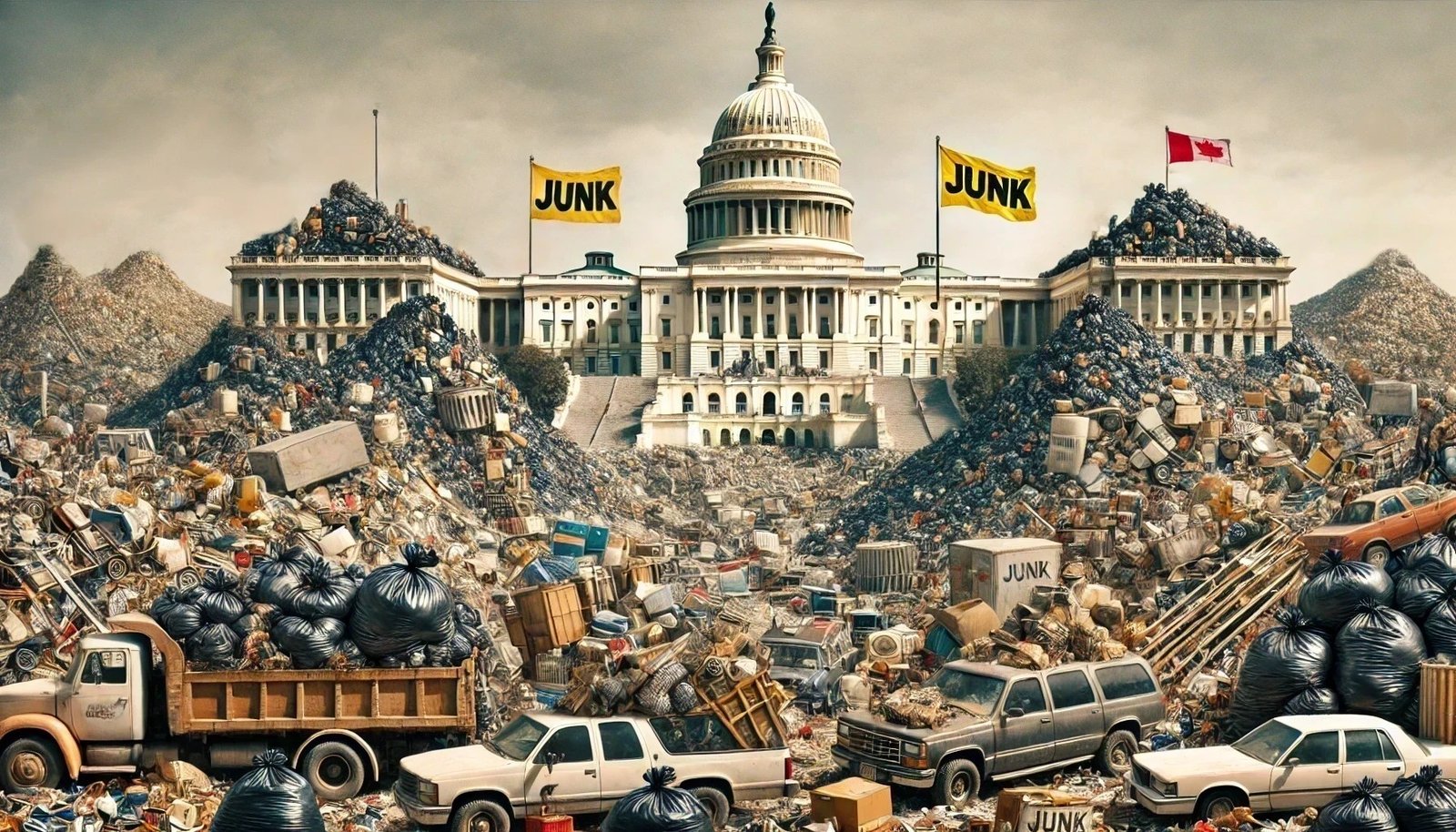
The FTC is rumored to be preparing legal action against Greystar, the largest landlord in the US, for “hidden fees”, also called “junk fees” (“FTC Prepares to Sue Largest U.S. Apartment Landlord Over Hidden Fees,” Wall Street Journal, January 13, 2025):
The FTC finalized its hidden-fees rule last month and said it would seek civil penalties from firms that violated the rule. It mentioned the hotel and live-event ticketing sectors, requiring “up-front disclosure of total price including fees.” …
If the potential FTC lawsuit proceeds, Greystar would become the first apartment landlord to face formal government allegations of hiding fees.
One can imagine hidden fees that would be fraudulent: for example, you rent a hotel room and once there, you realize that there is no bed, except for a special fee (and they refuse to reimburse you). In reality, many so-called hidden fees are prices for supplementary services: you go to the theatre and, besides the entry ticket, you have to pay for the popcorn. Most hidden fees lie somewhere in between these two examples and people just get used to them. Everybody knows he has to pay a separate fee to check his baggage on a flight and a late payment fee if he does not pay a minimum amount when his credit card is due. In all cases except obvious fraud, instead of waging coercive power—and, ultimately, putting their boots on the ground: the cops—governments should heed the first principle of liberal logic advanced by Anthony de Jasay: “In case of doubt, abstain.”
Ironically, the state (all levels of government) is the mother of all junk fees. Those are more difficult to avoid than private hidden fees. Here are a few examples taken at random:
- State governments typically control insurance prices, which leads to shortages (no insurance available at the controlled prices), which are in most states alleviated by some form of public insurance of last resort, which private insurance companies are forced to finance in case of cost overrun. The government will push on private insurance premiums a hidden fee that subsidizes the insurance of those who cannot buy private insurance because of government intervention. (See the case of California: “California’s Wildfire Insurance Catastrophe,” Wall Street Journal, January 10, 2025).
- Deadweight losses from taxes bring a misallocation of resources, meaning that the supply of some goods and services that consumers want will be restricted, forcing prices up as if by junk fees.
- An inflation tax results from a government bidding up resource prices when it finances part of its debt by increasing the money supply. This includes the increase in interest cost (for mortgages, for instance) due to the fear of future inflation—something that may currently be going on.
- Hidden fees follow from the price caps that, in most states and at the federal level, kick in after a declaration of emergency. Price caps generate shortages and search costs (a government junk fee) for those who want the goods that disappear from legal markets; the higher prices on black or grey markets are another government junk fee.
- Junk fees are hidden in any good or service whose price is bid up by government subsidies to certain categories of demanders, notably in health care. Among the non-retired and non-studying able-bodied persons in the lower quintile of the income distribution, only one-third word (compared to two-thirds in the 1960s); the obvious cause is that the average household in that quintile gets about $45,000 a year in different government subsidies, in cash or in kind, an important part of which is in free Medicaid. What’s the point of working and losing these benefits? The government-financed Medicaid demand introduces a hidden fee in everybody’s medical services. The same of course is true for a large part of Medicare.
- A similar government junk fee is paid by anybody who purchases education from his own pocket.
- Any business regulation—for example, the coercive privileges granted to trade unions—causes hidden fees because it increases the cost of the goods and services produced.
- Customs tariffs are typically paid by national consumers in terms of higher prices. Like other forms of protectionism, they generate junk fees. (The fact that the owners and workers of protected companies get a hidden subsidy does not compensate for the junk fee imposed on others.)
- In any promise honored by politicians, there is a junk fee for those who have to finance the beneficiaries’ advantages, whether this cost is a tax increase or an invisible reduction in his subjective utility. The promise to help one group of voters is generally (Anthony de Jasay would say “always”) paid by other voters.
- Last time I checked the Harmonized Tariff Schedule of the United States, Revision 8 of the 2019 edition, it contained 3,882 pages, and I am sure it does not translate into fewer junk fees now.
- A dozen years ago, the Internal Revenue Code contained 2,652 pages, to which the regulations, rulings, and other clarifications, added about 9,000 pages, according to the Tax Foundation. Here again, the number of hidden has likely increased.
The specific attack of the FTC on landlords’ “junk fees” may not be going anywhere (for now) because of the imminent change of government. Still, it illustrates another hidden fee in government intervention: the uncertainty created by the arbitrariness and constant changes in threatening laws and regulations.
******************************

Government junk fees, by DALL-E (with some external influence)
