
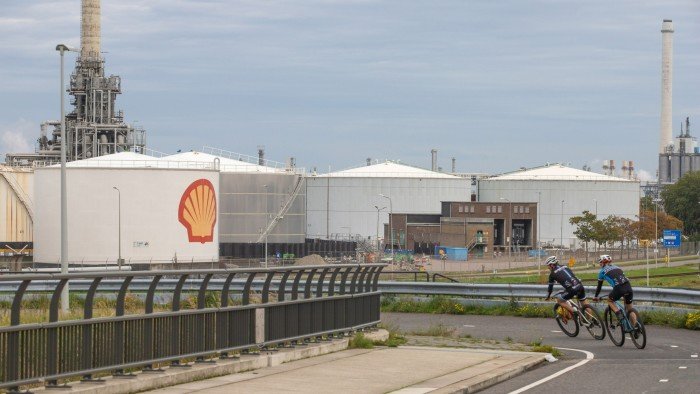
Shell trimmed its gas production forecast for the fourth quarter, and warned that trading in its gas and chemicals divisions would be “significantly lower” than in the previous three months.
Wednesday’s trading statement, which comes ahead of Shell’s quarterly results on January 30, struck a more muted tone following a run of quarters in which the FTSE 100 oil major has consistently beaten expectations.
“We see the release as negative, with weakness across a number of divisions and weaker trading across oil, gas and power,” said Biraj Borkhataria, an analyst at RBC Capital Markets. Shares fell 1.4 per cent in early trading in London.
Shell said it was trimming its gas production forecasts for the fourth quarter due to planned maintenance at its giant Pearl plant in Qatar. It now expects to report production between 880,000 and 920,000 barrels a day (b/d), compared with a previous estimate of 900,000 to 960,000 b/d.
The world’s biggest liquefied natural gas (LNG) trader is expecting LNG volumes to fall in the period compared with the previous three months, in part because fewer cargoes were also shipped in the period. It has forecast 6.8mn-7.2mn tonnes for the three months to the end of December, compared with 7.5mn tonnes in the third quarter.
Trading in Shell’s gas business is forecast to be “significantly lower”, due to the expiry of hedging contracts that Shell took out in 2022 and 2023 to protect itself from potential price risks following Russia’s invasion of Ukraine. The company said at the start of 2022 that it would withdraw from all its Russian joint ventures, including its 27.5 per cent stake in the Sakhalin-2 LNG facility.
On Wednesday it said its chemicals and products trading result would also be “significantly lower” than the previous quarter, due to “seasonality”, with adjusted earnings in its chemicals subsegment expected to reflect a loss.
Shell’s update “looks soft relative to current expectations”, Borkhataria said. “We expect the update to drive downgrades to consensus earnings expectations,” but did “not expect weaker results to impact shareholder returns or the broader outlook”.
