
In several recent posts, Tyler Cowen has stressed the need for better models of inflation. In one case, he expressed exasperation at my claim that (price) inflation is an almost meaningless concept:
4b. More seriously, Scott seems to dismiss the price level concept altogether. For instance he once wrote: “In the past, I’ve frequently argued that inflation is an almost meaningless and useless concept. I’m not even aware of any coherent definitions of the concept.” I don’t think this is a defensible point of view, and you have to compare Scott’s criticisms of the o1 model to his own approach, which is fairly nihilistic. And I think wrong. If inflation were higher and someone offered Scott an inflation-indexed contract to sign, would he be unable to evaluate such a transaction? Obviously not.
Yes, there’s some hyperbole in the phrase “almost meaningless”. But I suspect there’s much less exaggeration than most economists would assume. I’ll present my case with an example and then discuss Keynes’s view on the subject, which I believe is more accurate than either my previously expressed view or Tyler’s view. Then I’ll discuss China’s economy, an area where I seem to view the price level as important, but most other economists “dismiss the price level concept altogether”. No one will come out looking very good (except Keynes.)
What led me to such an overheated claim about inflation being almost meaningless? It would help to look inside the “sausage factory” and see what’s going on when the government estimates inflation. The more I look at official government estimates of TV inflation, for instance, the more skeptical I become about the entire process:
According to the U.S. Bureau of Labor Statistics, prices for televisions are 99.15% lower in 2024 versus 1960 (a $495.77 difference in value).
Between 1960 and 2024: Televisions experienced an average inflation rate of -7.18% per year. This rate of change indicates significant deflation. In other words, televisions costing $500 in the year 1960 would cost $4.23 in 2024 for an equivalent purchase. Compared to the overall inflation rate of 3.76% during this same period, inflation for televisions was significantly lower.
To me, that estimate doesn’t just seem wrong, it seems borderline insane. And that’s despite the fact that I’m probably in the top 1% of snobs who really care about picture quality. A few years back, I paid thousands of dollars extra to get a 77-inch OLED TV. Yes, in a technical sense modern sets are much better. But more that 100 times better? Please define the term ‘better’.
If you pressed an economist, they’d probably say “better” means more utility. Fine, but what utility measuring device determined that viewers derive 100 times more utility from a modern TV? In 1960, I was five years old. I don’t recall picture quality having much effect on how hard I laughed while watching I Love Lucy. In what meaningful sense is a modern TV 100 times better?
Economists obsess over whether the CPI or the PCE is closer to the “true rate of inflation”. But how can there be a true rate of inflation if economists cannot even precisely define what they mean by “better”?
If TVs were the only good, I’d stand by my claim that government inflation estimates are “almost meaningless”. But they are not the only good. And I would have to concede that inflation estimates for a gallon of gasoline or a dozen eggs are far from meaningless. The overall CPI is a hodgepodge composite of meaningless and meaningful data points, all mixed together.
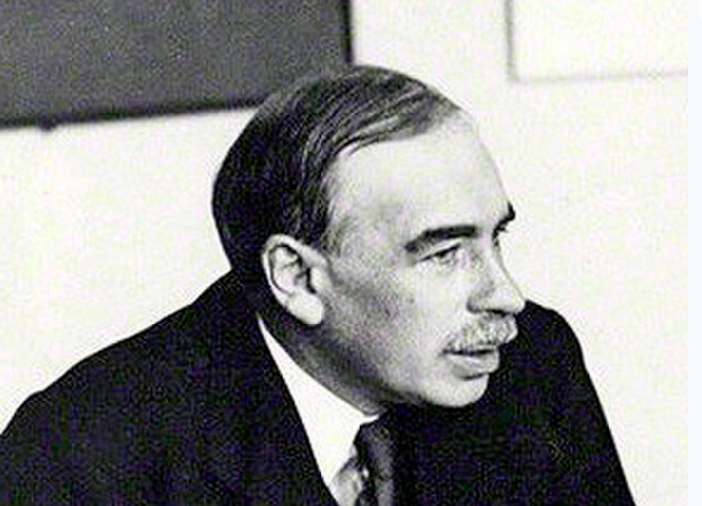
Here’s Keynes in the General Theory, discussing the question of whether inflation data is meaningful:
But the proper place for such things as net real output and the general level of prices lies within the field of historical and statistical description, and their purpose should be to satisfy historical or social curiosity, a purpose for which perfect precision — such as our causal analysis requires, whether or not our knowledge of the actual values of the relevant quantities is complete or exact — is neither usual nor necessary. To say that net output to-day is greater, but the price-level lower, than ten years ago or one year ago, is a proposition of a similar character to the statement that Queen Victoria was a better queen but not a happier woman than Queen Elizabeth — a proposition not without meaning and not without interest, but unsuitable as material for the differential calculus. Our precision will be a mock precision if we try to use such partly vague and non-quantitative concepts as the basis of a quantitative analysis. . . .
In dealing with the theory of employment I propose, therefore, to make use of only two fundamental units of quantity, namely, quantities of money-value and quantities of employment. . . . We shall call the unit in which the quantity of employment is measured the labour-unit; and the money-wage of the labour-unit we shall call the wage-unit. . . .
It is my belief that much unnecessary perplexity can be avoided if we limit ourselves strictly to the two units, money and labour, when we are dealing with the behaviour of the economic system as a whole; reserving the use of units of particular outputs and equipments to the occasions when we are analysing the output of individual firms or industries in isolation; and the use of vague concepts, such as the quantity of output as a whole, the quantity of capital equipment as a whole and the general level of prices, to the occasions when we are attempting some historical comparison which is within certain (perhaps fairly wide) limits avowedly unprecise and approximate.
In general, I find the General Theory to be wildly overrated. Of course it’s got some good stuff, as Keynes was brilliant. But overall it is a far less useful guide to macroeconomics than is the earlier Tract on Monetary Reform.
The preceding quotation, however, is a very insightful observation. Keynes was right; fuzzy concepts like the price level can be useful for some purposes, but are inadequate for more rigorous scientific investigations. And whereas price inflation is not very useful, wage inflation should be a central concept in any macroeconomic model.
On the other hand, while inflation is a fuzzy concept, it is obviously not a meaningless observation to say that Venezuela’s nominal GDP growth overstates its real GDP growth due to a fast rising price level. We do have some rough but reasonable estimates of price inflation that can help to illuminate comparisons between time periods, or between countries.
Consider my frequent claims that China has the world’s largest economy. That statement only makes sense if you compare the US and Chinese economies in real terms. In nominal terms, the US has the largest economy. So in that sense, I’m a bit of a hypocrite.
When Tyler says that I “dismiss the price level concept altogether”, a reader might be forgiven for assuming that I hold some fringe views outside the mainstream. So I decided to google “world’s second largest economy”, to see what I got. At the top of the list was AI overview:

There followed a long list of links that mentioned China, not the US (which is the actual second largest economy.) And yet the claim that China is second only makes sense if one “dismisses the price level concept altogether.” There is simply no plausible estimate of US and Chinese price levels that would have China in any position other than world’s largest economy.
So let’s compare the views of Keynes with the views of mainstream economists:
1. Both Keynes and I believe that wage inflation and employment are the two key macroeconomic variables. While price inflation is not completely useless, its marginal value is almost zero, once you have accounted for wage inflation.
2. Recessions occur when aggregate demand falls relative to nominal wage rates.
3. The price level may be of interest to people making very general comparisons about the relative size of economies, or when estimating the change in living standards over very long periods of time, but should not be treated as if they were precise scientific concepts.
4. The original Phillips Curve utilized wage inflation. I am almost certain that Keynes would have shared my view that the later shift to price inflation was a mistake.
To summarize, economists tend to use price inflation in places where it is not appropriate–where wage inflation would be far more useful. Even worse, they often “dismiss the price level concept altogether” when considering exactly the sort of broad generalizations where price level adjustments would be highly appropriate, such as the question of whether the US or China has the world’s largest economy.
And don’t try to argue that when discussing “the economy”, the AI Overview assumed we meant “nominal economy”. I am quite confident that if you asked any AI a question about recent US economic growth, they would cite data for real GDP, not nominal GDP. That’s also true of the media. “The economy” seems to mean real GDP when discussing the business cycle, but it suddenly means nominal GDP when people wish to show the supremacy of the US economy.
PS. Off topic: Happy birthday to my stepfather Maxwell Freeman, who turned 100 today. Max earned two Purple Hearts fighting in places like Leyte and Okinawa during WWII. He is still going strong.
