
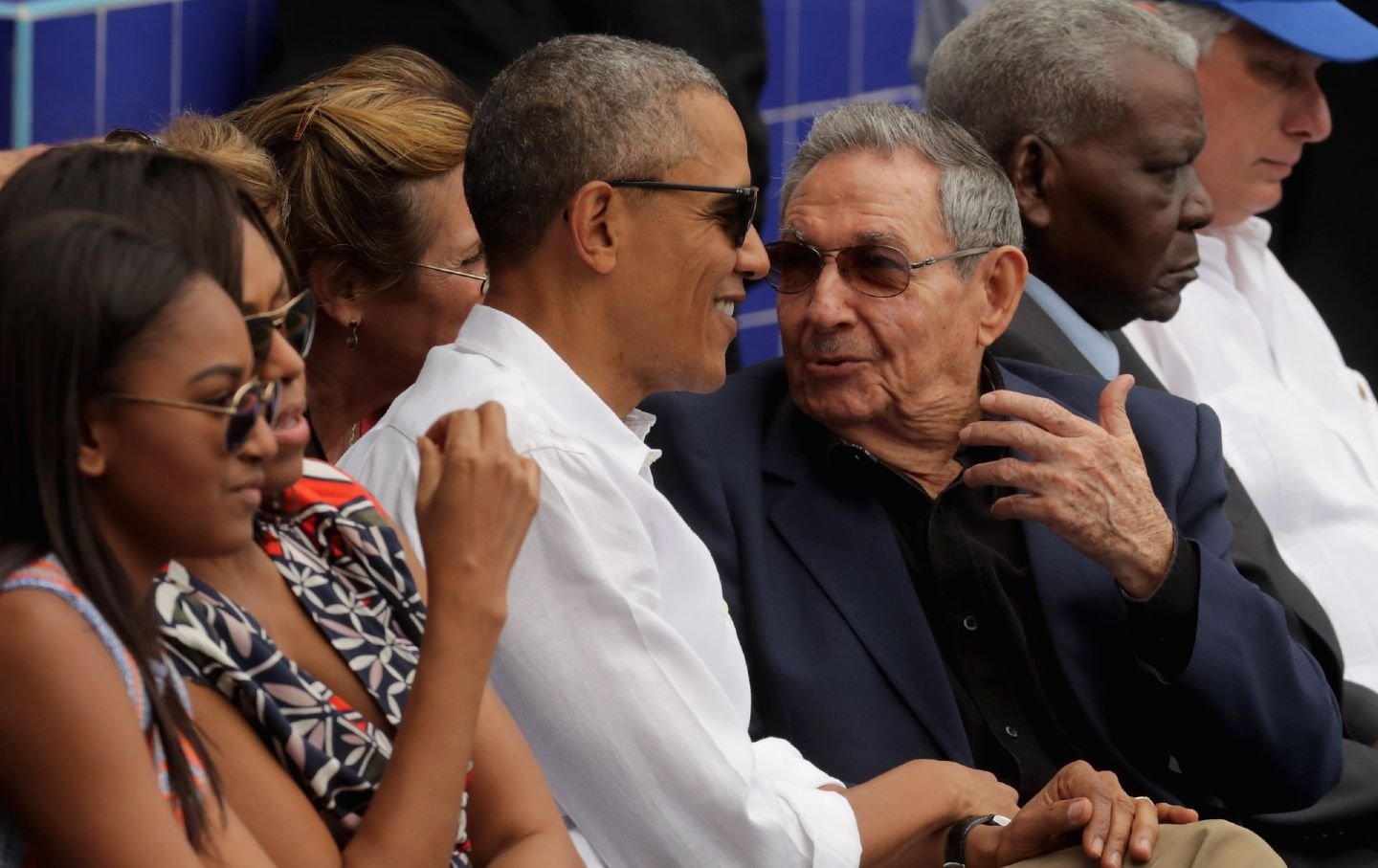
On the 10th anniversary of Obama’s opening, the outgoing president should take immediate action because it is good for the US, good for the Cuban people—and the right thing to do.
On November 15, just one week into the final, lame-duck phase of Joe Biden’s White House tenure, the president received a forceful congressional letter urging him to take “immediate action” to provide critical humanitarian and energy infrastructure assistance to Cuba. “The Cuban people are currently facing widespread blackouts and an escalating energy crisis,” stated the letter, co-sponsored by Representatives Barbara Lee and James McGovern, along with 16 other signatories. “The situation is not only causing immense suffering for the Cuban people but also poses serious risks to U.S. national security interests,” they wrote. “If left unaddressed, the crisis will almost certainly fuel increased migration, strain US border management systems, and fully destabilize the already-strained Caribbean region.”
To date, there has been no response from the Biden White House. But last week during a hearing before the House Foreign Affairs Committee, Secretary of State Anthony Blinken testified that “I do not anticipate any changes in our policy towards Cuba during the pendency of this administration.” Despite the president’s promise during the 2020 campaign that he would restore the historic US policy of normalized relations that Barack Obama announced 10 years ago today, Biden’s legacy on Cuba appears destined to be one of frustrating and infuriating inaction—leaving in place the previous Trump administration’s hostile and punitive policies, and enabling the next Trump administration to quickly escalate its regime-change posture toward Cuba after January 20, 2025.
The Obama-Biden Breakthrough
Four years ago, few members of the political establishment and the Cuba policy advocacy community could have anticipated this ominous outcome. Expectations were high that the incoming Biden administration would restore the successful process of positive engagement that the Obama-Biden administration had engineered—and Trump had decimated. After all, Biden was present at the creation of Obama’s history-changing détente with Cuba; the then-Vice President was one of only a handful of senior White House officials who knew about the secret negotiations with Raul Castro’s government that Obama had authorized to finally achieve a modus vivendi with Cuba.
Those secret talks—conducted by two National Security Council officials. Benjamin Rhodes and Ricardo Zuñiga, with Raul Castro’s son, Maj. Alejandro Castro and another Cuban military officer, over the course of 18 months—led to a historic breakthrough on December 17, 2014. On that dramatic day exactly 10 years ago, which Cubans iconically refer to as “diez y siete d”—17 D—Obama and Raul Castro both announced an agreement to end the acrimony of the past and normalize diplomatic ties. Just two weeks later, Biden attended the inauguration of Brazilian President Dilma Rousseff in Brasilia where, as one White House aide recalled, he received accolades from one Latin American leader after another for finally normalizing US bilateral relations with Cuba.
As Biden knows, the US détente with Cuba was a substantive success for the interests of both nations. The Obama administration moved quickly to remove Cuba from the State Department’s list of nations that support international terrorism, officially re-open embassies in Washington and Havana, lift restrictions on remittances, restore commercial flights to the island as well as loosen travel restrictions so US citizens could see Cuba’s realities for themselves, and expand trade, commerce and a US business presence on the island. The influx of travelers, and businesses such as Airbnb, provided substantive inputs for the Cuban economy, most notably in the expansion of Cuba’s entrepreneurial private sector. The two countries also advanced their mutual security interests by establishing a bilateral commission to oversee collaboration on key issues such as counternarcotics operations, counterterrorism cooperation, disaster management, and normalization of migration. In less than two years, Washington and Havana signed 22 bilateral agreements to advance those issues through mutual cooperation.
Current Issue
Trump’s Regression
Obama’s posture of engagement proved so successful that an inter-agency national security review conducted during the first months of the Trump administration concluded that the policy should be sustained. “[T]he review was sent to Trump recommending he keep in place Obama’s drive to normalize relations with Cuba,” Foreign Policy reported in 2017. “He nixed that idea after promising on the campaign trail to cater a new policy to Cuban-American hardliners.” During his first administration, Trump systematically dismantled the Obama-Biden policy of détente with Cuba, replacing it with dozens of cruel, punitive sanctions—including cutting off wire-transfer remittances during the pandemic—that have taken a costly toll on Cuba’s economy and its people. Assaulting the rights of US citizens to freely visit Cuba, Trump curtailed flights, barred cruise ships, and created a “Restricted Entities” list—the hotels, restaurants, bars and businesses which US travelers can no longer legally patronise. Only seven days before leaving office, Trump mendaciously redesignated Cuba as a state that supports international terrorism, imposing even more economic penalties against the island.
During the 2020 campaign, Biden stated that “in large part I would go back” to the Obama era of engagement with Cuba. He recognized the benefits of that approach to the Cuban people, and to US relations in the hemisphere. “This is more than about Cuba,” he noted, “it’s about all of the Caribbean and it’s about all of our friends and allies in Latin America.”
But after Biden’s inauguration, his administration took little action to remove the Trump sanctions and restore Obama’s policy of normalized relations. After almost three years of inexplicable delay during the pandemic, the Treasury Department finally restored Western Union’s Cuba service and the ability of Cuban Americans to wire critically needed remittances to their relatives on the island; Biden also restored commercial air service to regional airports in Cuba—which Trump had canceled—while maintaining the prohibition lists on where travelers can stay, eat, drink and shop. Last May, the Treasury Department finally issued long-promised regulations that would allow Cuban entrepreneurs to open bank accounts in the United States. Yet, the Biden administration has refused to remove Cuba’s designation as a state that supports international terrorism, even as US officials quietly acknowledged that Cuba does not belong on the list.
What Biden Can Do
The congressional letter to Biden specifically requests that he remove Cuba from the list of terrorist states to facilitate “access to energy and economic relief for the Cuban people.” To address Cuba’s spiraling crisis, the Representatives also urged Biden to expedite humanitarian assistance and technical support; suspend all sanctions that impede aid and donations to Cuba; and fast-track the export of critical equipment to repair and modernize Cuba’s electrical grid. “We urge your administration to act swiftly to implement these measures and mitigate the growing crisis in Cuba while advancing U.S. interests in the region,” the letter concluded.
Popular
“swipe left below to view more authors”Swipe →
To be sure, whatever executive action Biden might take during the final days of his difficult presidency is subject to reversal by the incoming hardliners, led by Trump’s nominee for secretary of state, Marco Rubio. But Biden could and should implement these measures—to urgently assist a Cuban populace in need, as well as to resurrect the model of peaceful coexistence as a successful alternative to a US posture of hostility and aggression that has failed to advance US interests for over 60 years. Toward that goal, he should also order the expedited declassification of the key secret files relating to the Obama détente—including the interagency assessment, conducted during the first Trump administration, that positive engagement was advancing US interests as well as those of the Cuban people. Those documents represent the verdict of history on a model of creative diplomacy and peaceful coexistence that is, today, more relevant than ever.
Biden’s legacy as vice-president includes the historic Obama-era détente in US-Cuban relations. In the waning days of his troubled tenure, his presidential legacy could also include reminding the world that Washington is capable of a sensible, productive and normal policy toward Cuba.
More from The Nation
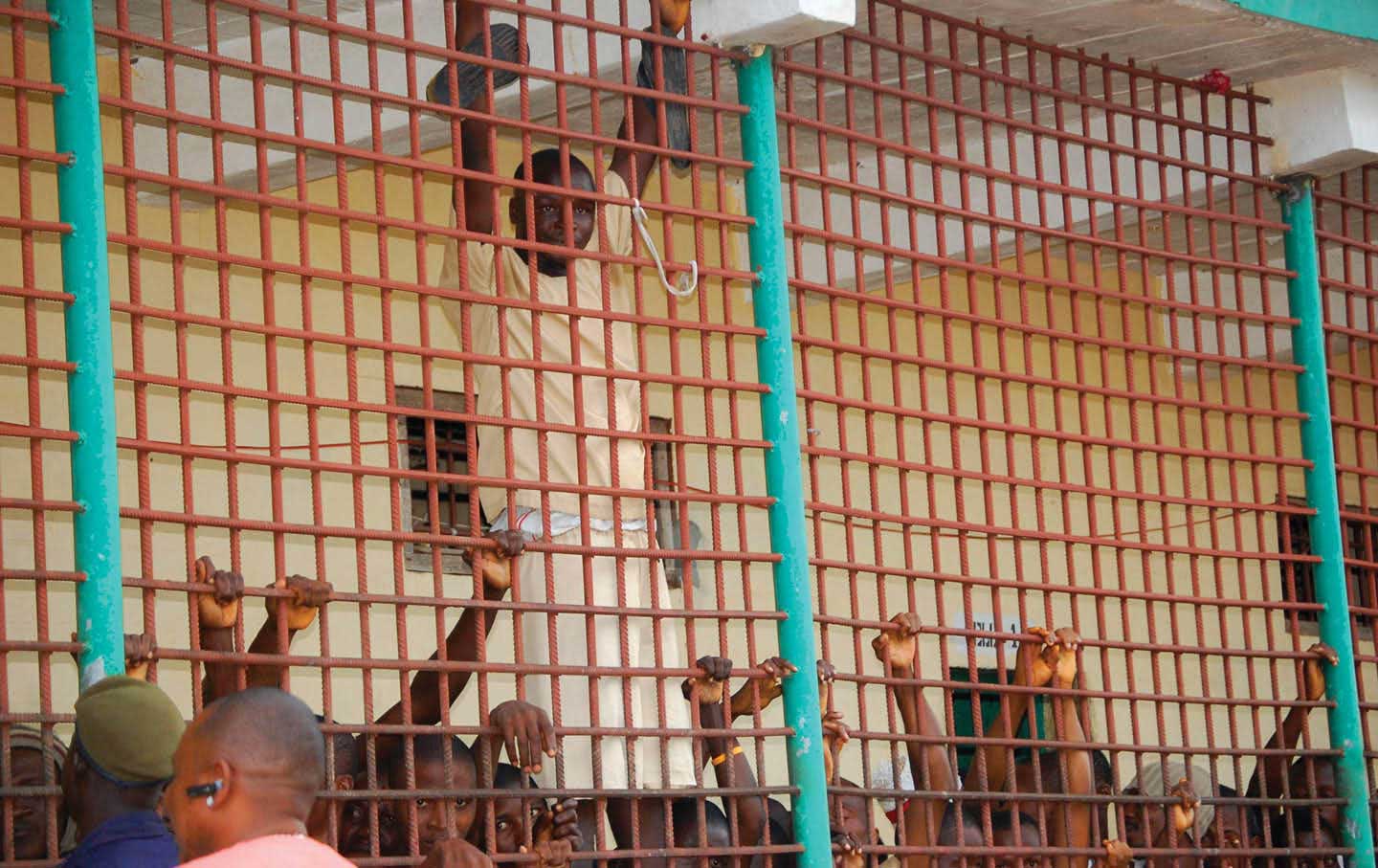
Decades after independence, colonial-era laws have created a mass-incarceration crisis in Sierra Leone as poor citizens are thrown into prison for the smallest offenses.
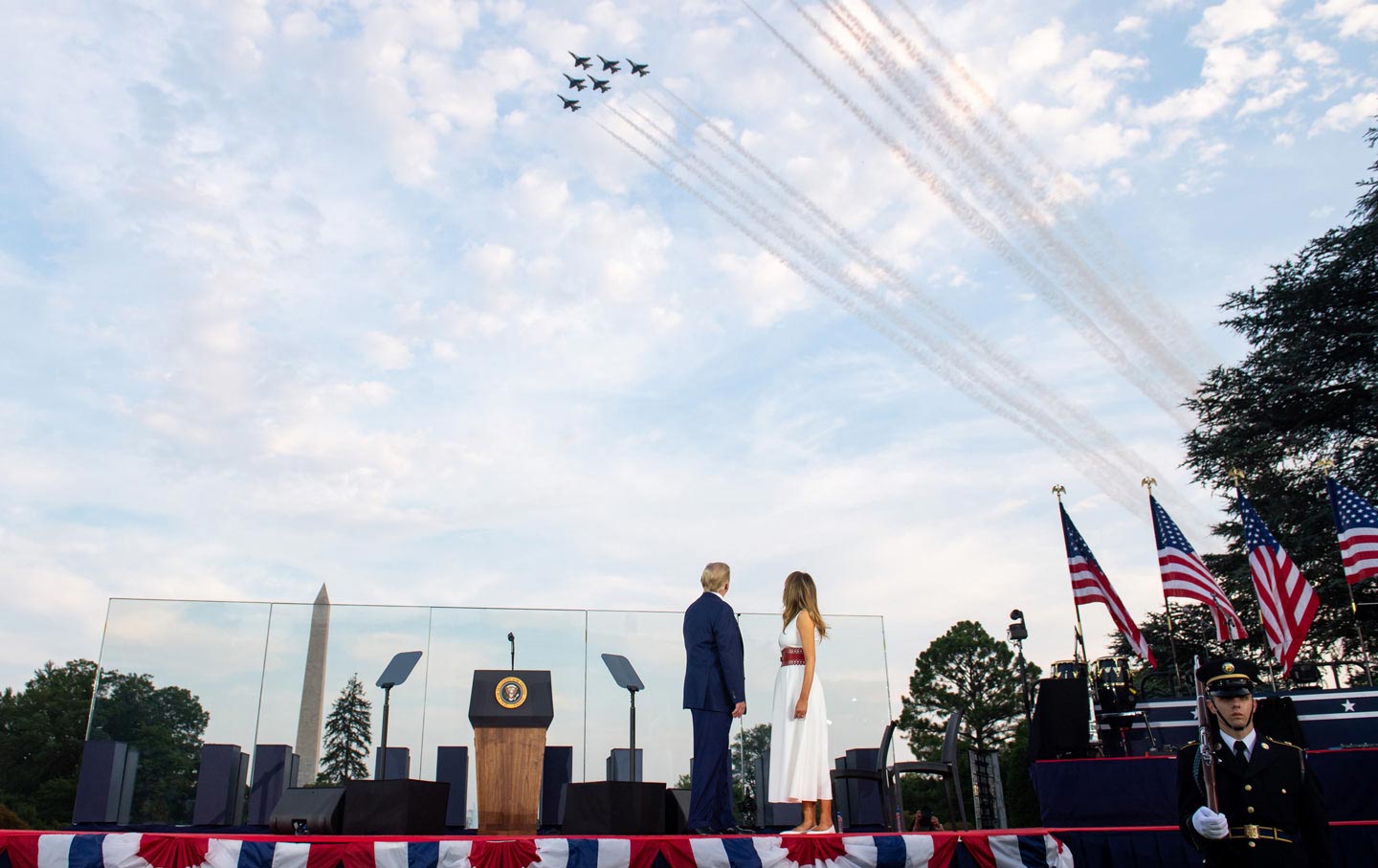
It’s no longer clear that anyone in Trump’s second term will be there to restrain him from moving forward with his worst intentions against civilians.
If history is any guide, the latest Lebanese ceasefire may well have broken down by the time you read this.
The speed of the Assad dictatorship’s collapse stunned even the opposition. But the result is a power vacuum that Israel and Turkey have already moved to occupy.
Retired diplomat Chas Freeman and writer Pascal Lottaz discuss what happens now that Damascus is in the hands of Hayat Tahrir al-Sham.
