
Unlock the Editor’s Digest for free
Roula Khalaf, Editor of the FT, selects her favourite stories in this weekly newsletter.
One morning not that long ago, I got to my desk in the office and announced to anyone within earshot that I had just done something unexpected and depressing.
My 19-year-old Toyota had abruptly died and in the rush to replace it, I had ended up buying another petrol-electric hybrid instead of the fully electric plug-in car my partner and I had always thought we would get next.
Most of my colleagues heard me out politely as I prattled on about my partner needing another car pronto because he was in the middle of a project that required him to make 340-mile round trips to a remote bit of Wales at short notice.
They tutted sympathetically about these trips, and my unhappy visions of said partner being stranded in a Tesco car park staring at a bank of broken electric car chargers on a wintry Welsh night.
They agreed that, even at home in London, finding a functioning, vacant charger could be daunting. Or rather, most of them agreed. One colleague was neither sympathetic nor understanding. He was, quite visibly, appalled.
What I had done, he said, was incredible. There were plenty of chargers on all main roads now. Anyone who said otherwise was wrong. He had been crossing half of Europe in his electric car for years without a hitch.
When I started stammering that cost had also been a factor, and even the cheapest decent used EVs were beyond my ideal budget, he jumped online and started scouring Auto Trader to show I had not looked hard enough.
I prayed he would find a Tesla, so I could loftily remind him I had just written about the way Elon Musk’s antics had turned me off buying his cars. But work duties intervened and the conversation ended, a relief considering we sit just feet apart.
The incident has stayed with me for several reasons, the main one being the realisation that my colleague, who is one of my favourite FT people, and an inspiring green tech early adopter, was almost certainly right. I probably would have found a satisfactory EV with more effort.
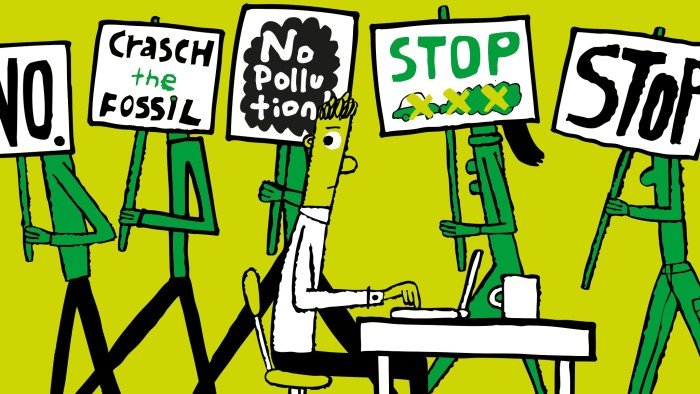
At the same time, being on the receiving end of a robust bout of climate shaming was a jolting reminder of how carefully peer pressure needs to be applied to encourage greener behaviour, whether at work or at home.
There is no doubt that the influence of others can be a powerful climate policy tool. Research has long shown that one of the main reasons people put solar panels on their roofs is not because they are well off or green-minded. It’s because their neighbours have done it first.
Living within 500 metres of a visible rooftop solar system makes you more likely to install one yourself, an analysis of Connecticut households shows, with each visible panel increasing by 6.5 per cent the chances you will follow suit.
Other solar adoption studies found similar evidence of this so-called social contagion effect, which can also sway companies and farms.
Then there is the classic green nudging case of Opower, a US home energy management software group. Its products allow utilities to offer people personalised reports showing how their energy use compares with that of the neighbours.
Early studies showed such reports led to an average 2 per cent drop in household energy use that has since shaved billions of dollars from customer bills.
But there is a catch, says climate scientist Katharine Hayhoe.
Longer-term analysis showed political conservatives who use more power than average and don’t support green charities actually increased their electricity use after getting this type of information.
“If we think we’re being shamed into doing something, it makes us feel — or sometimes even do — exactly the opposite,” Hayhoe writes in her book on climate communication, Saving Us.
She thinks people are more inclined to be persuaded if they are simply shown the benefits of green behaviour or products, be it taking the train instead of flying — or buying an electric car.
I’m sure she is correct, but I do not blame anyone who suffers the frustration my colleague felt about my dismal EV effort.
At a time when the deepening climate threat is growing visibly worse, and fears about the problem are rising, there should be no need to prod, shame or show. System-wide policies should make green behaviour the obvious, easiest, financially preferable choice. Alas, this is still much more of an exception than a norm.
pilita.clark@ft.com
