
Unlock the Editor’s Digest for free
Roula Khalaf, Editor of the FT, selects her favourite stories in this weekly newsletter.
New York high school teacher Matt Polazzo dedicated his first post-election politics class to media coverage of Donald Trump’s victory. As one student expressed frustration that television reporting had been “one sided”, Polazzo scrolled through screenshots of articles from the New York Times, Politico and The Free Press.
“My goal is to have you be informed readers of news,” he told the teenagers. “Vary your media diet. Get a sense of the ideology of the outlet and read opposing ones. There’s a lot of sewage on Twitter [X], but you get a much clearer vision there of the manosphere and the tech bros.”
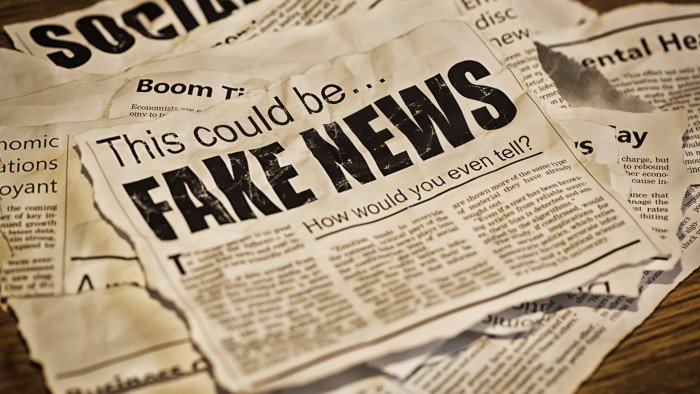
In recent years, young people in the US have dominated the shift away from traditional media organisations towards social media, raising concerns about increased partisanship and consumption of fabricated stories.
A recent study conducted by the News Literacy Project found just 18 per cent of US teenagers could accurately distinguish news, advertisement, opinion and entertainment. Nearly half said they believed the press did more to harm democracy than protect it.
“You just can’t overestimate the urgency,” says Michelle Lipkin, head of the non-profit National Association of Media Literacy Education. “We have so much work to do. We have seen the advance of AI, growing dangers of mis- and disinformation, deep fakes, online scams and concerns over mental health and how we manage it. It’s so necessary we understand the information we consume, think about it and don’t just blindly follow what we see and hear.”
These concerns have resulted in new regulations and educational resources aimed at improving media literacy among young people. The grassroots organisation Media Literacy Now says more than half of all US states have conducted hearings or discussions and 18 have passed bills on the topic. But teachers who try to educate students on the subject are faced with multiple obstacles. One is a lack of a consistent definition of media literacy. There are different interpretations of its purpose and the navigation between opinions, partiality, errors and disinformation.
Renee Hobbs, professor of communication studies at the University of Rhode Island, says: “Different politicians think of it as a hammer that can be used for different purposes. After I finished a presentation on media literacy in the Bible Belt in Oklahoma, two middle-school teachers thanked me and said ‘we’re going to use it to critically analyse satanic imagery in Disney movies.’”
A second concern is that without a legal requirement backed by funding, it can be hard for schools to squeeze the topic into already overcrowded timetables. Michael Martirone, a high school social studies teacher in New Jersey, which recently passed a media literacy law, says: “A lot of teachers are doing it piecemeal. It’s not mandated so we have to weave it into courses. We can’t do a deep dive.”
The third uncertainty is over what approach to adopt. Sam Wineburg, a professor of education at Stanford University, argues for “lateral reading” to research the credibility of any source before clicking to read. Others use online games. Philip Higham, a professor of psychology at the University of Southampton, favours “inductive learning”, by which students are shown multiple examples of true and fake news to interpret.
Evidence remains thin on the extent to which any approach changes actual reading habits, beliefs or actions — not least voting in the presidential elections. As Martirone puts it: “You can practise something for 55 minutes in the classroom, but when students are with their friends, will they take the time to think critically?”
It is also possible that young people are simply disengaging from news and evidence-based content because they believe facts do not lead to meaningful political change on the topics that matter to them, such as climate change. Reflecting after his politics class, Polazzo questioned whether the US election would help encourage his students to seek out more legitimate news sources. “Our generation read the newspapers but this one only looks at TikTok. They aren’t really interested in politics and if they start to get engaged, this is the result they see.”
andrew.jack@ft.com
