
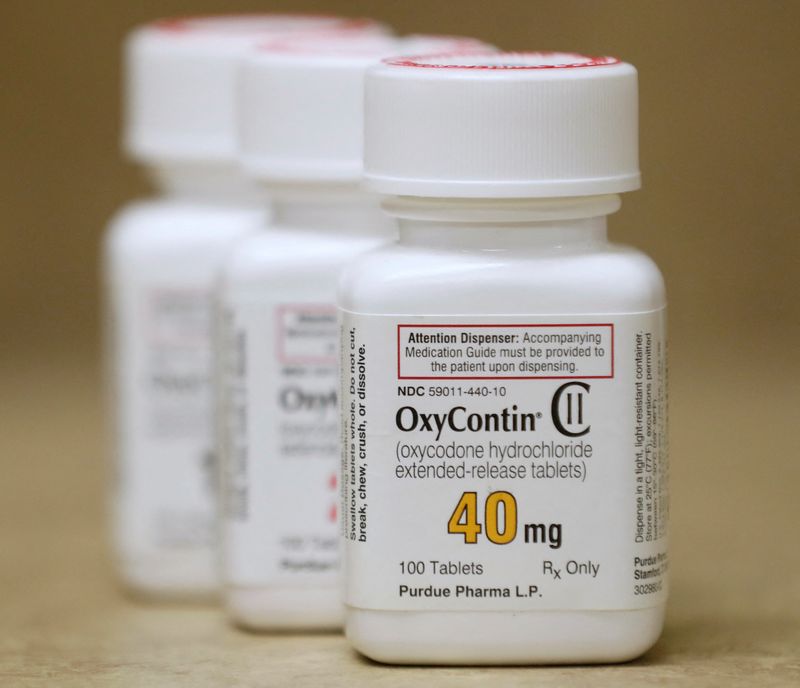
© Reuters. FILE PHOTO: Bottles of prescription painkiller OxyContin, 40mg, 20mg and 15mg pills, made by Purdue Pharma L.D. sit on a counter at a local pharmacy, in Provo, Utah, U.S., April 25, 2017. REUTERS/George Frey/File Photo
By John Kruzel and Andrew Chung
WASHINGTON (Reuters) -The U.S. Supreme Court on Monday grappled with a challenge by President Joe Biden’s administration to the legality of OxyContin maker Purdue Pharma’s bankruptcy settlement, a deal that if approved would shield its wealthy Sackler family owners from lawsuits over their role in the country’s opioid epidemic.
Purdue’s owners under the settlement would receive immunity in exchange for paying up to $6 billion to settle thousands of lawsuits filed by states, hospitals, people who had become addicted and others who have sued the Stamford, Connecticut-based company over misleading marketing of the powerful pain medication OxyContin.
Some of the justices during arguments in the case seemed to convey skepticism toward the administration’s challenge to the bankruptcy plan.
“Bankruptcy courts for 30 years have been approving plans like this,” conservative Justice Brett Kavanaugh told a lawyer arguing on behalf of the administration, asking why the court should say such plans are “categorically inappropriate.”
Some justices seemed wary of extending protections to the Sacklers under bankruptcy law when the family members themselves were not debtors under the plan.
“In some ways, they’re getting a better deal than the usual bankruptcy discharge,” liberal Justice Elena Kagan told Gregory Garre, a lawyer representing Purdue, adding that the Sacklers under the deal would be “protected from claims of fraud and willful misconduct,” which does not happen in a typical bankruptcy proceeding.
The justices in August paused bankruptcy proceedings concerning Purdue and its affiliates when they agreed to take up the administration’s appeal of a ruling by the Manhattan-based 2nd U.S. Circuit of Appeals upholding the settlement.
Outside the court, about 50 people protested the settlement, including family members of opioid victims. “Sacklers lie, people die,” some of the demonstrators chanted. Some held signs in memory of people who died from opioids. Another sign read, “Deadliest white collar criminals – the Sackler cartel.”
The Biden administration in court papers told the justices that allowing the 2nd Circuit’s decision to stand would provide “a roadmap for corporations and wealthy individuals to misuse the bankruptcy system to avoid mass-tort liability.”
At issue is whether U.S. bankruptcy law allows Purdue’s restructuring to include legal protections for the members of the Sackler family, who have not filed for personal bankruptcy.
CHAPTER 11
Purdue filed for Chapter 11 bankruptcy in 2019 to address its debts, nearly all of which stemmed from thousands of lawsuits alleging that OxyContin helped kickstart an opioid epidemic that has caused more than half a million U.S. overdose deaths over two decades.
Purdue estimates that its bankruptcy settlement, approved by a U.S. bankruptcy judge in 2021, would provide $10 billion in value to its creditors, including state and local governments, individual victims of addiction, hospitals and others who have sued the company.
The Biden administration and eight states challenged the settlement. All of the states dropped their opposition after the Sacklers agreed to contribute more to the settlement fund.
In upholding the settlement in May, the 2nd Circuit concluded that federal bankruptcy law allows legal protections for non-bankrupt parties like the Sacklers in extraordinary circumstances. It ruled that the legal claims against Purdue were inextricably linked to claims against its owners, and that allowing lawsuits to continue targeting the Sacklers would undermine Purdue’s efforts to reach a bankruptcy settlement.
Members of the Sackler family have denied wrongdoing but expressed regret that OxyContin “unexpectedly became part of an opioid crisis.” They said in May that the bankruptcy settlement would provide “substantial resources for people and communities in need.”
The administration told the Supreme Court that Purdue’s settlement is an abuse of bankruptcy protections meant for debtors in “financial distress,” not people like the Sacklers. The administration has also alleged that the Sackler family members withdrew $11 billion from Purdue before agreeing to contribute $6 billion to its opioid settlement.
Although the vast majority of claimants who participated in a vote on whether to approve the deal viewed it favorably, some justices expressed concern about depriving those opposed to the deal from suing over their injuries.
“We don’t normally say that a non-consenting party can have its claim for property eliminated in this fashion without consent or any process of court,” conservative Justice Neil Gorsuch told a lawyer for the debtors.
