
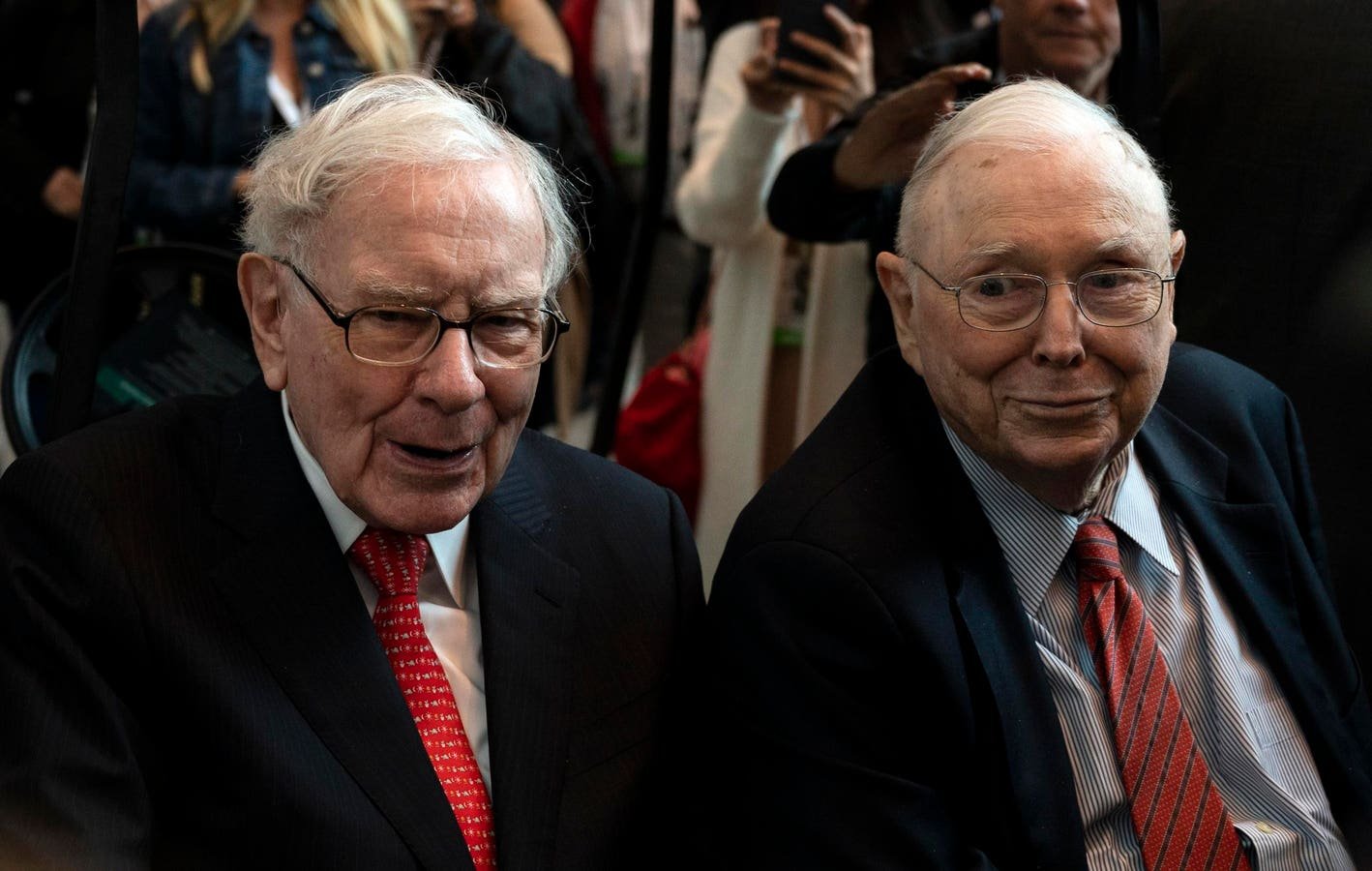
Berkshire Hathaway’s Warren Buffett (L) and Charlie Munger.
JOHANNES EISELE/AFP via Getty Images
The Bank of Japan’s balance sheet has long since topped the size of the nation’s $4.7 trillion economy. But whether officials feel ready to exit quantitative easing may hinge on a much smaller figure: $71 billion.
That’s how much Governor Kazuo Ueda’s team racked up in losses on bond holdings in the six months to September, a record amount.
To be sure, these are unrealized paper losses. But being ¥10.5 trillion in the red in just 182 days is nothing to dismiss. In fact, it could very well add to the reasons why QE will remain the law of the land here in Japan longer than expected.
It speaks to, at the very least, the financial trauma Ueda’s team must consider as it tries to wrap up 23 years of the most aggressive monetary stimulus in history. And the longest-lasting QE experiment.
There’s a supreme irony about where Tokyo finds itself in late 2023. In the 2000-2001 period, the BOJ pioneered the QE that central banks everywhere adopted following the 2008 global crisis. Yet officials in Washington, Frankfurt, London, Sydney and elsewhere have all since normalized interest rate policy. Japan hasn’t, despite inflation hitting 40-year highs this year.
Now, fast-mounting unrealized losses demonstrate the challenges and pitfalls the BOJ faces plotting an end to QE.
Many think the BOJ will begin exiting by mid-2024. Yet if the BOJ is sustaining such epic losses, it will first have to assess how even a minuscule increase in 10-year yields would affect banks, corporate balance sheets, local governments, insurance companies, pension funds, endowments, universities, the postal system and the growing ranks of retirees.
The BOJ holds more than half of all the central Japanese government’s outstanding debt. Most of the rest are held across sectors in an economy that’s had nearly a quarter century to get used to the idea that free money might never go away. It was in 1999 when the BOJ slashed rates to zero, the first Group of Seven economy to do so.
That, and QE, was meant to be a life support tool for a deflationary economy in the intensive-care unit. QE was never intended to become a permanent feature of what was then Asia’s top financial power.
China now wears that crown in Asia, even as economists worry it’s flirting with “Japanification.” Between deflation and a Chinese property sector in crisis, the echoes are clear enough. Yet the lessons from Japan’s lost decades haven’t been fully absorbed in Tokyo either.
Prime Minister Fumio Kishida’s approval ratings are in the low 20s as inflation rises faster than average wages. Kishida’s proposed remedy? More fiscal stimulus and hoping that Team Ueda can be dissuaded from yanking away the proverbial punchbowl.
Absent is talk of resurrecting structural reform efforts. Nearly 11 years ago, Kishida’s Liberal Democratic Party returned to power with bold pledges to reduce bureaucracy, boost innovation, modernize labor markets, empower women and attract more foreign talent.
Mostly, the LDP relied on the BOJ to boost credit well above and beyond what it had done in the previous 13 years. Under 2013-2023 Governor Haruhiko Kuroda, the BOJ hoarded debt as never before and became the largest holder of Japanese stocks via exchange traded funds.
Supersizing the BOJ’s balance sheet produced record corporate profits. And last week, the Nikkei Stock Average returned to 33-year highs. Along with free-flowing BOJ stimulus, the stock rally is also partly the result of efforts to strengthen corporate governance.
Beginning with 2001-2006 Prime Minister Junichiro Koizumi and gaining momentum under 2012-2020 leader Shinzo Abe, Tokyo prodded companies to diversify boardrooms, increase returns on equity and give shareholders a louder voice.
Look no further than Warren Buffett’s arrival in 2020. His Berkshire Hathaway conglomerate surprised many — including the Tokyo political establishment — when it made its first-ever big bets on Japan Inc. Buffett and longtime lieutenant and vice chair Charlie Munger took 5% stakes in Japanese “sogo shosha” general trading companies Itochu, Marubeni, Mitsubishi, Mitsui and Sumitomo.
Those investments paid off so well that Buffett and Munger upped their stakes earlier this year. Munger, who died on Tuesday at 99, gushed about Berkshire’s Japan investments in an interview in late October. Munger told the Acquired podcast that putting billions of dollars to work in Japan was a “no-brainer” and even a gift from the heavens.
“It was awfully easy money,” Munger said, adding that “it was like having God just opening a chest and just pouring money into it.”
Though the stock-picking prowess of the Buffett-Munger tag-team is part of this tale, so is the fact Japanese 10-year yields were 0.14% when they arrived. These two value-investing legends couldn’t have found easier money anywhere in the developed world.
It’s great that Japan has worked out so well for Berkshire Hathaway. If only the last decade saw politicians in Tokyo take the kind of care with Japanese workers as they did the ranks of foreign investors pocketing the spoils.
Thanks to this complacency year after year, government after government, the BOJ is essentially trapped. Even before it begins “tapering,” it’s losing the annual gross domestic product of Uruguay in just six months. Anyone betting the BOJ can get out this “awfully easy money” mess anytime soon may not be looking at the full picture.
