
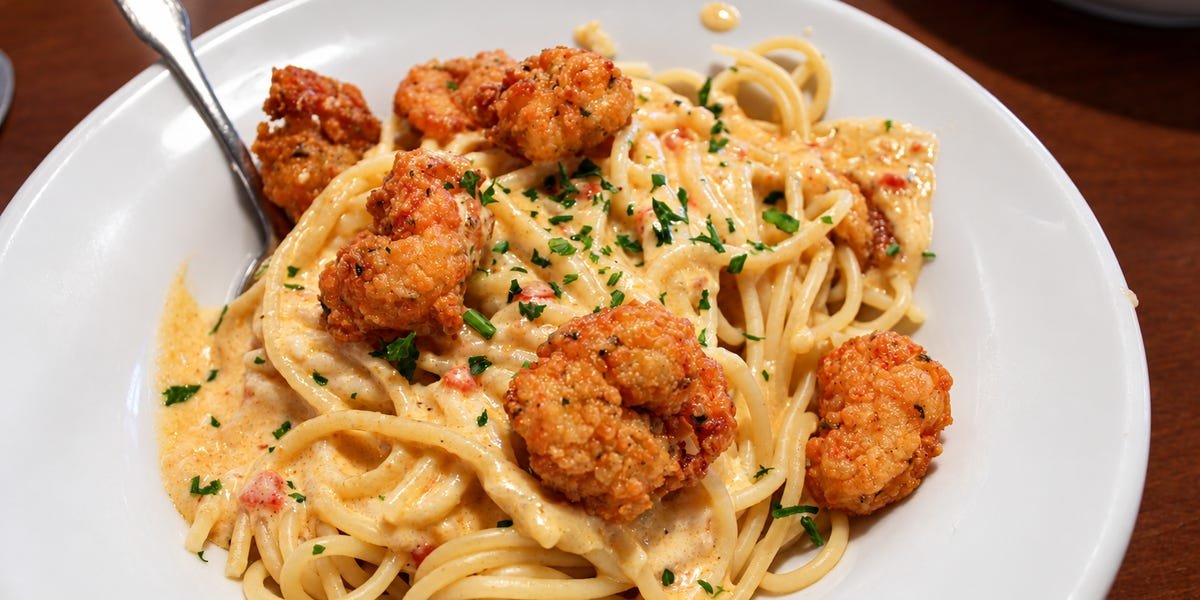
I paid more for the deal at Olive Garden’s Times Square flagship than most diners would at a typical location, but I still thought it was a good value.
My meal, including a soda, a side of Alfredo sauce, tax, and tip, came to $50.64. While pricey for one person, it’s about what I’d expect to pay for a dinner out in New York City, and those meals aren’t bottomless.
For the price, I got unlimited soup or salad and breadsticks, multiple customizable pasta bowls with protein, and enough leftovers for another meal.
Olive Garden’s Never-Ending Pasta Bowl works because it makes diners feel like they’re getting a supersized deal while relying on low-cost, easy-to-prepare ingredients. The menu sticks to a handful of pastas and sauces that can be prepared in bulk, while costlier proteins carry an upcharge.
Limited-time promotions also create urgency and help bring diners through the door. Restaurant Business reported that after Olive Garden saw traffic dip in summer 2024, the chain’s parent company, Darden, moved up the deal’s launch and extended it by three weeks. It helped Olive Garden post a 2% increase in same-store sales that quarter — its first positive result in a year, according to Nation’s Restaurant News.
Olive Garden’s deal follows a safer formula than Red Lobster’s Ultimate Endless Shrimp, which became a permanent menu item in 2023, allowing diners to repeatedly order costlier seafood dishes. It contributed to an $11 million quarterly loss for the company and even played a role in the chain’s bankruptcy filing. It’s since returned only for limited periods.
Olive Garden’s Never-Ending Pasta Bowl is a reminder that, when it comes to value, chains still know what resonates with customers: comfort food and big portions at an affordable price.
I arrived skeptical and left stuffed, with leftovers in hand and a new appreciation for the restaurant’s cult-favorite breadsticks.
