
Consumer Financial Protection Bureau Director Rohit Chopra testifies before the Senate Banking, … [+]
I went to Las Vegas for Money20/20, one of the lighthouse events for me and a great many other fintech fans. I’m not saying this to make you jealous — although you should be, because I had a lot of fun and I won a couple of hundred dollars at blackjack — but because I was thinking about how at the same time last year Cameron D’Ambrosi wrote in the Liminal newsletter that Money 20/20 “isn’t a digital identity conference, but payments are more anchored on digital identity than ever before”. I couldn’t agree more. I was therefore not surprised to see plenty more talk about digital identity there this year, which was great because I never get bored talking about digital identity. What surprised me though was that I spent even more time talking about open banking. It has arrived in America.
1033 And All That
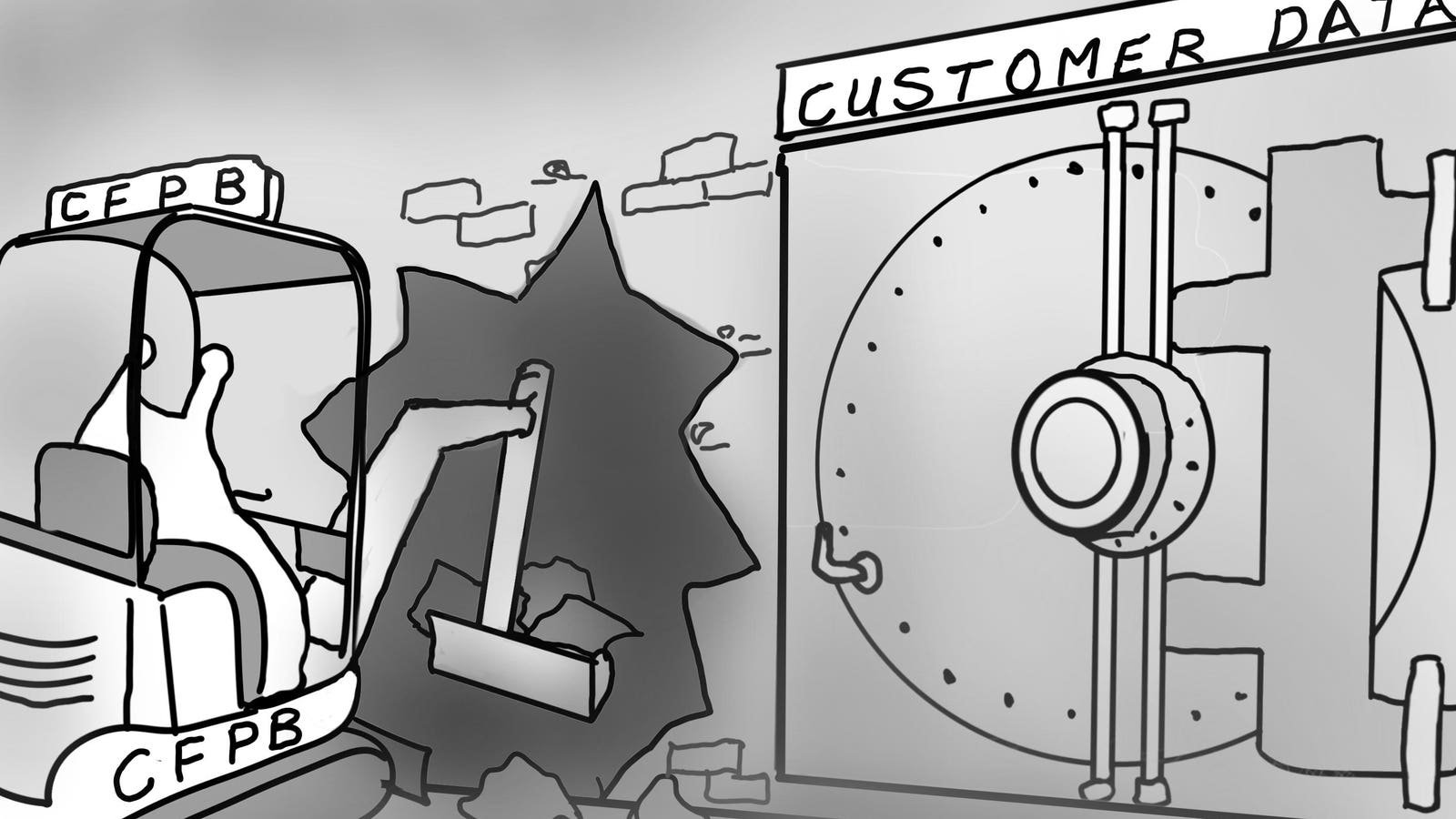
This time last year I wrote that governments across the globe were embracing open finance and noted that the Consumer Financial Protection Bureau (CFPB) had committed to finalise open banking rules for the U.S. by the end of this year. The Director of the CFB Rohit Chopra said on stage at last year’s Money20/20 that the Bureau would propose requiring financial institutions offering deposit accounts, credit cards, digital wallets, prepaid cards, and other transaction accounts to set up secure methods (such as APIs) for data sharing. Well, they have.
The CSFB are on schedule and have published their draft “Required Rulemaking on Personal Financial Data Rights”. These proposed rules are, make no mistake about it, a big deal.
Just to give a little context, the proposed Personal Financial Data Rights rule activates section 1033 of the Consumer Financial Protection Act of 2010 (CFPA) and aims to increase competition by forbidding financial institutions from hoarding a customer’s data and by requiring companies to share data at the customer’s direction with other companies who may be offering better products. The proposed rule would allow people to break up with banks that provide bad service and would forbid companies that receive data from misusing or wrongfully exploiting sensitive personal financial data.
(When it comes to the issue of increasing competition, by the way, there is no love lost between Mr. Chopra, the big banks and their trade associations and consortiums. The Bureau has made clear it hopes that open banking will support increased competition by making it easier for consumers to compare and switch providers, whether for checking or savings accounts, credit cards, loans, or mortgages, bringing to the market a dynamic not seen as an unalloyed benefit by the incumbents.)
To summarise, the proposed rule would require depository and non-depository entities to make available to consumers and authorized third parties certain data relating to consumers’ transactions and accounts; to establish obligations for third parties accessing a consumer’s data, including important privacy protections for that data; and to provide basic standards for data access. The CFPB want to ensure that consumers have the legal right to share their data free of what they call “junk fees” and switch accounts with ease to get better deals and better services.
Breaking the data out.
I am very much in favour of the proposed rule because it will stop financial services players from “hoarding” a consumer’s data. I took to the stage this year to join the Money20/20 panel discussion on “Open Data” (chaired by Michelle Beyo) and made the point that while open data stands to increase GDP, it depends on data flowing around the economy and not sitting locked in vaults or serving as a moat against competition. We as a society need open data, and open financial services are a good place to start. We need to get out of this era of data hoarding where companies are now storing any and all of the data that they can get their hands on just in case it will be worth something in the future. As it sits in these hoards, data is not working to the greater good.
There is a great opportunity for fintechs who can use that data. Just as the doctor needs X-rays, bloods and histories, so the AI that powers an effective financial health provider needs your transaction records from your checking account, your mortgage, your pension, your insurers and everywhere else. Now, obtaining this data and using it is a difficult area to exploit because it has to be done within the bounds of privacy regulation and ethical “financial health” boundaries, but it does seem to me that the open banking environments emerging around the world mean that consumers should find it easier to share this data with the institutions that want to provide a good financial health.
Data For Health
It is important to put this data to use as soon as possible. In the current economic downturn many people need help to manage their finances. Most of their mistakes are very basic. It does not take a giant supercomputer and all of the data in the word to stop people from falling into common traps around the way they borrow, save, spend and invest.
(One might imagine a situation where employers strive to improve employees wealth, just as they provide health benefits now by funding financial counselling as an employee benefit.)
The cost of providing these kinds of financial health services, in a world of AI and machine learning, is affordable and delivers something of real value to the normal person who is, frankly, as ill-equipped as I am to make decisions about pension plans and savings and so on. This is why I am sure that the spread of open banking means the potential for a real revolution in consumer finance and this time it will be a revolution that will make life better for the average consumer.
