

US annual inflation accelerated to 4.2% last month, new consumer price index data showed, as expected. That adds to the recent trend of inflation speeding up, reaching the highest rate since April 2023.
The inflation report is just one in a recent string of economic releases. The Bureau of Labor Statistics published its jobs report this past Friday, which showed job growth blowing past expectations, even better gains than previously reported in March and April, and steady unemployment.
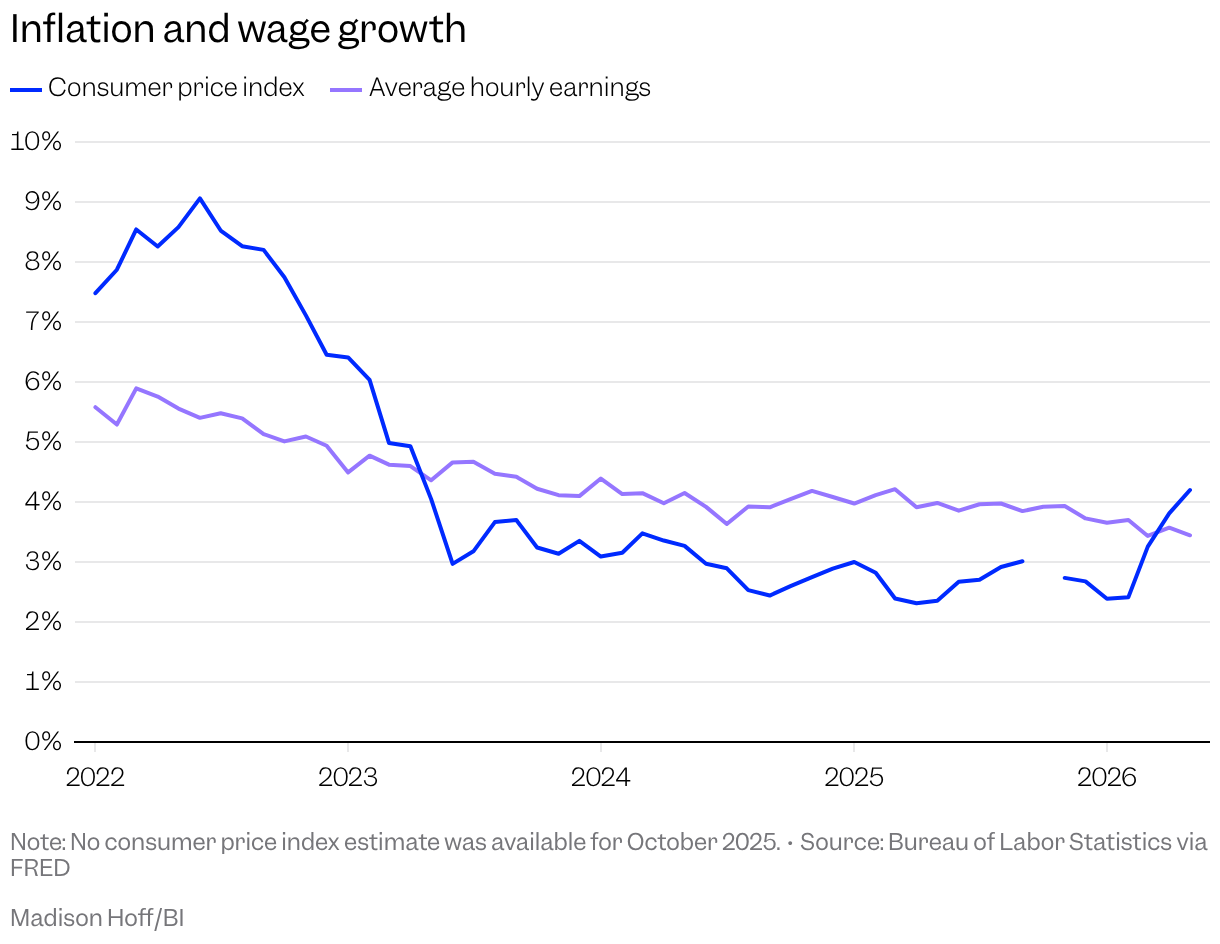
Inflation outpaced wage growth for the second straight time. Average hourly earnings increased 3.4% in May from a year ago. Real earnings fell 0.7% over the year and 0.1% over the month.
Mark Hamrick, senior economic analyst at Bankrate, expects inflation to remain elevated in the near term because of supply chain disruptions in the Middle East, which could mean the trend of inflation surpassing wage growth persists.
“The dividing line between the haves and the have nots is dictating whether consumers are able to keep with rising price levels,” Hamrick said in an email to Business Insider. He pointed to the Fed’s May Beige Book, which said consumer spending is “increasingly bifurcated across income groups amid affordability pressures,” with higher-income households less affected.
Nicole Bachaud, an economist at ZipRecruiter, said wage growth falling short of inflation is putting financial strain on middle-income households. The Fed’s May Beige Book echoed that sentiment; the Federal Reserve Bank of Kansas City, in the book, said one firm noted that “middle-income households are squeezing more life out of every dollar before deciding to spend it.”
Laura Ullrich, the director of economic research in North America at the Indeed Hiring Lab, told Business Insider that while the job market is healthy, it’s still a tough time to be looking for work. Long-term unemployment and the median number of weeks people had been unemployed inched up in May.
Several economists said in commentary on Friday that the Fed will focus on inflation, given recently solid job growth. CME FedWatch, which estimates probabilities for where interest rates will go based on market moves, showed before the new consumer price index report a 98% chance that rates will be unchanged at next week’s meeting. This will be Kevin Warsh’s first time leading the meeting as Fed chair since Jerome Powell’s tenure ended. Powell is staying on the board; it’s to be seen how long he stays on, but his term ends in 2028.
This is a developing story. Please check back for updates.
