
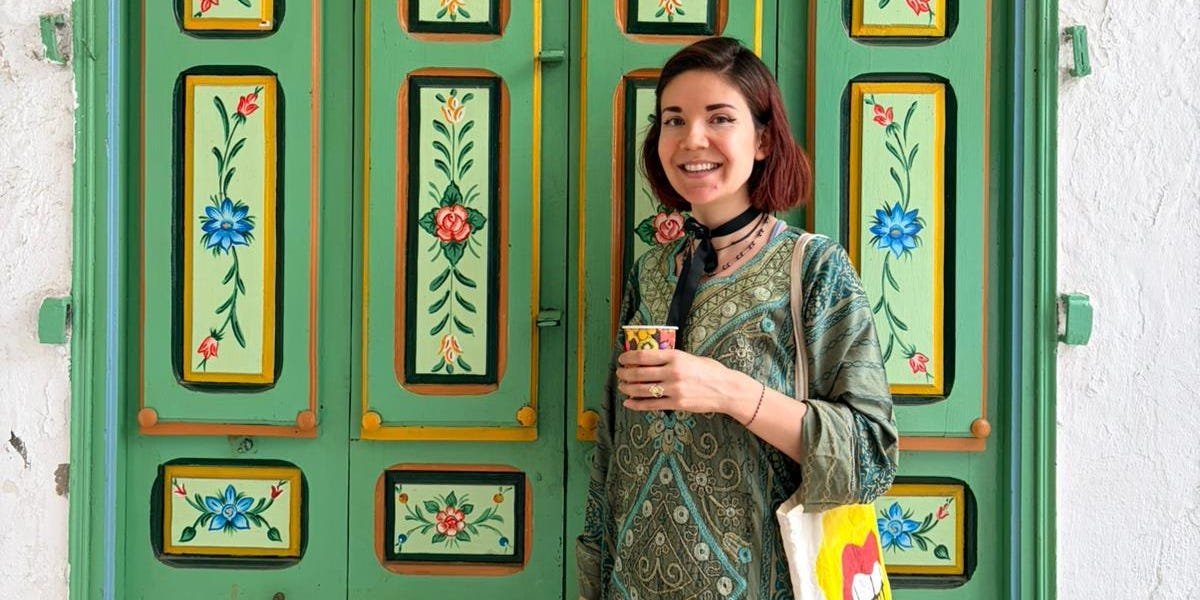
My weeks are planned around which cafés I’ll visit, long lunch breaks, spending time in nature, painting, and going to the spa. I schedule my work around that — not my life around my work.
I rejected both hustle culture and the FIRE (Financial Independence, Retire Early) movement in favor of a solution that lets me work as little as possible so I can have everyday joys.
Working 40-hour workweeks to retire in my 70s and then maybe traveling sounded like I was delaying my life. Working longer hours, investing heavily in a market that can be unpredictable, and maintaining a very frugal lifestyle so I could retire at 40 didn’t sound like a good idea to me either. Instead, my slow-FIRE lifestyle means my life is designed around time freedom instead of full financial independence.
I chose a middle path after experiencing burnout and seeing others struggle
Growing up, I saw both my parents work long, stressful weeks (and often weekends), and health and happiness didn’t seem to be prioritized.
I followed suit and tried putting in 70-hour weeks in my mid-20s (working two jobs while pursuing my graduate degree), and while I made a lot of money, I didn’t have time to spend it.
At 26, I had burned out. I quit my full-time job and found remote work that let me clock a few hours a week while traveling the world. I’m now a freelance writer and researcher. Every job I take, I prioritize freedom over other benefits.
Courtesy of Catherine Work.
A year later, I met my now partner, another remote worker who wanted to travel. This lifestyle evolved from our values: prioritizing adventure, learning, and health, not status. After seeing young friends get diagnosed with terminal illnesses and recognizing the instability of geopolitics and economics, we decided on a middle path: being financially responsible while living our lives in the present.
I see working less as an investment in my long-term health
Health is really important to my partner and me, and I believe our decision to work less will save us money as we get older. We regularly get 9 hours of sleep, do at least 2 hours of exercise, and eat healthy meals (ones we have time to make) every day.
I’m hoping our daily habits and our overall lower-stress lifestyle lead to fewer medical bills in the future. I see prioritizing our time in this way as preventive medicine.
We keep our monthly expenses low while still enjoying life
As an American, when I see salaries posted at $100,000 ayear, I sometimes wonder if I’m setting myself up for disaster by not chasing a better-paying full-time job.
In reality, so much of the world doesn’t make this much, and I spend much less than the average American. For example, this month I’m spending $150 on my portion of the rent (which includes utilities and a weekly house cleaner), $15 on the gym, $8 on a phone plan, about $100 on groceries and eating out, $200 on activities and weekend trips, and $50 for weekly massages. My partner pays about the same, minus the spa. Most months, our bills as a couple don’t go above $2,000.
We also save money by being childfree, not drinking alcohol or smoking, and being vegetarians. These choices weren’t motivated by money, but they certainly help.
I don’t feel any of our lifestyle decisions were solely driven by finances — they were driven by our values of sustainability and freedom, so what may feel like a sacrifice to some feels like a natural decision to us. We save by not buying a lot of material items, owning a house, or making convenience purchases.
Courtesy of Catherine Work.
Working less has given me a life I didn’t know was possible
I recognize this lifestyle was partly born of the unpredictable job market and a sense of an unpredictable future, but choosing to prioritize my free time has made me feel I can regain some control.
I decided that not working a full-time job (at least for now) is the kindest thing I can do for myself: both mentally and physically.
I don’t have a fancy job title, a high salary, a retirement fund that would let me stop working at 40, or a closet full of designer clothes. But I can say I’m spending hours every day being happy, and that’s a middle path I didn’t know existed until I challenged my assumptions about what a good life could look like.
