
Unlock the Editor’s Digest for free
Roula Khalaf, Editor of the FT, selects her favourite stories in this weekly newsletter.
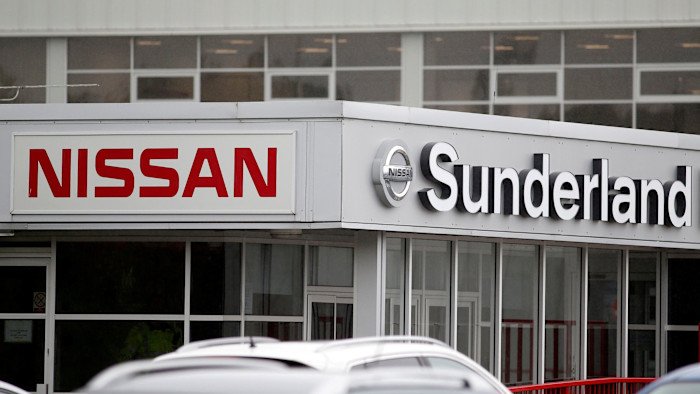
Nissan has warned the UK government that it would be forced to shut down its plant in Sunderland if Britain was not fully included in the EU’s “Made in Europe” manufacturing targets, according to three people with knowledge of the discussions.
Despite heavy lobbying efforts by the UK government, the EU proposals presented on Wednesday require vehicles for corporate fleets and small electric vehicles to be assembled within the bloc. This threatens Nissan, Jaguar Land Rover and Toyota, which make vehicles in the UK for the European markets.
Industry executives have warned that the proposed rules would be a huge blow to vehicles and car parts made in the UK since their largest export market is the EU.
Peter Kyle, UK business secretary, was taking the potential threat to Britain’s carmakers “really seriously” and talking to auto companies to establish exactly what the proposed rules meant, according to people familiar with his thinking.
Kyle, who has been lobbying to ensure Britain is part of any “Made in Europe” scheme in recent weeks and initially welcomed Wednesday’s proposals, is expected to step up that effort.
The measures are designed to save Europe’s struggling €2tn industrial base from competition in strategic sectors, particularly coming from China.
But Brussels said it would allow trade partners, including the UK, South Korea and Japan to be eligible for public procurement and subsidies in clean tech, heavy industry and parts of the car sector, provided that reciprocal arrangements are in place in these technologies. The Commission declined to comment on the risk to UK car manufacturing.
Nissan said it was pleased the Commission had “recognised how important partners are to the EU supply chain”. But it added: “Using a different definition for corporate fleets and the small‑car super credit creates confusion and adds unnecessary complexity for the industry.”
Six out of 10 cars sold in Europe are corporate fleets, while for some carmakers the segment accounts for as much as half of their annual sales.
Nissan is one of the largest automotive employers in the UK with about 6,000 workers at its Sunderland factory, which supports another 30,000 jobs across the supply chain. The company has invested £6bn into the plant but its utilisation rate has been hovering at about 30 per cent owing to sluggish demand.
One person close to the company warned that if Nissan was “frozen out of access to EU incentives” it could pose “an existential threat”.
The Japanese group has repeatedly raised questions about the future of its Sunderland plant in the wake of the Brexit vote, as well as over the government’s EV sales targets.
Mike Hawes, chief executive of the UK’s Society of Motor Manufacturers and Traders, said that the sector was “gravely concerned” by the proposals, warning that they would “discriminate against UK-made vehicles and components”.
Last year’s vehicle output in the UK had already fallen to the lowest level since the 1950s after Stellantis shut down its van factory in Luton. BMW last year also paused a £600mn investment plan to produce electric Mini cars in Oxford.
Ford, which makes engines in the UK and also produces commercial vans in Turkey, said the proposal rules would undermine established supply chains.
“What’s concerning is the uncertainty the proposal creates, leaving open the possibility that trusted partners could be excluded,” Jim Baumbick, who heads Ford’s European business, said. “This precarious approach makes it harder to plan, invest and scale in Europe.”
The UK was a “collateral victim” of the EU’s need to protect its car market, a person familiar with the “Made in Europe” negotiations said.
There is “a risk of lots of unemployment” in the EU if the automotive sector was not “totally closed” in regard to corporate fleets and small EVs. “It’s not against the UK,” they added.
The proposal led by French commissioner Stéphane Séjourné will be subject to negotiations between the European parliament and member states before it enters into force, setting up a long period of uncertainty and fierce lobbying.
