
Crypto Journalist
Amin Ayan

Crypto Journalist

Share

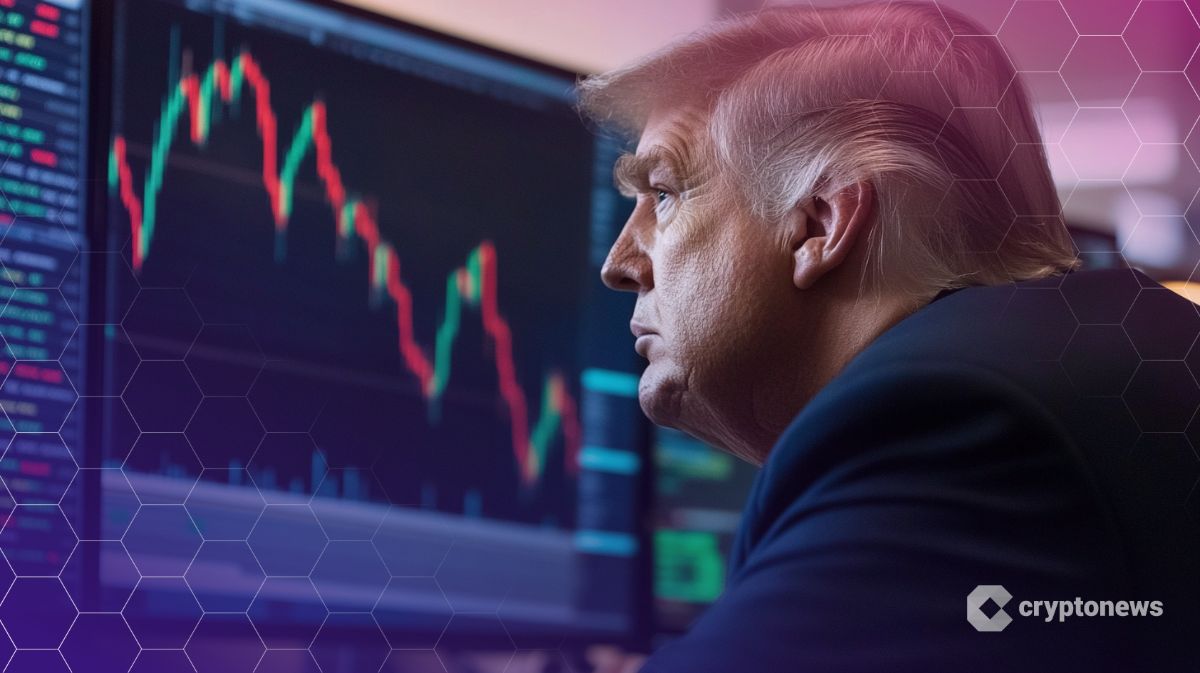
Cryptocurrency markets showed resilience Friday after US President Donald Trump unveiled a new universal 10% tariff on imports, even as the policy followed a Supreme Court decision blocking his earlier use of emergency economic powers.
Key Takeaways:
- Crypto prices held steady despite Trump announcing a new 10% universal tariff.
- The Supreme Court blocked the use of emergency powers, but the administration shifted to other trade laws.
- Unlike past trade tensions, markets reacted cautiously with no major selloff in Bitcoin or Ether.
Bitcoin traded near $67,800 during the session, while Ether held around $1,960, according to data from CoinMarketCap.
Broader crypto conditions remained steady, with the total digital asset market capitalization hovering around $2.33 trillion and sentiment indicators continued to reflect caution rather than panic.
Trump Orders 10% Global Tariff Using New Legal Authority After Court Ruling
Trump sharply criticized the court’s ruling during a press conference, calling the decision “ridiculous,” and said his administration would proceed using alternative legal authorities.
“Effective immediately… I will sign an order to impose a 10% Global tariff under Section 122 over and above our normal tariffs already being charged,” he said, adding that national security tariffs under Sections 232 and 301 would remain in force.
The Supreme Court earlier ruled that the White House lacked authority to impose tariffs under the International Emergency Economic Powers Act (IEEPA) during peacetime.
In its opinion, the court emphasized that the Constitution grants Congress, not the executive branch, the power to levy duties and taxes, noting no previous administration had used the statute to enact tariffs of comparable scale.
Tariffs have historically unsettled risk assets, including equities and digital currencies, as trade disputes tend to tighten liquidity expectations and cloud economic forecasts.
Previous tariff announcements from Washington have often triggered rapid selloffs across global markets.
This time, however, crypto traders appeared to take a measured stance. Bitcoin showed only marginal intraday changes and Ethereum posted small gains over 24 hours, while major tokens such as XRP and BNB also moved modestly.
Trump had previously imposed tariffs of 25% on certain imports from Canada and Mexico and 10% on Chinese goods, citing national security and trade deficit concerns.
The court rejected those justifications under the emergency statute, but the administration’s new order relies on longstanding trade laws, including the Trade Expansion Act of 1962 and the Trade Act of 1974.
Bitcoin Loses 25,000 Millionaire Addresses Under Trump
As reported, Bitcoin has shed roughly 25,000 millionaire addresses in the year since Donald Trump returned to the White House, even as US policy shifted toward a more crypto-friendly stance.
Blockchain data shows the number of addresses holding at least $1 million in BTC fell about 16% year over year, suggesting regulatory optimism has not translated into sustained on-chain wealth growth.
The pullback was less severe among the largest holders. Addresses with more than $10 million in Bitcoin declined by about 12.5%, indicating that top-tier investors were better able to withstand price volatility, while wallets near the millionaire threshold were more exposed to market swings.
Much of the increase in Bitcoin millionaire addresses occurred before Trump took office, driven by a late-2024 rally fueled by election-related optimism and expectations of deregulation.
