
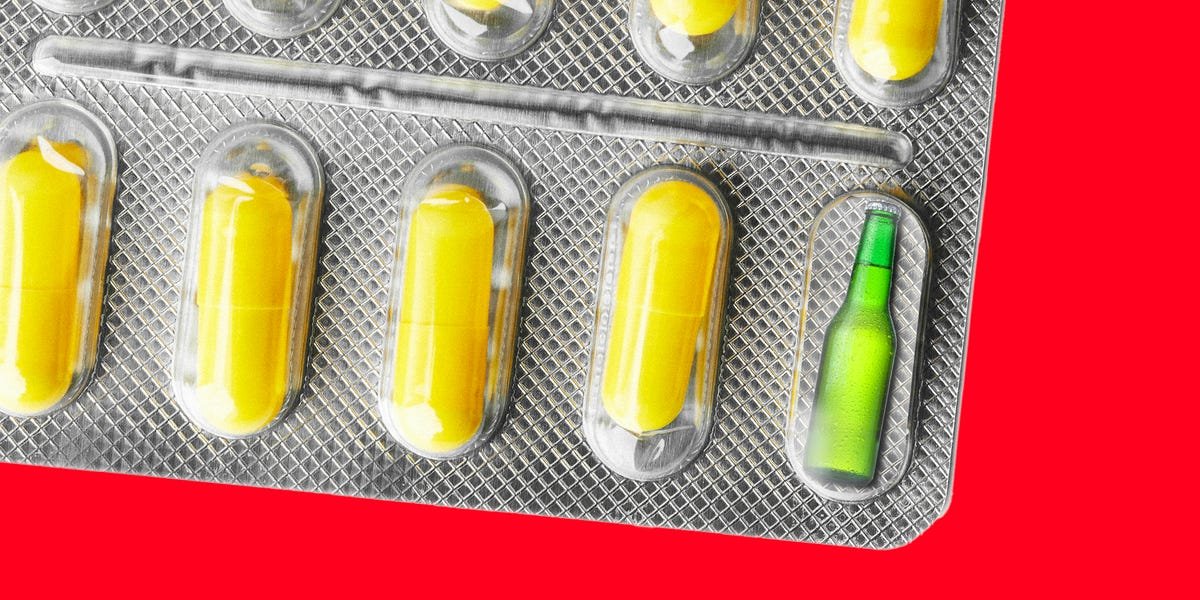
To some extent, Americans are talking about alcohol more than ever. We’re having open conversations about the negative health impacts of drinking. People are consuming less booze overall and examining strategies to moderate, even as each drink packs more punch. There is one aspect of alcohol we’re still not talking about: addiction, and, more precisely, the medical treatments available to combat it. What’s even odder — your doctor may not know much about them, either.
Even as researchers examine the potential for GLP-1s such as Ozempic and Zepbound to reduce alcohol consumption, the most underappreciated story in alcohol use disorder isn’t the promise of new drugs. It’s why the ones we already have are so rarely used. There are three FDA-approved medications to treat AUD in the US: naltrexone, acamprosate, and disulfiram. They’ve existed for decades, are effective for some people in reducing or stopping drinking, and, addiction physicians say, have few drawbacks.
Despite all of this, they are broadly unknown to patients and widely underprescribed. Just 2% of Americans with an alcohol disorder diagnosis receive approved medications for treatment, says Dr. Lorenzo Leggio, a senior investigator at the National Institute on Alcohol Abuse and Alcoholism. By comparison, 85% of people diagnosed with diabetes get approved treatments for it.
These drugs aren’t a panacea — like all medications, some things work for some people and not others. But they’re an important tool in a toolbox to treat a condition that affects millions of Americans and takes thousands of lives each year.
“The challenge here is to really treat addiction the same way we treat diabetes, hypertension, cancer, Parkinson’s, depression, and the list goes on and on,” Leggio says.
At a basic level, the medications used to treat alcohol use disorder do something quite simple: they make drinking less appealing.
The first is naltrexone, which was first developed to treat opioid use disorder. It blocks the warm, buzzy feelings of alcohol — people may still drink, but it doesn’t do much for them. (They’ll still get the impaired effects of alcohol, just not the euphoria.) Some people use naltrexone to undertake what’s called the “Sinclair Method,” where they take the drug an hour before starting drinking so that when the session begins, the pleasurable effects from the alcohol are blunted. The idea is that if the person takes naltrexone every time they drink, the associated reward with alcohol will lessen, reducing cravings over time and thus leading to a significant drop in drinking or even abstinence. Some people may choose to take naltrexone only when they have what could be a potentially heavy drinking event, like a wedding, so they end the night with two drinks instead of 10. Naltrexone is also available through an extended-release one-month injection.
There’s lots of benefits and very few drawbacks.
Another option is acamprosate, which restores brain balance after it’s been thrown off by heavy alcohol use and can help reduce cravings, though it doesn’t reduce alcohol’s effects in the moment. It’s prescribed more commonly in Europe. The final of the trio is disulfiram, which inhibits the body’s ability to break down alcohol — essentially, it makes people sick if they drink. It’s the least commonly prescribed of the three because of high rates of patient noncompliance.
Research shows that naltrexone can help reduce heavy drinking and cravings, and acamprosate can help promote abstinence and prevent a return to drinking.
“I really view medications as being tremendously helpful in turning the volume down on craving, on withdrawal symptoms, on some of the other reasons that people struggle,” says Katie Witkiewitz, a psychologist at the University of New Mexico who specializes in substance use disorders.
Effectiveness can vary among patients and can be modest, as with many medications. The same goes for side effects, which can include headache or nausea (sometimes caused by naltrexone), and lack of appetite or irritability (sometimes caused by acamprosate). Addiction specialists say the medications are generally well-tolerated by most patients.
“There’s lots of benefits and very few drawbacks,” says Sarah Wakeman, the senior medical director for substance use disorder at Mass General Brigham in Boston. “These medications are incredibly safe, and you need very little, if any, lab monitoring.”
The drugs are also hyper affordable — naltrexone, acamprosate, and disulfiram are all generics, and they’re generally covered by insurance. The exception is Vivitrol, the naltrexone injection, which is still under patent.
Given how straightforward these medications are, it’s natural to ask why they aren’t used more often. The answer is complicated, having to do with the stigma around addiction, lack of patient knowledge, and the ways in which our society and the medical establishment treat alcohol.
Alcoholism is a disease of denial — individuals often minimize, rationalize, or lie about their drinking. Even people who drink moderately tend to fudge the numbers when asked about their alcohol habits, either by their doctor or people they know. Our culture writ large is in denial about alcoholism, too. We tend to treat it as a lack of willpower, as a moral failing, and a bad habit people need to knock off. We generally don’t see it as the chronic condition it is.
If doctors don’t want to prescribe it and patients have never heard of it, then a company is not going to develop the next drug for drinking because they’re like, ‘It’s a waste of money.’
Many people may not realize they are engaging in problem drinking, and if they do, they may not go to their doctors about it. Treatment for alcohol use disorder has “largely evolved outside of the mainstream of healthcare,” says Dr. Caleb Alexander, a practicing internist and drug safety expert at the Johns Hopkins Bloomberg School of Public Health. Historically, it’s been siloed into specialty treatment programs — behavioral therapies, rehabilitation centers, or groups such as Alcoholics Anonymous or SMART Recovery. These work for some people, but not everyone. Alexander adds that many of these settings don’t have prescribers, formularies, or medication management that would provide access to AUD drugs. Some groups may also be opposed to medication intervention.
Those who do seek help through the healthcare system often run into discouraging obstacles, and doctors themselves may be ill-equipped to help. Physicians are often poorly trained in addiction medicine in medical school or residency. They may not be versed in the medications available or have a misperception that they need specialization to prescribe them. Doctors are also people, and they may hold the same biases as anyone else about alcohol.
“A lot of doctors don’t even want to have these conversations at all,” says Keith Humphreys, a professor of psychiatry at Stanford University who specializes in addiction and a former senior policy advisor in the Obama administration.
The result: the medications that are at doctors’ fingertips go woefully under-discussed and under-prescribed. People lie to their doctors about their drinking instead of having open, honest talks. Because these drugs are generics and don’t lead to a huge payday for manufacturers, there’s no marketing money behind them, and they have no champions. This creates a self-fulfilling prophecy: Since there is such a small market now, potential innovations for alcohol addiction are stunted.
“If doctors don’t want to prescribe it and patients have never heard of it, then a company is not going to develop the next drug for drinking because they’re like, ‘It’s a waste of money,'” Humphreys says.
There are some online providers to fill the void, such as telehealth company Oar Health and Ria Health, which focus on medication-assisted alcohol treatment. They can be options for people who may be too embarrassed to go to their doctors or whose doctors are resistant to trying medications, but they’re also costlier and may not come with the same level of supervision.
There are some signs that this neglect may not be a permanent state of affairs.
Researchers are studying whether GLP-1s such as semaglutide and tirzepatide might help reduce alcohol consumption. While some early evidence is promising, experts say it’s too early to tell just how effective they might ultimately be. If GLP-1s do prove useful in helping to treat alcohol use disorder, they have some advantages other medications do not: there’s a lot of money and momentum behind them.
“They’re already part of the cultural milieu,” Witkiewitz says. “People are using them, people are wanting them, and that’s not something we typically see with medications.”
GLP-1 makers were initially hesitant to investigate the effectiveness of their drugs on alcohol use because they were concerned it might damage their brands, Humphreys says, in another example of just how pervasive the addiction stigma is. Now, “the companies have decided they’re going to go for it.”
At the moment, GLP-1s are merely a hope in helping people manage problem alcohol use. The reality is that there are options out there, they’re just often ignored. The overarching barrier has more to do with lack of will than lack of way. Ideally, there would be multiple other drugs under development for the treatment of AUD, and more patients and doctors would know about what’s already out there.
The real test is whether we finally treat alcohol addiction like a disease rather than a character flaw.
“All these tools that we have, from 12 steps to AAs to behavior treatment to medications, they’re not mutually exclusive,” Leggio says.
The way we talk about and approach drinking can and should evolve. The FDA recently formally recognized a reduction in drinking as a valid endpoint in alcohol-related clinical trials, meaning the goal of medications under development doesn’t need to be total abstinence — it can also be helping people to slow down. It’s a “paradigm shift,” Witkiewitz says, and may lead to more drugs to help curb drinking and more doctors aware of the health benefits of cutting back.
The real test is whether we finally treat alcohol addiction like a disease rather than a character flaw. We’ve done it with other conditions before. While there’s still a stigma around obesity, that is changing, thanks in part to GLP-1s, as more people accept the idea that weight loss is about more than willpower.
“There’s this idea that medications are a crutch or making it an easy way out,” Wakeman says.
Perhaps a better parallel is depression. For years, it, too, was swept under the rug. People were told to shake it off. Today, it’s widely understood as a treatable condition. There are a variety of medications available, and many patients try different formulations and dosages until they find the right fit. For some people, medication isn’t the answer, and they use other strategies to combat and mitigate it. People aren’t expected to be free of depressive episodes forever, even with treatment, and in many circles, it’s quite commonplace to discuss, whether at the doctor’s office or over lunch.
“Prior to Prozac becoming now a completely banal thing that you can talk about at a dinner party, depression was, ‘You need a kick in the butt, pick yourself up, what’s the matter with you?'” Humphreys says.
Alcohol use disorder could now be reaching a similar inflection point. The science behind treatments has existed for years, but the culture has lagged behind. GLP-1 drugs may help to accelerate a shift in how we think about medication to curb drinking. And if we’re talking so much about the dangers of drinking, shouldn’t we be giving people as much help as possible to slow down and stop?
Emily Stewart is a senior correspondent at Business Insider, writing about business and the economy.
Business Insider’s Discourse stories provide perspectives on the day’s most pressing issues, informed by analysis, reporting, and expertise.
