Close Menu
    What's Hot

    Renaissance, Schonfeld Among Quants That Have Lost Money in 2026

    January 23, 2026

    200+ U.S. Stocks Just Landed on SOL – Is This the Most Bullish News of the Year?

    January 23, 2026

    Job Interview Things Not to Do, Mistakes From Etiquette Expert

    January 23, 2026
    Facebook X (Twitter) Instagram
    Hot Paths
    • Home
    • News
    • Politics
    • Money
    • Personal Finance
    • Business
    • Economy
    • Investing
    • Markets
      • Stocks
      • Futures & Commodities
      • Crypto
      • Forex
    • Technology
    Facebook X (Twitter) Instagram
    Hot Paths
    Home»Markets»Crypto»Vitalik Buterin’s 2026 Self-Sovereign Tech Stack Revealed
    Crypto

    Vitalik Buterin’s 2026 Self-Sovereign Tech Stack Revealed

    Press RoomBy Press RoomJanuary 23, 2026No Comments4 Mins Read
    Facebook Twitter Pinterest LinkedIn Tumblr Email
    Share
    Facebook Twitter LinkedIn Pinterest Email

    Journalist

    Hassan Shittu

    Journalist

    Hassan ShittuVerified

    Part of the Team Since

    Jun 2023

    About Author

    Hassan, a Cryptonews.com journalist with 6+ years of experience in Web3 journalism, brings deep knowledge across Crypto, Web3 Gaming, NFTs, and Play-to-Earn sectors. His work has appeared in…

    Share

    Last updated: 

    January 23, 2026

    Ethereum Founder Vitalik Buterin Ditches Big Tech: His 2026 "Self-Sovereign" Stack Reveals Surprising Changes

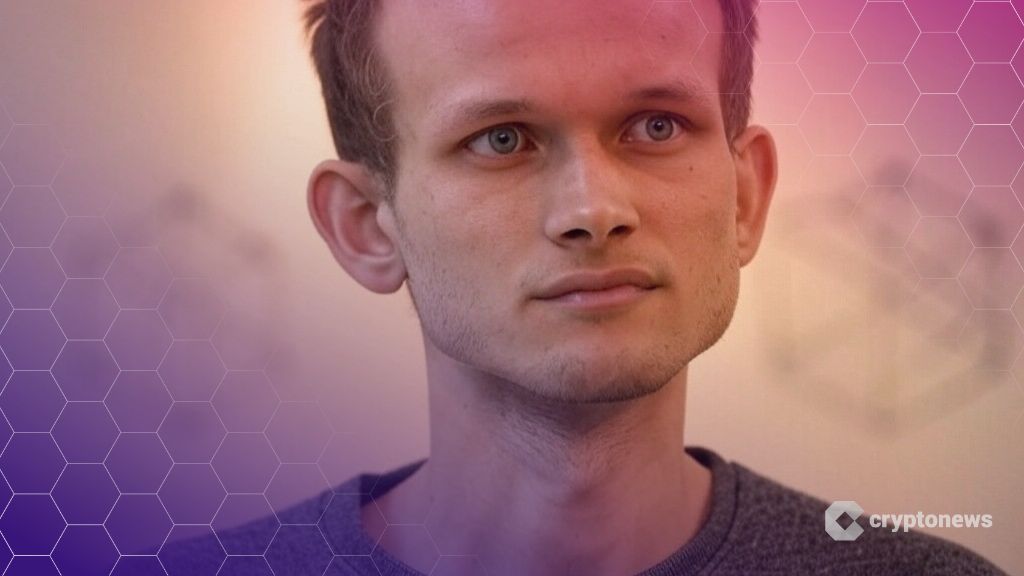
    Ethereum cofounder Vitalik Buterin has outlined a personal shift away from Big Tech platforms, framing 2026 as a pivotal year for what he calls “computing self-sovereignty.”

    This is a concept that extends beyond blockchain and into how individuals use everyday software, communication tools, and artificial intelligence.

    2026 is the year we take back lost ground in computing self-sovereignty.

    But this applies far beyond the blockchain world.

    In 2025, I made two major changes to the software I use:

    * Switched almost fully to https://t.co/caFP0K5fYF (open source encrypted decentralized docs)
    *…

    — vitalik.eth (@VitalikButerin) January 22, 2026

    In a post shared on X, Buterin described a series of changes he has made across his devices to reduce reliance on centralized, data-intensive services.

    Vitalik Buterin Replaces Google, Telegram With Privacy-Focused Alternatives

    He claimed that the process started in 2025 when he transferred nearly completely to the open-source and encrypted and decentralized document platform Fileverse, which is purported to be a privacy-focused alternative to Google Docs.

    At roughly the same period, he reported having changed to Signal as his main messaging application, abandoning Telegram.

    Signal supports end-to-end encryption on all conversations by default and only retains a little metadata, whereas Telegram encrypts messages only in optional so-called secret chats.

    He further stated that it otherwise stores messages and metadata on its servers, a design that has attracted increased attention due to an increase in law enforcement requests in some jurisdictions.

    The changes made in 2026 included more extensive ones, which were due to those initial adjustments.

    Buterin claimed to have substituted Google Maps with OpenStreetMap, with Organic Maps on mobile phones, citing the advantage of local and offline use that restricted the volume of location data sent to third parties.

    He also left Gmail for Proton Mail, citing encrypted messaging as a more powerful tool to use for confidential communication.

    Simultaneously, he claimed to have started giving priority to decentralized social media and still tests the idea of running large language models locally, as opposed to using cloud-based AI services.

    Buterin Sees Local AI as the Future of User Privacy

    The rationale of these decisions is not purity in ideology but practicality, as Buterin wrote.

    According to him, it is not necessary to send big amounts of personal information to centralized services, as there are tools that can be used to minimize this exposure.

    He admitted that local AI systems still have usability and integration issues, especially for translation, transcription, and document search, but noted that there has been a lot of improvement in the last year.

    He explained a more ambitious long-term vision where local models are integrated with cryptographic schemes like zero-knowledge proofs, trusted execution environments, and local data filtering to restrict the information that ever leaves a user’s device.

    Rising AI Demand Puts Self-Sovereign Computing Back on the Map

    The remarks made by Butterin come amidst the wider revival of interest in self-sovereign computing, which is a model that highlights the importance of individualized controls of data, identity, and computing resources.

    The idea integrates identity systems based on decentralization, personal servers, and privacy-by-design software with the aim of minimizing reliance on platforms that are controlled by corporations.

    Privacy activists, including Naomi Brockwell, have long held the position that the most consistent approach to ensuring autonomy is to run software and AI models in place.

    The most private way to use AI is to host it locally, but you’re limited by your own hardware. There are AI platforms that allow you to access more powerful models & also respect your privacy. Planning to update this video soon to include newcomers like https://t.co/ueOskOEx0g. pic.twitter.com/WlB6PUxlpA

    — Naomi Brockwell priv/acc (@naomibrockwell) January 19, 2026

    The time also stands out due to the re-evaluation of the strategic value of computing infrastructure by governments and corporations.

    Analysts believe that 2026 will be the year of a change in the treatment of AI data centers, energy-backed compute and GPU capacity.

    With the demand of large-scale AI continuing to outpace its supply, compute and energy are becoming viewed as a source of geopolitical power.

    In that environment, the appeal of local and decentralized computing models has grown, particularly as concerns mount over surveillance, data residency, and platform dependence.


    Share. Facebook Twitter Pinterest LinkedIn Tumblr Email
    Press Room

    Related Posts

    200+ U.S. Stocks Just Landed on SOL – Is This the Most Bullish News of the Year?

    January 23, 2026

    Power Shifts From Congress to Regulators

    January 23, 2026

    Can Traders Still Win in Meme Coins in 2026?

    January 23, 2026
    Leave A Reply Cancel Reply

    LATEST NEWS

    Renaissance, Schonfeld Among Quants That Have Lost Money in 2026

    January 23, 2026

    200+ U.S. Stocks Just Landed on SOL – Is This the Most Bullish News of the Year?

    January 23, 2026

    Job Interview Things Not to Do, Mistakes From Etiquette Expert

    January 23, 2026

    Power Shifts From Congress to Regulators

    January 23, 2026
    POPULAR
    Business

    The Business of Formula One

    May 27, 2023
    Business

    Weddings and divorce: the scourge of investment returns

    May 27, 2023
    Business

    How F1 found a secret fuel to accelerate media rights growth

    May 27, 2023
    Advertisement
    Load WordPress Sites in as fast as 37ms!

    Archives

    • January 2026
    • December 2025
    • November 2025
    • October 2025
    • September 2025
    • August 2025
    • July 2025
    • June 2025
    • May 2025
    • April 2025
    • March 2025
    • February 2025
    • January 2025
    • December 2024
    • November 2024
    • April 2024
    • March 2024
    • February 2024
    • January 2024
    • December 2023
    • November 2023
    • October 2023
    • September 2023
    • May 2023

    Categories

    • Business
    • Crypto
    • Economy
    • Forex
    • Futures & Commodities
    • Investing
    • Market Data
    • Money
    • News
    • Personal Finance
    • Politics
    • Stocks
    • Technology

    Your source for the serious news. This demo is crafted specifically to exhibit the use of the theme as a news site. Visit our main page for more demos.

    We're social. Connect with us:

    Facebook X (Twitter) Instagram Pinterest YouTube

    Subscribe to Updates

    Get the latest creative news from FooBar about art, design and business.

    Facebook X (Twitter) Instagram Pinterest
    • Home
    • Buy Now
    © 2026 ThemeSphere. Designed by ThemeSphere.

    Type above and press Enter to search. Press Esc to cancel.