
Journalist
Tanzeel Akhtar

Journalist

Share

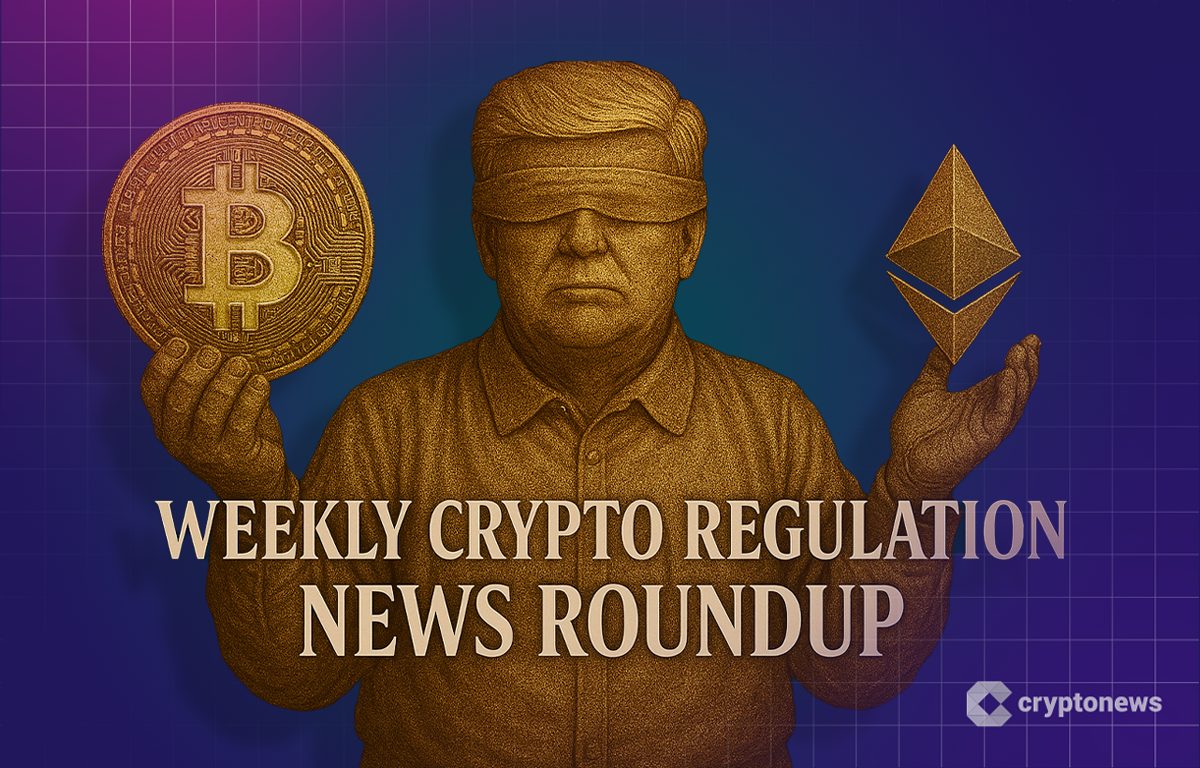
The past week in crypto regulation exposed a deeper truth about the current policy environment: digital asset oversight is no longer just a technical debate about market structure but a proxy battleground for institutional independence, surveillance power and political leverage.
From an extraordinary intervention by the Federal Reserve chair to mounting fractures in Congress over crypto legislation, the regulatory picture remains volatile—and increasingly politicized.
Powell Breaks Silence on DOJ Probe, Warns of Threat to Fed Independence
Federal Reserve Chair Jerome Powell delivered one of the most consequential public statements of his tenure on Sunday, accusing the Trump administration of weaponizing the Justice Department to pressure the central bank into cutting interest rates.
Powell confirmed that the Department of Justice served the Fed with grand jury subpoenas on Friday, tied to his June 2025 congressional testimony concerning a multi-year renovation of the Federal Reserve’s headquarters. While the investigation centers on disclosures related to the project, Powell framed the action in far broader terms.
“The threat of criminal charges is a consequence of the Federal Reserve setting interest rates based on our best assessment of what will serve the public, rather than following the preferences of the President,” he said in a rare televised address.
The implications extend beyond monetary policy. Powell warned that allowing criminal investigations to influence rate decisions risks subordinating economic judgment to political intimidation. For crypto markets—already sensitive to macro volatility—the episode underscores how regulatory stability depends not only on statutes, but on the resilience of institutional norms.
Tennessee Judge Halts State Action Against Kalshi
In a notable check on state-level enforcement, a federal judge in Tennessee temporarily blocked regulators from taking action against prediction market platform Kalshi.
U.S. District Judge Aleta Trauger granted Kalshi a preliminary injunction and temporary restraining order against the Tennessee Sports Wagering Council and the state attorney general. The order pauses enforcement of a cease-and-desist directive while the case proceeds.
Judge Trauger found that Kalshi would suffer “irreparable injury and loss” if state action continued and said the company is likely to succeed on the merits of its claims. Crucially, she added that Kalshi’s rights would likely be violated absent court intervention.
The ruling reinforces a growing judicial skepticism toward state attempts to regulate federally overseen financial products—a dynamic that could have broader implications for derivatives-linked crypto products and on-chain prediction markets.
Senate Delays Market Structure Bill as Bipartisan Fault Lines Emerge
Momentum behind comprehensive crypto legislation slowed again after Senate Agriculture Committee Chairman John Boozman postponed a planned markup of the Digital Asset Market Clarity Act to late January.
The delay follows negotiations with Democratic lead Cory Booker, as lawmakers attempt to finalize unresolved provisions covering regulatory jurisdiction, stablecoin yields, DeFi protections, and token classification. While the bill seeks to split oversight between the SEC and CFTC, political timing is becoming a growing obstacle.
With the 2026 midterm elections approaching, some analysts now warn that final passage could slip into 2027. That risk persists despite vocal support from the Trump administration and newly appointed SEC Chair Paul Atkins, who described this period as “a big week for crypto” and urged Congress to move digital asset markets out of the regulatory gray zone.
New Timeline, Old Tensions
Boozman later confirmed that legislative text would be released by the close of business on January 21, with a committee markup scheduled for January 27 at 3 p.m. The announcement followed parallel action by the Senate Banking Committee, where senators reportedly submitted 137 amendments to the CLARITY Act ahead of their own markup.
“This schedule ensures transparency and allows for thorough review,” Boozman said, thanking Booker for continued bipartisan cooperation.
Yet the volume of amendments highlights how unsettled core policy questions remain—particularly around enforcement authority, surveillance, and the treatment of decentralized systems.
Galaxy Warns of “Patriot Act–Style” Crypto Surveillance
Those concerns came into sharper focus after Galaxy Digital published a research note warning that the Senate Banking Committee’s draft bill could grant the Treasury Department sweeping new powers reminiscent of the USA Patriot Act.
According to Galaxy, the draft goes beyond the House-passed Digital Asset Market Clarity Act, particularly in its approach to illicit finance. At issue is a proposed crypto-specific “special measures” authority that would allow Treasury to designate foreign jurisdictions, financial institutions or even entire categories of digital asset transactions as primary money-laundering concerns.
Such authority, Galaxy argued, risks creating blunt enforcement tools that could chill legitimate activity, fragment liquidity, and push innovation offshore—outcomes regulators have repeatedly said they want to avoid.
Coinbase Withdraws Support, Senate Banking Delays Markup
Industry unease boiled over when Coinbase publicly withdrew support for the Senate Banking Committee’s draft, prompting Chairman Tim Scott to postpone the committee’s planned markup.
CEO Brian Armstrong said the exchange could not back the bill after reviewing the text over 48 hours, despite its goal of clarifying token classifications and assigning spot market oversight to the CFTC.
The reversal exposed a widening gap between lawmakers seeking expansive enforcement authority and industry players demanding predictable, proportionate rules. It also underscored a broader reality: without industry buy-in, even bipartisan legislation risks stalling.
New York Pushes Criminalization of Unlicensed Crypto Activity
At the state level, enforcement rhetoric intensified further. Alvin Bragg, speaking at New York Law School, urged lawmakers to criminalize unlicensed crypto operations, citing what he described as a “$51 billion criminal economy.”
Bragg argued that regulatory gaps allow illicit proceeds from guns, drugs, fraud, and terrorism financing to flow through unlicensed platforms with limited consequence. Closing those gaps, he said, is now a core enforcement priority alongside gun violence and organized retail theft.
While New York has long taken an aggressive stance through its licensing regime, Bragg’s comments signal renewed appetite for criminal penalties—not just civil enforcement—in crypto oversight.
The Bigger Picture
Taken together, this week’s developments illustrate a regulatory environment under strain. Federal independence, state authority, congressional compromise and civil liberties are all colliding in the crypto debate. Markets are no longer reacting solely to policy outcomes but to the political processes behind them.
For digital asset firms and investors, the message is clear: regulatory risk is increasingly intertwined with political risk. Until lawmakers resolve not just who regulates crypto—but how much power regulators should wield—the industry will remain in a state of cautious uncertainty.
