


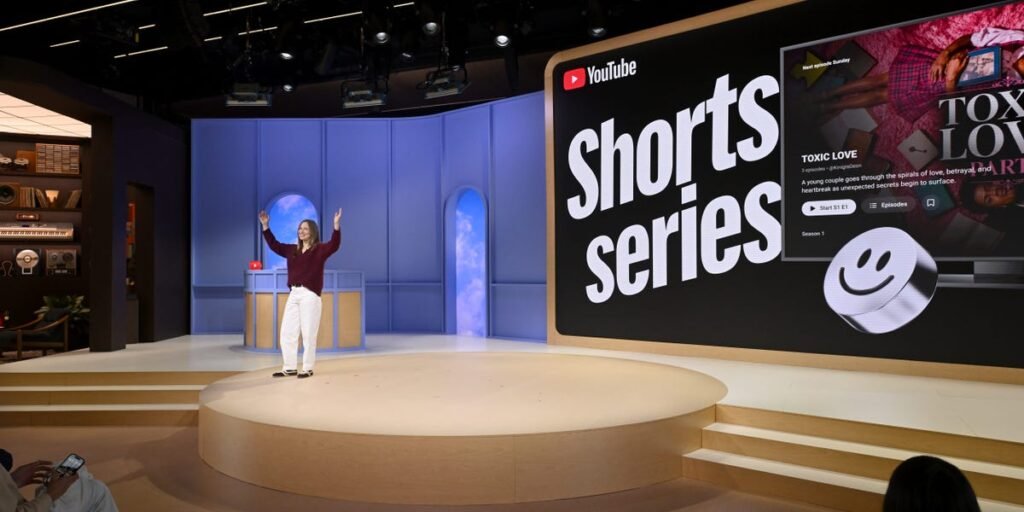
YouTube is getting in on the micro-drama craze, and helping to bring the fast-growing format to TV screens.
On Wednesday, it’s releasing a new feature that allows creators to bundle their short videos in a series of episodes or seasons, designed to be viewed sequentially. The tool is available to any Shorts creator, but is particularly helpful for micro-drama studios that make soap-opera-style shows aired in snippets of 1 to 3 minutes.
“Micro-drama studios, even before this tool, are having great success on YouTube, and hopefully it’s going to make the viewer experience of their content even better,” said Kurt Wilms, senior director of product at YouTube, speaking with reporters at the company’s Made on YouTube event on Wednesday.
Micro-drama platforms typically make money via “freemium” models, where viewers can watch a few episodes for free before being asked to pay up. Wilms said studios can mimic that workflow using YouTube’s existing memberships product.
He said a studio can offer a few episodes of a series for free, and then “put the rest of them behind the membership table.”
YouTube also has in-feed ads that give a share of revenue to creators, offering an alternative way for them to make money.
Serialized short dramas, which often live on dedicated apps like DramaBox or ReelShort, have exploded in popularity in the US over the past few years, captivating and bemusing Hollywood. Despite their zany plot lines around werewolf romances and sordid billionaire affairs, they’ve become a serious business. Global short-drama revenue is expected to reach $7.8 billion this year, with the US accounting for about 40% of that, per a Deloitte analysis. Streaming platforms like Paramount+ are testing out the format, and YouTube rival TikTok is diving into short dramas at full speed.
Experimenting with a basic micro-drama product will give YouTube a chance to learn more about viewers’ appetites and decide if it’s worth investing in additional tools.
YouTube is seeing a big increase in micro-drama viewing
YouTube also shared some eye-opening stats on micro-drama viewership:
Want more Business Insider in your news feed?
Add BI in Google so our reporting is easier to find when you’re searching for what matters.
- In the first half of 2026, the format crossed 6.5 billion views, with watch time growing over 50% year over year
- While micro dramas are a mobile-first format, views on TVs increased by over 90% year over year

Gokko Club via YouTube
“We’re seeing both the mini-drama studios as well as creators saying people are watching Shorts on the TV,” Wilms said. “People are watching episodic Shorts on the TV, and it’s kind of clunky to watch one after the other. And that’s why the Shorts tools were made. This is going to hopefully help that use case.”
YouTube emphasized that its Shorts series feature isn’t just for pure-play micro-drama studios. It identified Kinigra Deon as a creator who was embracing short episodic storytelling, too.
Micro dramas’ growth on YouTube in the living room shows in particular how the lines between the video app and traditional TV have been blurring. YouTube has gobbled up a bigger share of the TV viewing pie, and more ad dollars have followed as advertisers differentiate less between the two.
YouTube’s massive scale can be a shot in the arm for a new format, as it was for podcasts. In 2025, YouTube said that more than 1 billion people listened to podcasts there every month, helping propel the audio format into a watchable one.
Wilms said he expected the micro-drama category to keep growing as people watch more short-form content — of all kinds — across different screens.
“Micro dramas in particular, they’re fast paced, they’re action packed,” he said. “Overall, we see a lot of success of bite-size content that could be personalized to your taste. There’s a little bit of a continuation of short-form content that now applies to episodic content that can engage and retain your viewers.”