


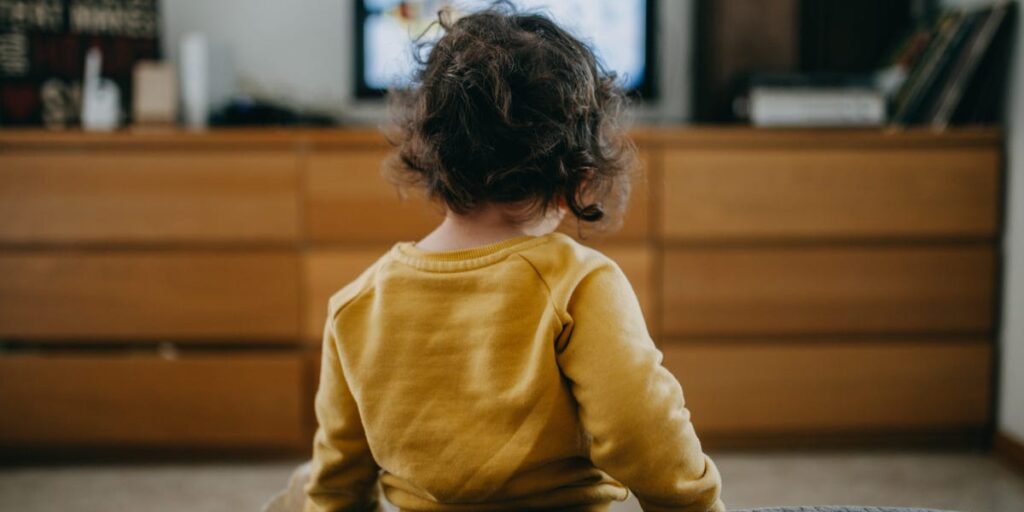
Every time my kids asked to watch TV, I had to prepare myself for battle.
My 2-year-old should not be experiencing decision fatigue, yet I watched her grapple with the impossible choice of which Bubble Guppies episode to watch every single day. And when she would finally pick, it wouldn’t even hold her attention. Three minutes later, she would have followed me into the kitchen, asking for attention from me. Not only were my kids overstimulated, but so was I.

Courtesy of the author
In an effort to protect everyone’s sanity, I told my kids the TV was broken.
I don’t want my kids to get used to instant gratification
On each individual platform, there can be miles worth of scrolling involved to find something to watch. And between each service (YouTube TV, Netflix, Disney+, Hulu, Peacock, Paramount, Prime Video, and HBO), any show or movie you can think of is available.
We live in a world where instant gratification is so consistent and routine that it’s becoming redundant. I don’t want my kids to grow up like this.
We told our kids (ages 5 & 2.5) that our TV broke at the beginning of March. My husband and I geared up for a weekend full of real-life entertainment. I don’t remember exactly what we did that first weekend, but I can guarantee there was an adjustment period for every person in the house.
Because the TV was “broken,” it was easier for the kids to accept it and move on, but they sure were persistent. They were very concerned with the well-being of the TV. How long would it be broken? Should we call someone?
It made my husband and me realize how often we had been turning to it ourselves to “entertain” the kids while we cleaned up, cooked dinner, or just sat on our phones.
It’s been 4 months without a TV
To make the adjustment easier for everyone, we did a handful of things immediately and continue to do them almost daily, even four months later.
My husband and I made an intentional effort to put our phones down in the evenings. If the kids can’t be on a big screen, why should we get to be on a little screen?
Courtesy of the author
We keep the kids stocked with their favorite coloring books and crafts. My kids already love coloring and stickers, so that wasn’t a pastime we had to introduce or convince them to enjoy.
We read to our kids almost every time they ask. There have been multiple occasions when 40 minutes have passed just by reading whatever book they want.
We play with our children, including pretend play. Restaurant, Sonic, or Ninja Turtles, doctor, school. Sometimes we’re a den of foxes. Other times, my husband owns a pizzeria, and chaos ensues when I call in an order for a “cat pizza.” As the weather warmed up, we started playing hide-and-seek tag outside.
I noticed the benefits of not having a TV
Once we regained our footing without the TV, the benefits were almost instantaneous. And this is not a surprise to me. I am well aware of research on the side effects of excessive screen time and the benefits of limited screen time for child development, sleep, and circadian rhythms.
The first change was improved attitudes by all. With no TV, we became more involved as parents, which allowed for more conversation. We communicate better because we communicate more. The kids ask more questions, and we have time to give thoughtful answers.
The way they treat each other also improved almost immediately. There are always going to be creative differences about the best way to build the magnatile tower, who was using the red marker first, or who needs which colored plate at dinner. But the kids get along leaps and bounds better than they even did when the TV worked.
My kids play together. And when they aren’t playing together, they are at least co-existing in peace. They are increasingly aware of each other, as individuals and as siblings. My 5-year-old will genuinely tell you that his 2.5-year-old sister is his best friend. He will think of her when he has a dentist appointment and goes into day care late, and she will share with him without being prompted.
We spend more time actually with our kids now — talking, listening, connecting — so it’s easier for us to notice the little things about each other. Part of it is them growing up, obviously; they are developing their own personalities. Part of it is them having more room to explore, try new things, discover the world, and themselves. Without a constant distraction, my husband and I can notice their individual personalities more.
Not a day goes by that we don’t talk about how much we appreciate each of them for separate reasons.