


This article is an on-site version of our FirstFT newsletter. Subscribers can sign up to our Asia, Europe/Africa or Americas edition to get the newsletter delivered every weekday morning. Explore all of our newsletters here
Today’s agenda: Merz on Germany’s debt brake; BP’s investor day; D1 makes a comeback; UK executive pay; and Russian grandfathers dying in Ukraine
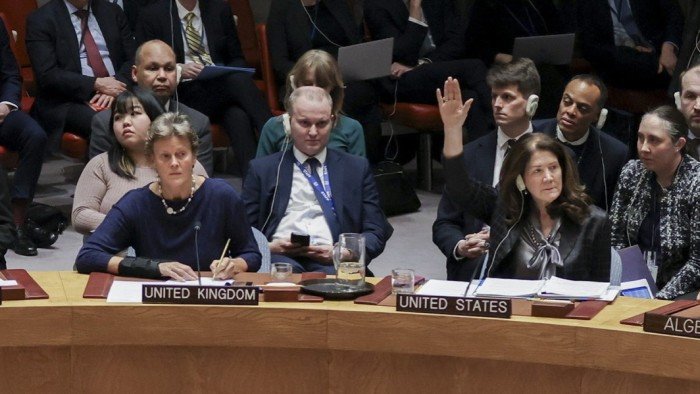
Good morning. We begin in New York where a US resolution calling for a “swift end” to the war in Ukraine passed the UN Security Council with the backing of Moscow and Beijing in a vote that dealt the latest blow to western unity during Donald Trump’s presidency.
What happened: Since 2022, the UN has backed Ukraine’s sovereignty and territorial integrity, while noting Moscow’s aggression. It has also called for Russian forces to immediately withdraw from Ukraine. The US resolution did not include language to this effect, despite efforts by European countries to include it. France and the UK did not veto the measure but they abstained after failing in a last-ditch effort to delay the vote.
Earlier in the day the US in an extraordinary move also voted with Russia against Ukraine and EU nations in the UN General Assembly ahead of the Security Council vote.
What does it mean: The vote highlighted how the transatlantic alliance that has underpinned European security since the end of the second world war has begun to fray as the US president takes a transactional approach to foreign policy. It marks a stark contrast to the administration of Trump’s predecessor, Joe Biden, which led a western effort to freeze Russia out of the global economy in retaliation for its full-scale invasion of Ukraine three years ago. More on last night’s vote at the UN Security Council.
-
European defence: Britain will this week join EU leaders in groundbreaking talks about setting up Europe-wide defence funding arrangements, amid fears of a disappearing US security blanket.
Europe faces an era-defining moment. How should policymakers and business leaders prepare? Hear from the FT’s experts on what lies ahead in this exclusive webinar on February 27. Save your spot here.
Here’s what else we’re keeping tabs on today:
-
Economic data: Germany releases fourth-quarter GDP estimates while the OECD publishes world trade statistics for the same period.
-
Apple shareholder meeting: Investors will vote on a motion attempting to force the iPhone maker to scrap its diversity, equity and inclusion policies.
-
Italy: The 2024 UN Biodiversity Conference resumes sessions for the 16th meeting of the Conference of the Parties to the Convention on Biological Diversity in Rome.
Five more top stories
1. German election winner Friedrich Merz is looking at using the outgoing parliament to lift the country’s strict “debt brake” before newly elected far-right and far-left lawmakers can take their seats. The manoeuvre would allow Merz to reform the borrowing cap to allow more defence spending, which is opposed by the rightwing Alternative for Germany and leftwing Die Linke.
2. Exclusive: BP will abandon its pledge to reduce oil and gas output and announce at least one major divestment at its crucial investor day tomorrow, said people familiar with the plan, as chief executive Murray Auchincloss battles to convince activist Elliott Management that he can turn around the energy major.
3. Exclusive: The $21bn fund manager D1 Capital Partners has made a comeback by riding a handful of giant corporate turnarounds in Europe, as the region’s stock markets have undervalued many of its largest companies. The firm netted a 44 per cent return on its publicly traded portfolio last year and an additional 7.7 per cent in January. More details from the investor letter seen by the Financial Times.
4. Big London-listed companies are planning to boost their top executives’ pay as they try to capitalise on a “change in tone” from investors following London Stock Exchange Group and Smith & Nephew’s success last year in securing shareholders’ agreement for multimillion-pound pay rises for their top executives. Here are the groups proposing to offer their chief executives improved pay deals this year.
5. Only 1 per cent of people out of the workforce for health reasons find a job within six months, even though 20 per cent want one, according to a think-tank report that underlines the challenge the government faces in cutting the UK’s spiralling welfare bill. Findings showed the need to change the financial incentives to help ill and disabled people return to employment.
-
More UK employment: The underlying problems behind the UK’s truck driver shortage have not yet been resolved, writes Sarah O’Connor.
The Big Read


As China’s government struggles to ease a property crisis, state-owned developers have been buying up land. Meanwhile policymakers have unveiled a host of measures to prop up the housing market, including purchases of complete but unsold apartments that can eventually be used as social housing. But this FT visual investigation shows such government initiatives are leaving uncertain consequences for the economy.
We’re also reading and listening to . . .
-
Gulf in fortunes: While the London Stock Exchange suffers an exodus of companies, its parent is enjoying financial success, writes John Gapper.
-
‘Renegotiation’: Ghana’s new president is seeking changes to the $3bn IMF agreement credited with bringing financial stability to the country.
-
Muffled activism: Fearful employees in Silicon Valley have done little to protest against tech titans as they make a rightward shift.
-
The Economics Show🎧: Martin Wolf talks to IMD’s Richard Baldwin about the future of global trade and if technology is making tariffs redundant.
Chart of the day
An increasing number of Russian men in their 50s fighting in Ukraine are getting killed in action, as the make-up of the Kremlin’s forces has shifted towards so-called volunteers, men who are convinced to enlist in the army with the offer of a wage and generous bonus. Read more on Russian grandfathers dying on the front line.
Take a break from the news . . .

Sabbatical leave is a deeply misunderstood corporate benefit. Once largely confined to the sedate halls of academia, it is still a luxury in many places, yet also more prevalent than widely imagined. So how do countries and corporations fare when it comes to the most desirable of workplace perks?
Thank you for reading and remember you can add FirstFT to myFT. You can also elect to receive a FirstFT push notification every morning on the app. Send your recommendations and feedback to firstft@ft.com
Recommended newsletters for you
One Must-Read — Remarkable journalism you won’t want to miss. Sign up here
Newswrap — Our business and economics round-up. Sign up here