


The US Army announced plans to build nuclear microreactors on five military bases as it tests whether nuclear energy can keep critical operations running if the power grid goes down.
The Janus Program’s initial rollout selected five vendors and assigned each to a different installation. The Army sees the technology as a potential way to ensure bases and troops can operate off-grid during a conflict.
Questions remain about the ultimate cost, which vendors will prove viable, and how widely the Army could deploy the reactors.
On Wednesday, Army officials shared details on the program. In partnership with the Defense Innovation Unit, the service is awarding up to $2.2 billion in contracts for the first reactors, which will be commercially operated. The Army said it will provide technical support once the reactors are online.
Army Secretary Dan Driscoll said the contracts are meant to give bases reliable power independent of potentially vulnerable external commercial grids.
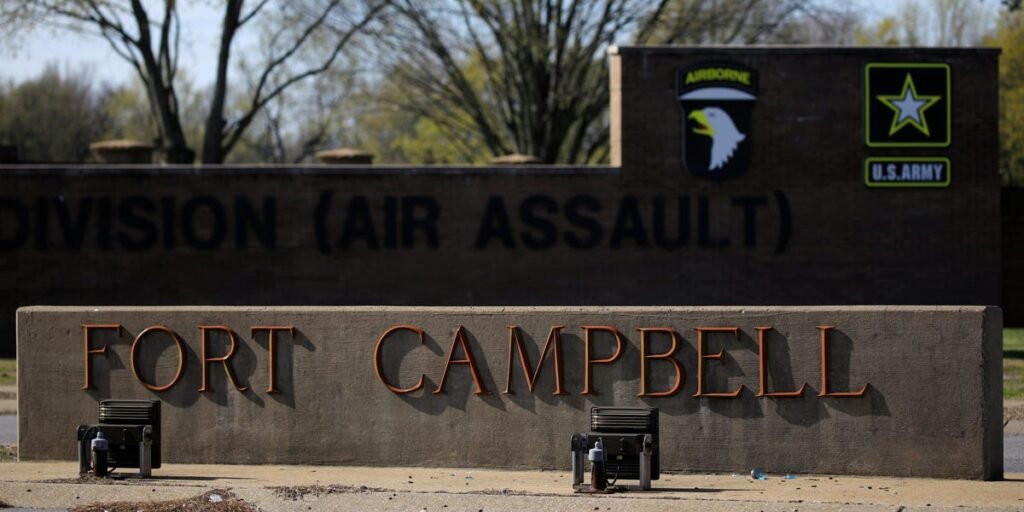
For the Janus program, the Army is pairing Antares Nuclear, Inc. with Fort Bragg in North Carolina, BWXT Advanced Technologies, LLC with Fort Campbell in Kentucky, General Atomics Electromagnetic Systems with Fort Hood in Texas, Radiant Industries, Inc. with Fort Benning in Georgia, and Westinghouse Government Services with Fort Drum in New York.
The Army said future sites could include other strategically important or remote installations.
As the Army rolls out the program, it plans to support the companies through testing and construction. “The schedules that we have agreed to here are what we would consider aggressive but plausible,” Jeff Waksman, deputy assistant secretary of the Army for energy and sustainability, said.
The Army aims to have more than 20 microreactors across Department of Defense installations by 2028.
Want more Business Insider in your news feed?
Add BI in Google so our reporting is easier to find when you’re searching for what matters.

US Army photo by Sgt. Cole Paulson
The five bases were chosen after an analysis of potential risks, including seismic activity, as well as energy requirements and costs. The Army then matched each vendor with a base based partly on its proposed design and construction approach.
“Each of these companies are doing their parallel design” of reactor, Waksman told reporters.
“We have five companies because we want to keep maximal competition,” he said. “We know that this is going to be very difficult, and that there’s a real chance that one or more of these companies will fail, and we want to ensure that, at all times, we have competition, we have more than one vendor, that we don’t get vendor-locked.”
Nuclear microreactors are small nuclear reactors that generate power through nuclear fission on a smaller scale. The commercial technology in this space has been experimental for years, with questions remaining on the feasibility and cost compared to other energy sources.
The Army said the number of reactors and the amount of power they will generate will vary by site and vendor.
Army officials said that the service is still evaluating the cost of expanding the program to more installations, which will depend on vendor performance, testing, manufacturing, and the locations of those bases.
The Janus Program was launched last fall following an executive order by US President Donald Trump that called for accelerating nuclear power development and reactor deployment. Although the selected Army bases will continue to rely on external power grids, the microreactors offer a fallback option to keep communications, weapons, and command-and-control systems operational if they lose power.
Concerns have grown over potential vulnerabilities of US military bases to enemy attacks, including in cyberspace and the electromagnetic spectrum, as well as physical strikes using drones and other weapon systems.
“Unlike in prior conflicts, we now know that our domestic electric grid is potentially at risk,” Waksman said. “In a conflict, we also know that we will not necessarily be able to move fossil fuels easily wherever we need them to go.”
The Army presently relies on fossil-fuel generators to back up its critical infrastructure.
Waksman added that DoD’s Project Pele, an initiative to develop a first-of-its-kind mobile microreactor prototype, has provided the service with insight into what the physical risks to reactors are and how it can mitigate them.