


Author
Ahmed Barakat


Author


Share


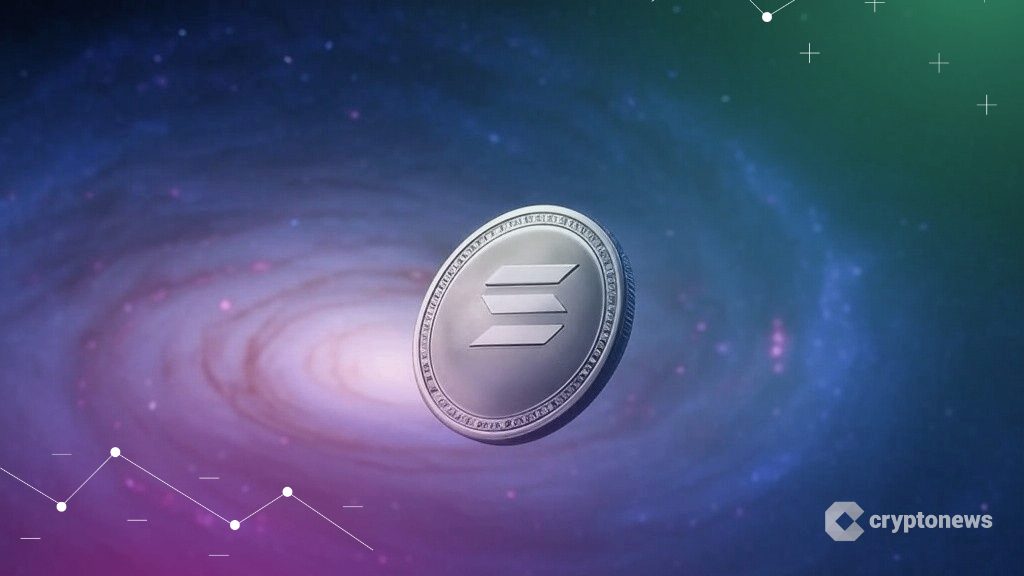
Breaking Solana news: Moody’s Ratings deployed its credit ratings infrastructure on Solana mainnet on June 17, 2026, through a partnership with AlphaLedger, making Solana the first major public, permissionless blockchain to carry live Moody’s credit ratings in machine-readable form.
The integration embeds ratings directly into the token metadata of tokenized bonds and other fixed income securities, meaning the credit signal travels with the asset on-chain rather than sitting behind a proprietary terminal.
For institutional participants building on Solana’s RWA stack, this closes one of the most obvious gaps in tokenized debt markets: access to standardized, independent credit analysis at the protocol level.
The distinction from Moody’s earlier Canton Network rollout matters structurally. Canton is a permissioned, institutional-grade blockchain with a defined set of vetted participants.
Solana is open infrastructure, any wallet, trading venue, or DeFi protocol can now query Moody’s credit data directly from on-chain token metadata without credentialing through a closed network. That shift from permissioned to permissionless delivery is what makes this announcement materially different from what Moody’s has done before.
Discover: The Best Crypto to Diversify Your Portfolio
Solana News: How the Token Integration Engine Actually Works on Solana
Moody’s Token Integration Engine, known as TIE, is designed as network-agnostic infrastructure: ratings are assigned off-chain using Moody’s standard methodology, then pushed on-chain via API through
AlphaLedger’s platform, where they are embedded into the token metadata of the underlying security. When a rating changes, upgrade or downgrade, that update propagates on-chain automatically, so any application consuming the data gets a live credit signal rather than a static snapshot.
The system was first validated in a June 2025 proof-of-concept on Solana’s devnet, where AlphaLedger simulated a municipal bond issuance, Moody’s ran a full credit assessment, and the resulting rating was written into the token’s metadata and made queryable by smart contracts.
The mainnet rollout scales that proof-of-concept to production, with early focus on U.S. municipal bonds and other fixed income instruments.
Manish Dutta, Chief Executive Officer of AlphaLedger, said the integration allows tokenized markets to use the same credit information that investors rely on in traditional fixed-income markets. That framing is precise: the goal is not to create a parallel ratings system but to make the existing one programmatically accessible on a public chain.
Rajeev Bamra, Head of Digital Economy Strategy at Moody’s Ratings, said investors increasingly need access to independent credit analysis in on-chain environments.
The specific problem TIE targets is automated risk management, giving DeFi protocols and digital asset platforms a trusted, machine-readable credit input they can use for collateral decisions, margin policies, and investment eligibility filters without routing through proprietary data feeds.
That use case has been largely theoretical in tokenized bond markets until now.
Discover: The Best Token Presales
Solana’s Institutional RWA Position: What This Integration Confirms
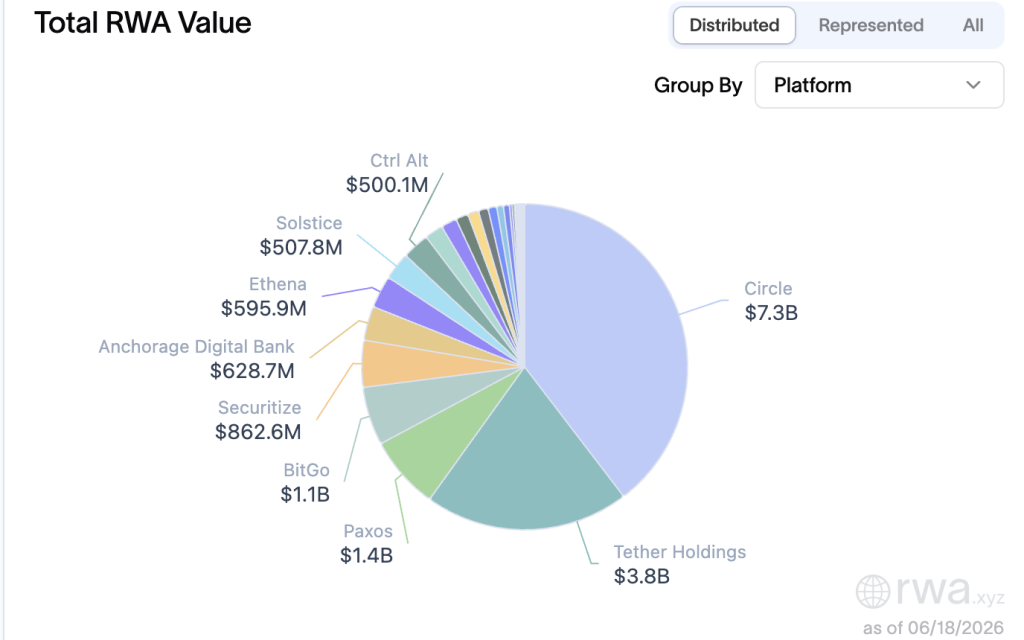
The Moody’s integration arrives as Solana’s institutional real-world assets pipeline has deepened considerably. Western Union launched a U.S. dollar stablecoin on the network targeting lower-cost remittances.
Blockchain developer R3, whose Corda network counts HSBC, Bank of America, the Bank of Italy, and the Monetary Authority of Singapore as participants, partnered with the Solana Foundation to port tokenized assets from Corda onto Solana.
Asset managers including BlackRock, Franklin Templeton, and Apollo have already launched tokenized investment products across the broader RWA space. Boston Consulting Group and Ripple estimate the tokenized asset market could reach $18.9 trillion by 2033.

Nick Ducoff, Head of Institutional Growth at the Solana Foundation, said the Moody’s integration improves transparency and accessibility for tokenized assets on the network.
The more concrete read is that embedding Big Three credit ratings into on-chain securities removes a key objection from fixed income desks evaluating Solana-based products: the absence of standardized, independently verifiable credit data.
Institutional fixed income buyers do not price risk without Moody’s, S&P, or Fitch, having that layer queryable on a public chain is a structural prerequisite for serious adoption, not a cosmetic feature.
Moody’s has indicated TIE will expand beyond municipal bonds to corporate, sovereign, and structured finance instruments as tokenization volumes grow, and will extend to additional blockchains beyond Canton and Solana.
The multi-chain framing is deliberate, Moody’s is positioning TIE as ratings infrastructure for the tokenized debt market broadly, not as a Solana-exclusive product.
Solana’s accelerating institutional deal flow suggests the network is establishing a durable lead in public-chain RWA issuance, but the Moody’s deployment itself is chain-agnostic by design.
Whether that early-mover position compounds or gets competed away depends on how quickly issuers and protocols integrate TIE data into live products, and how fast the rest of the tokenized fixed income stack catches up to meet it.
SOL’s price performance has been tracking broader market conditions more than protocol-level news, which is consistent with where institutional adoption sits right now: real infrastructure progress, not yet reflected in near-term price catalysts.