


Surging jet fuel prices could mean some airlines going out of business, according to the chief financial officer of Ryanair, Europe’s biggest airline.
“I think we will see some of the weaker carriers who were already struggling before the war possibly go to the wall in the winter,” Neil Sorahan told CNBC on Monday.
Since the Iran war began in late February, Brent crude oil has risen over 50% to more than $110 a barrel. Jet fuel prices rose to almost $200 a barrel, but have since pared back to about $163, according to the International Air Transport Association.
Jet fuel is typically an airline’s second-biggest expenditure, after labor.
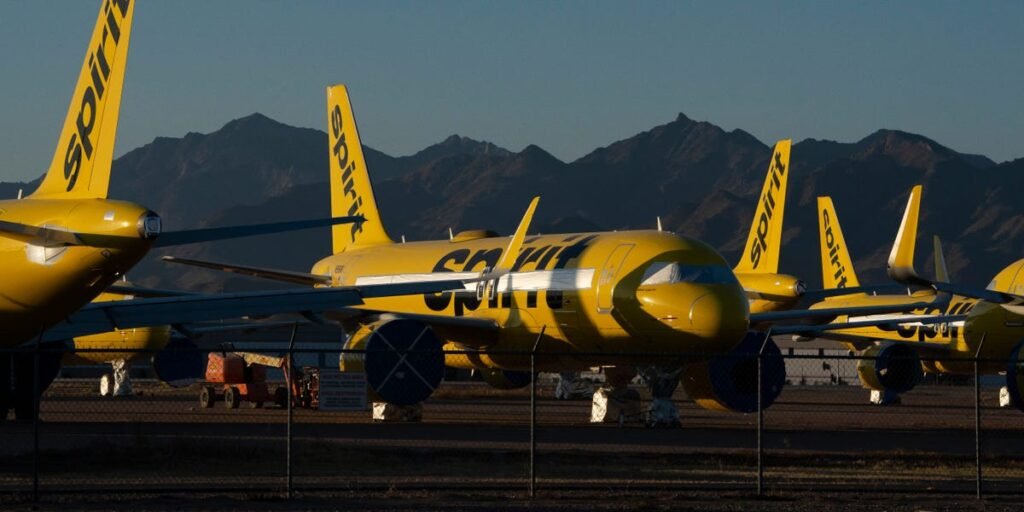
Spirit Airlines has been the biggest casualty of spiking jet fuel prices so far. The budget airline had already filed for bankruptcy restructuring last August, but ceased operations earlier this month, citing rising fuel costs.
However, like many European airlines, Ryanair has hedged against fuel costs using financial derivatives. 80% of its fuel is hedged at $67 per barrel, CEO Michael O’Leary said during a Monday earnings call. “We do not expect to be cutting flights or schedules because of higher oil prices,” he said.
Sorahan told CNBC that Ryanair “probably had some concern around oil supply” a couple of months ago, but the airline is “increasingly confident” there won’t be issues this summer.
The CFO added that Europe is less dependent on oil imports through the Strait of Hormuz, with more oil now coming from the US, Venezuela, and Brazil.
“That said, I think prices will remain higher for longer, which puts Ryanair in a particularly strong position, given our strong fuel hedging.”
As a budget airline, Ryanair is particularly cautious about fuel prices because it wants to keep ticket prices as low as possible, hence its strong hedging practice.
Regardless, the Irish carrier is still preparing for all possibilities.
“Do we have plans for some kind of Armageddon situation? Of course, we do, but I don’t see that coming to pass,” Sorahan told CNBC. “As things stand, we’re operating a full schedule this summer, and plan to operate a full schedule into the winter period.”
On Monday, Ryanair reported that it carried 208 million passengers through the 2026 financial year, consolidating its position as Europe’s busiest carrier. Profits after tax also rose 40% to 2.26 billion euros ($2.6 billion).