


The robotaxi takeover — assuming they take over — will also be a real estate story.
As Waymo, Uber, Tesla, and other competitors race to flood the streets with fully autonomous cars, robotaxi operators will need to find places to park, charge, and maintain their vehicles.
Voltera, a charging infrastructure company based in Palo Alto that has partnered with Alphabet-backed Waymo, is buying up real estate now to prep for the AV boom.
“We need to get shovel-ready assets in the ground,” Brett Hauser, CEO of Voltera, told Business Insider in an interview. “You need to buy property in advance of customers.”
The hard part isn’t finding an empty parcel of land. Robotaxis serve dense, highly populated regions and are all-electric, which means depots need to be close to customers and near a power grid.

Every time Lloyd publishes a story, you’ll get an alert straight to your inbox!
Stay connected to Lloyd and get more of their work as it publishes.
Voltera
Once the depots are running, there’s no guarantee they’ll peacefully co-exist with their neighbors.
San Francisco residents previously reported Waymo’s incessant nighttime honking at a charging depot, which the robotaxi company had to fix. In December, the city of Santa Monica filed a lawsuit demanding Waymo halt nighttime charging operations after residents complained about the noise and light pollution. Voltera, which manages Waymo’s Santa Monica depot, was also included in the suit.
“I fully believe that’s going to have a favorable outcome,” Hauser said of the legal battle.
A spokesperson for Waymo did not respond to a request for comment.
Hauser spoke to Business Insider on how his company is preparing for a rapid influx of robotaxi operations, the challenges behind getting a depot ready for service, and whether the United States’ infrastructure is ready for the robotaxi revolution.
The interview was edited for length and clarity.
Tell the readers a little bit about Voltera
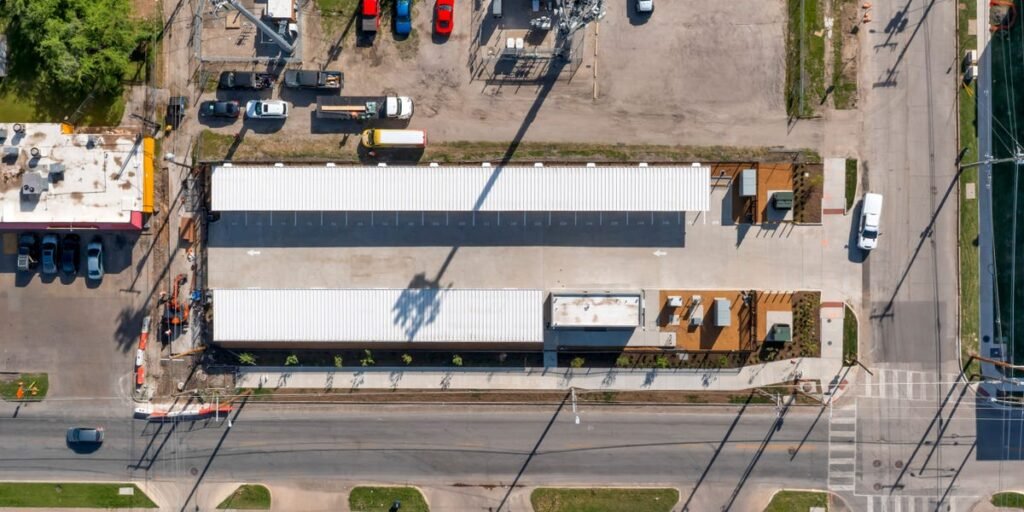
Voltera is a developer and operator of charging depots for electric fleets. We’ve been focusing on the light-duty segment and AVs in particular for the last 12 to 14 months. To date, we have 10 sites operational, mostly geared toward robotaxis — about 400 charging stalls and about 37 megawatts of power. We’ve got about double that in development right now.
Voltera
Our approach is to go in and, first of all, buy the real estate. If you control the real estate, you control the timelines. Owning it — and getting the power in a timeline with certainty — is what our customers and the industry need.
I think that is kind of the trickiest part of this.
You’ve said building charging depots can feel like “hand-to-hand combat.” Why is that?
It’d be great if there were a national framework for identifying a site, ensuring the zoning is correct, ensuring power is available, and then bringing your construction team in behind it. But every city has its own zoning codes, and what’s permissible is going to be different. Every utility has its own process for figuring out where power is available, and what the timeline is to get power, and who pays for it is very different.
It’s not only different city to city, but within a city, it can be very different. In Los Angeles, for example, one side of a street could be Department of Water and Power territory, and the other could be Southern California Edison.
The other piece of this is we don’t have the luxury of always going to where the power is. Data centers can generally look to where power is available and build there. We have to be in and around urban infill areas because you don’t want “deadhead miles,” where vehicles aren’t carrying a passenger and have to go back to base to charge. The depots need to be in and around where the drop-offs and pickups are happening, and that is not easy to find at the right price point.
So it’s really about the orchestration. Any one of those things — finding the real estate, dealing with utility companies — can cause you a problem, so you have to be good at all of it. What works in Los Angeles may not work in Phoenix or Atlanta. The biggest risk is the timeline for getting the power. That’s the biggest risk factor in getting these sites out and running.
If we’re talking about hundreds of thousands of robotaxis in the next five years, is the US ready for that?
I don’t know that we have that capacity today. If companies like Voltera are out there buying properties and entitling them now — and can give a customer a site within 12 months — then it becomes possible. But for a lot of people, perfecting the ability to find sites and bring power takes much longer. Some people can take 36 to 48 months, but depending on power availability and whether substation upgrades are needed, it can take longer.
So I think it’s aspirational. We can knock a big piece of that out, but I don’t know that you can have purpose-built depots at that scale in that timeframe.
Santa Monica has become a high-profile example of community friction with robotaxi and robotaxi depots. Was that something Voltera anticipated? And does it change Voltera’s definition of the right location?
Eric Thayer/Getty Images
I think that’s a very fair question. Let me start by saying that everything was done properly — zoning, permitting, above board, and by the book at this site. A couple of neighbors are frustrated and might remain so, no matter what gets done. I can’t get into their head and discuss that.
Community outreach and engagement are important, and we did do that in this case. I think people are, for the first time, experiencing robotaxis: the joys, the benefits, and sometimes some of the challenges.
With Santa Monica, I think we’ve built a very good site — to code and to spec —and you’ve got partners willing to do the right things on behalf of the city and residents. I fully believe that’s going to have a favorable outcome.