


Paramount Skydance’s plan to buy Warner Bros. Discovery has been put on ice — for now.
David Ellison’s Paramount was just ordered to pause its merger with WBD after a ruling from Araceli Martinez-Olguin, a Joe Biden-appointed judge for the US District Court in California.
The temporary restraining order was granted by Martinez-Olguin on Monday, a week after 12 states sued Paramount to block its acquisition of WBD. The order, which prevents Paramount from closing its deal or integrating operations with WBD, lasts for 14 days and can be extended.
The judge wrote in her ruling that the states had “raised serious questions” about the Paramount-WBD merger. She said the states had also shown they would face “irreparable harm” if the motion wasn’t granted, that the balance of hardships favored them, and that the order would be in the public interest.
Next, the judge will decide whether to issue a preliminary injunction, which is a court order that would further delay the merger.
The hearing on the potential preliminary injunction will be on Monday, August 3. From there, either Paramount or the states could appeal the decision. A preliminary injunction could delay the merger for months.
“We are confident the evidence will demonstrate that the State AGs’ antitrust arguments are without merit as their alleged markets and claims of anticompetitive effects are without any basis in modern market realities,” a Paramount spokesperson said in statement.
President Donald Trump’s Department of Justice has already approved the mega-merger.
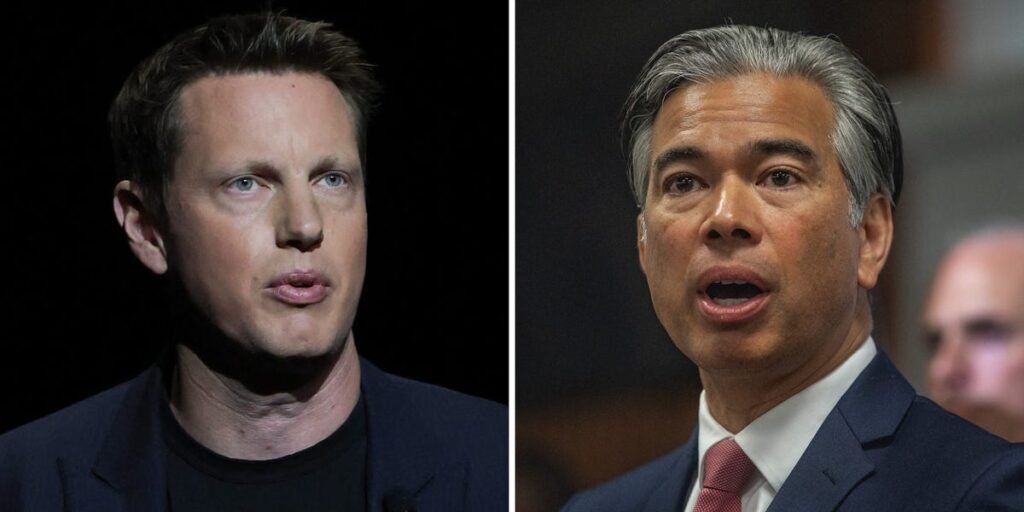
California Attorney General Rob Bonta, who spearheaded the antitrust effort by the states, had called Paramount’s WBD deal an “unlawful merger” that would “lead to higher prices, lower quality, and less content for film and television, harming movie theaters, basic cable distributors, and ultimately, audiences on every sofa and movie theater seat in the US.”
The states argue that a Paramount-WBD combination would have undue influence over three key areas of distribution: wide-release films in theaters, big-budget movies, and cable channels.
James Weingarten, the trial lawyer representing the suing states at the TRO hearing on Friday, said the Paramount-WBD deal had a “structural presumption of unlawfulness” in those three markets. He added that the combined company would have “excessive bargaining leverage” over TV distributors.
Paramount has said the lawsuit “reflects a fundamentally flawed application of the antitrust laws and is wrong on both the facts and the law,” and promised to “vigorously defend the transaction.”
Jeffrey Kessler, the defense lawyer representing Paramount Skydance, said Friday that there were “extremely low barriers to expansion of output” in theatrical film distribution, citing the success of lower-budget hits like YouTuber Curry Barker’s “Obsession.” Kessler also said the states’ market share figures for cable TV were “misleading,” downplaying the sway Paramount-WBD would have over that business.
In the order, the judge said the states presented “compelling evidence” that Paramount-WBD would “possess substantial market share in the wide-release theatrical distribution market.”
Ellison’s company has argued that buying WBD is crucial to competing against tech giants like Netflix. It says this deal would form “a stronger competitor against dominant streaming and technology platforms who have harmed the market for theatrical exhibition and jobs in the entertainment industry.”
Bonta told Business Insider that the streaming market isn’t the focus of his lawsuit and dismissed Paramount’s concerns about tech competition as a “distraction and a deflection.”
If Paramount bought WBD, it would have movie studios Paramount Pictures and Warner Bros. Studios; streaming services HBO Max, Paramount+, and Pluto TV; and TV channels like HBO, CBS, CNN, TBS, and Nickelodeon.