


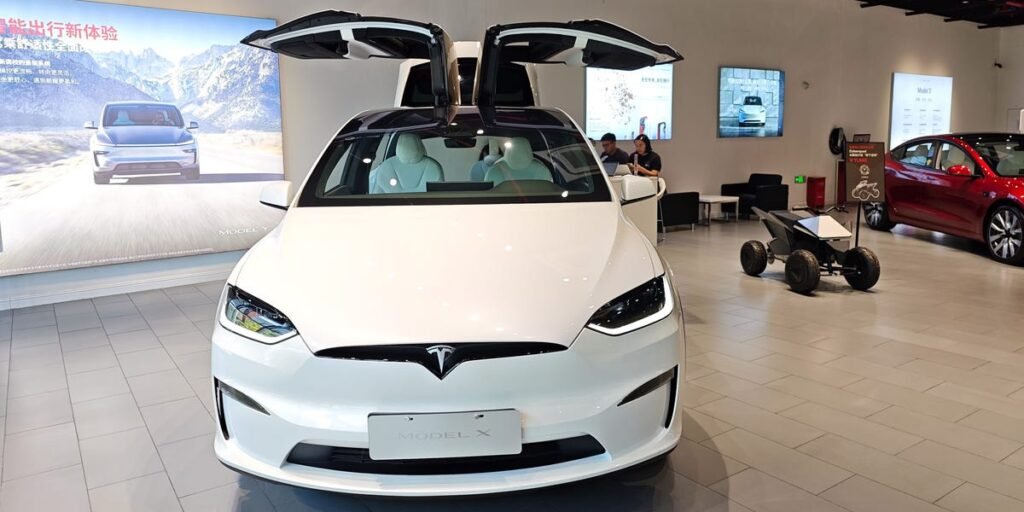
Tesla is taking its Model S and Model X to pasture.
The automaker will end production of the $94,990 sedan and $99,990 SUV next quarter, CEO Elon Musk said on Wednesday’s earnings call.
Based on recent delivery numbers, the decision isn’t particularly surprising.
Tesla does not break out Model S and Model X sales individually; instead, it groups them with the Cybertruck under “other models.” Still, earnings presentations suggest demand for the category has been declining for years.

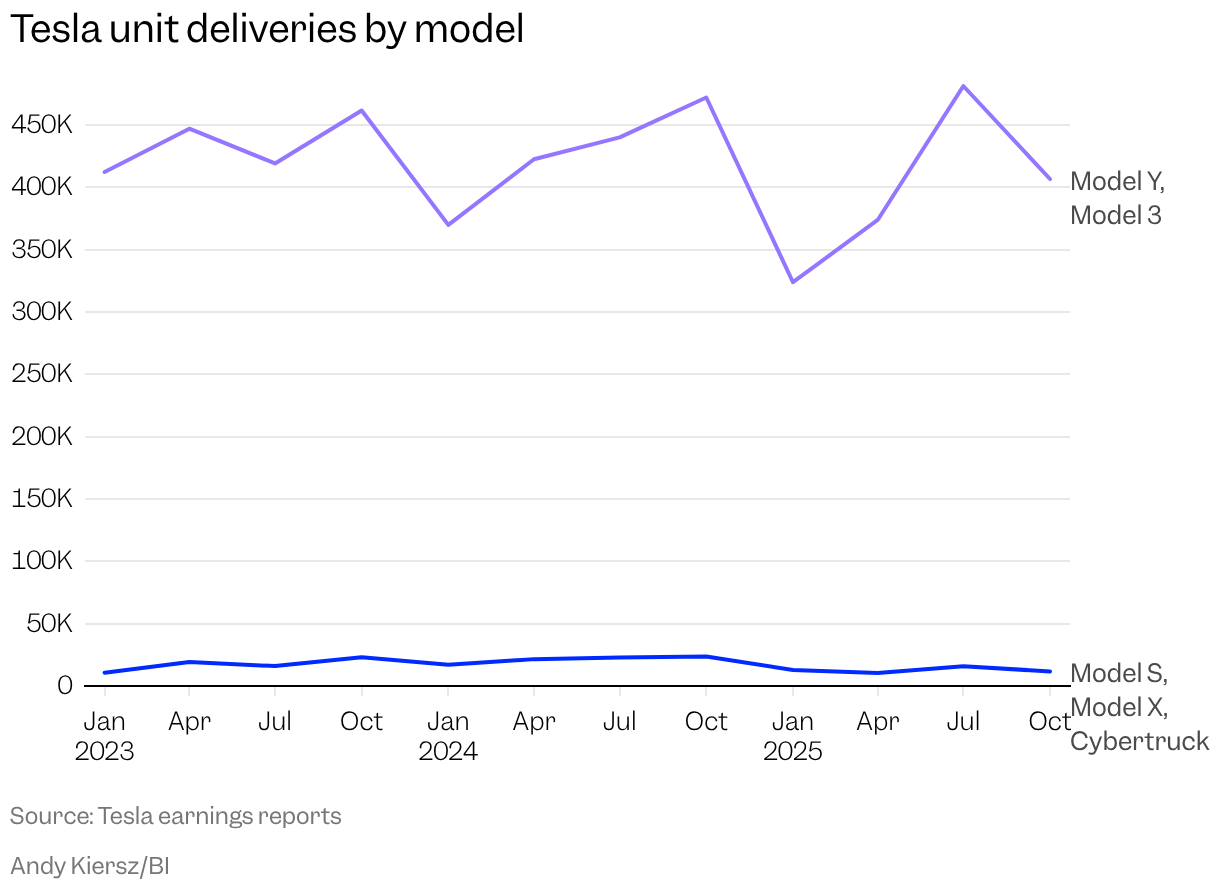
In 2025, Tesla sold 50,850 “other model” units worldwide — accounting for just over 3% of the automaker’s 1,636,129 sales.

Every time Ben publishes a story, you’ll get an alert straight to your inbox!
Stay connected to Ben and get more of their work as it publishes.
By contrast, its two best-selling options — the Model Y and Model 3 — sold 1,585,279 vehicles.
The “other model” figures are also down sharply from prior years. Tesla sold 85,133 vehicles in the category in 2024 — the first full year of Cybertruck deliveries.
That means sales fell about 40% in 2025, far steeper than the roughly 7% declines for the Model 3 and Model Y.
The soon-to-be-discontinued cars will remain an important part of Tesla’s history. The Model S, launched in 2012, was the automaker’s first car built from the ground up. The Model X came three years later, giving the company a foothold in America’s best-selling vehicle category, the SUV.
The Model X has faced reliability issues from the jump. The car’s sweeping gullwing doors were difficult to mass assemble, Musk said, calling the vehicle a “Fabergé egg” during a 2019 earnings call.
And while Tesla refreshed much of its lineup in 2025, the Model S and Model X received comparatively modest design updates — a contrast with the more aggressive changes to the Model 3 and Model Y.
Instead of chasing a revival of the aging car’s sales, Tesla said it is discontinuing the program’s production in favor of its Optimus humanoid robot. Musk projects building one million bots a year.
Sjoerd van der Wal/Getty Images
“It’s time to basically bring the Model S and X programs to an end with an honorable discharge, because we’re really moving into a future that is based on autonomy,” Musk said, adding that the decision was “slightly sad.”
The move underscores how far Tesla has shifted away from its legacy luxury models as growth slows and Musk pushes the company toward robotics and autonomy.
Still, analysts aren’t fully sold on the idea that Tesla’s manufacturing switch-up will lead to immediate profits or sales results.
“The company appears to be on track with the rollout of Robotaxi service in nine US cities, alongside the start of production for the Cybercab and Semi,” Steve Man, the senior auto industry analyst at Bloomberg Intelligence, told Business Insider. “But we believe a commercially ready Optimus robot remains at least a couple of years away.”
Tesla didn’t respond to Business a request for comment from Business Insider.