





MEXC, the global cryptocurrency exchange with more than 40 million registered users across 170-plus countries, has extended its zero-maker and zero-taker fee structure to more than 200 futures pairs, including perpetual contracts on precious metals, energy benchmarks, and synthetic exposure to U.S. equities.
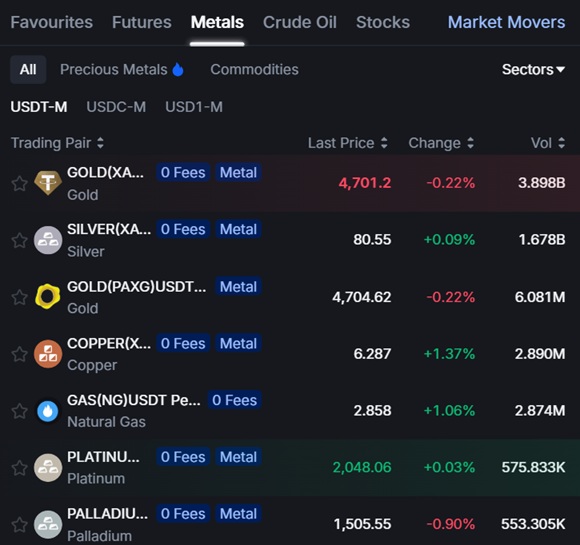
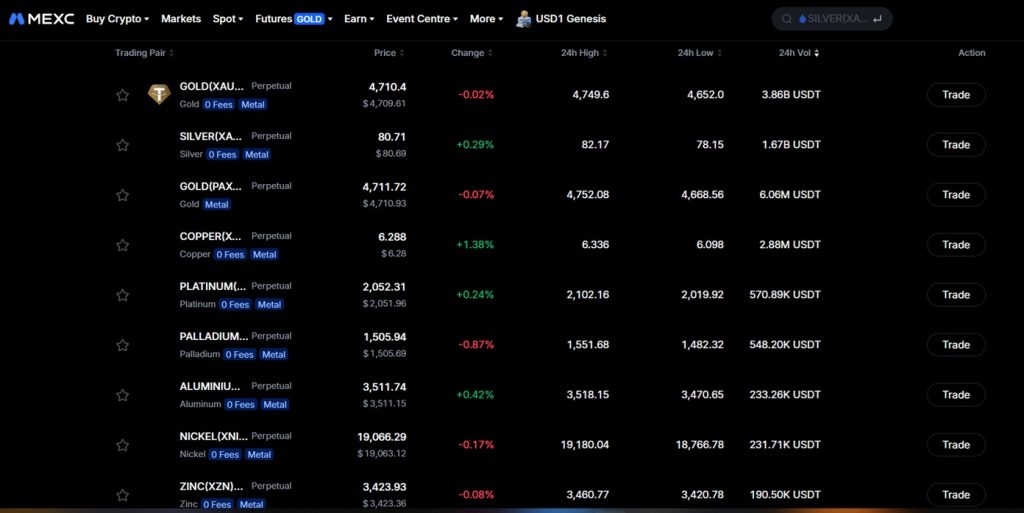
Zero-fee trading started in spot markets and has since expanded considerably. On the metals side, eligible contracts include perpetuals tied to GOLD(XAUT)USDT, GOLD(PAXG)USDT, SILVER(XAG)USDT, COPPER(XCU)USDT, PLATINUM(XPT)USDT, and PALLADIUM(XPD)USDT, with crude oil contracts sitting alongside them.
Gold and silver perpetuals currently carry leverage of up to 1000x – a figure that exceeds anything a conventional retail brokerage would offer on the same underlying assets.
You can browse the full selection on MEXC after signing up, where right now there is a $10 bonus on offer.
Across 2025, MEXC reports its zero-fee initiative has already saved more than 3.4 million traders more than 1.1 billion USDT in commissions. That covers more than 3,000 spot pairs, with the 200-plus futures contracts representing an expansion into territory where fees have been harder to escape.
What sets this apart from standard crypto fee competition is the underlying asset class. Exchanges undercutting each other on Bitcoin or ETH perpetuals is a familiar story. Applying zero commissions to derivatives that track gold spot prices, silver, copper, platinum, palladium, and crude benchmarks is a different proposition entirely.
Traditional access to these markets typically involves brokerage account paperwork, per-contract pricing, and trading confined to exchange hours, but MEXC’s Global Asset Futures product runs 24 hours a day, seven days a week, settles in USDT, and tracks real international market prices.

Synthetic perpetuals are available on individual U.S. names, including Tesla, NVIDIA, AMD, Intel, Micron, and GameStop, alongside index contracts on the S&P 500 and Nasdaq 100. Leverage on stock contracts runs lower than on the metal perpetuals, but still clears what most retail-facing brokers offer by a significant margin. Many of these pairs currently carry zero fees, though the eligible list rotates. Visit the “0 Fees” filter in the futures interface to confirm coverage at the time of trading.
Liquidation fees still apply to all contracts, and MEXC recommends users assess exposure carefully before entering.

Beyond futures, MEXC is not a single-product venue. The exchange was founded in 2018 and supports spot trading across thousands of pairs, margin lending, ETFs, staking, and launchpad access for new token offerings.
For new users to the platform, a $10 bonus is currently available on qualifying deposits and futures trading volume, with additional USDT reward campaigns frequently running on top of the base offer.
The spot side of the zero-fee program deserves mention on its own terms. More than 3,000 pairs fall under the same 0-Fee Fest umbrella, which means the commission savings available to a trader building a position across both spot and futures can compound meaningfully over time at sufficient volume.
The interface segments offerings by “Precious Metals,” “Commodities,” “0 Fees,” and sector, which helps in browsing a contract list that, across all product types, runs into the thousands.
MEXC restricts access in several jurisdictions under applicable local regulations, including the United States, the United Kingdom, Canada, Singapore, and Mainland China.
Metals, energy, and synthetic equity futures are among the currently eligible zero-fee pairs, and the futures interface “0 Fees” tab remains the most reliable way to see what’s covered on any given day, since the list changes on a rolling basis.
For anyone writing a check to a traditional broker each time they trade gold or oil, the model MEXC is running here is, at minimum, worth understanding before the next trade.
Sign up to MEXC to Explore More