


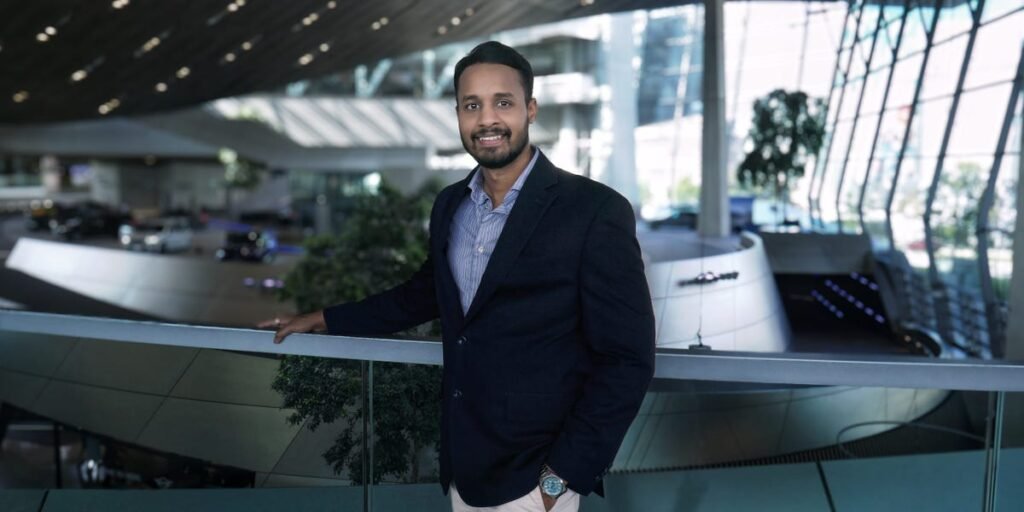
This as-told-to essay is based on a conversation with Ishansh Gupta, 29, who lives in Munich. The following has been edited for length and clarity.
Growing up in India, I knew I wanted to live in the US one day. I had relatives who’d moved there, and the way Bollywood movies portrayed the American dream resonated with me. I was interested in technology, and some of the biggest opportunities were there.
While completing my bachelor’s degree in computer science and engineering in India, I applied for internships around the world to increase my chances of getting accepted by a US university for a master’s degree.
I interned in Poland for two six-week stints in 2017 and 2018. After spending time in Europe, instead of applying to US colleges, I went to university in Germany and now work at BMW. I got a taste of life in America in 2022, when I did an assignment in South Carolina. I left feeling glad that I built my life in Germany and didn’t pay for an expensive US education.
Learning that international students could get free tuition in Germany was game-changing
During a trip to Berlin, I met a group of Indian people in a restaurant, who told me it was possible for international students to get free tuition at public universities in Germany. It was a game-changing moment for me. Even attending a private university in Germany felt more affordable than studying in the US, where I expected to pay around $100,000 for a master’s degree, including tuition and living costs.
While interning in Poland and visiting Germany, I had a really positive experience with European people and culture, and I was excited to explore different European countries. I was also impressed by Germany’s manufacturing and engineering strengths, and the level of technical knowledge people had.
In 2019, I started a master’s degree in data engineering at a private institution in Germany. A partial scholarship meant tuition cost me 8,000 euros ($9,000) instead of 20,000 euros. I learned very basic German in India, but it was a very international, English-speaking university, so I didn’t really struggle with a language barrier.
In my last semester, I completed a six-month internship at BMW, and was accepted onto a three-year PhD program there. In 2023, I got a full-time job as a digitalization specialist at BMW, and in 2026, I moved into a HR role leading AI initiatives for senior executives.
I’m still learning German, partly because I’m big on networking and want to understand inside jokes when connecting with people. I do have some meetings in German, and I’m able to understand a lot of the context, but if I don’t understand something, people are always happy to explain in English.

Courtesy of Aditya Sharma
I worked for BMW in the US for a few months, and noticed some differences with Germany
In my experience and that of friends in Germany, there is a strong culture of work-life balance in Germany.
When I worked on-site at BMW in South Carolina for three months in December 2022, I got the impression from friends and contacts at different companies that a person’s brand, ambition, and network seemed to matter a lot more in the US than in Germany.
The corporate culture in the US encourages people to talk about their work, build visibility, and take big career bets early on, like changing companies more frequently or joining a startup. In Germany, it’s common for people to stay with the same company for a long period, I think due to factors like labor protections and indefinite contracts. I don’t think people are less ambitious in Germany, they just talk about it less.
Want more Business Insider in your news feed?
Add BI in Google so our reporting is easier to find when you’re searching for what matters.
I’m open to future opportunities in the US, perhaps with an expat contract at BMW, but I’m happy to stay in Germany too.
I’m glad that I experienced the US without risking paying for an expensive education
Earlier in my life, taking a large loan or asking my parents to finance an expensive US education when I didn’t have an established career, professional network, or financial security would have been very risky. Today, the situation is very different. I have more professional experience and personal savings. If I took an opportunity in the US and things didn’t work out as planned, I think I’d have a realistic path back into the European job market.
Germany and Europe gave me opportunities that I could hardly have predicted when I first arrived. I’ve worked at BMW, pursued an industrial PhD program, and built my career while still having time for other interests like fitness and travel. I don’t feel at a disadvantage compared to people in America when it comes to the quality of my education or experiences.
I always imagined I might live and work in the US one day, and I’m glad that I could experience that without taking on the financial risk of an expensive US education. I wouldn’t do things differently.
Do you have a story to share about deciding on the right place to grow your career? Contact this reporter at ccheong@businessinsider.com