


Ashton McGrady was horrified to discover that TikTok had slapped an “AI-generated” label on a post she’d made for Disability Pride Month.
The creator had spent hours making a collage of images, stickers, and advice.
“It was really jarring to me, because that’s not something that I personally align with, and neither does my audience,” McGrady told Business Insider. “The whole point of being a creator is to create myself.” The post later had its AI note removed without explanation.
McGrady’s upload was one of the billions that TikTok says it has flagged using a mix of human labeling and automated tools. McGrady said she had a similar experience with a different post on Meta-owned Instagram, too.

Screenshot/Instagram/BI
Platforms like TikTok and Instagram say AI labeling offers more transparency to viewers, but the inexact processes have led to misclassifications, seven creators say. Some platforms acknowledge they’re not always accurate at spotting AI, using phrases like Meta’s “likely created or modified with AI” to hedge. For creators, even the suggestion that they’ve published AI content can feel damaging to their reputations.
Gregory Littley, who frequently posts photography to his Instagram, said several of his posts — which include scans of physical Polaroids — say that the “content in this post may have been modified with AI.”
“I cringe when I see that label,” Littley said. “I cringe even more when I know it’s not true.”
These labels could have real consequences for creators in a time of intense AI backlash. It’s particularly relevant in the $12 billion US influencer marketing industry, where authenticity and human connection are paramount. An AI hiccup can turn an audience against an influencer. YouTuber Hank Green, for example, recently apologized after coming under fire for using ChatGPT to help research a script.
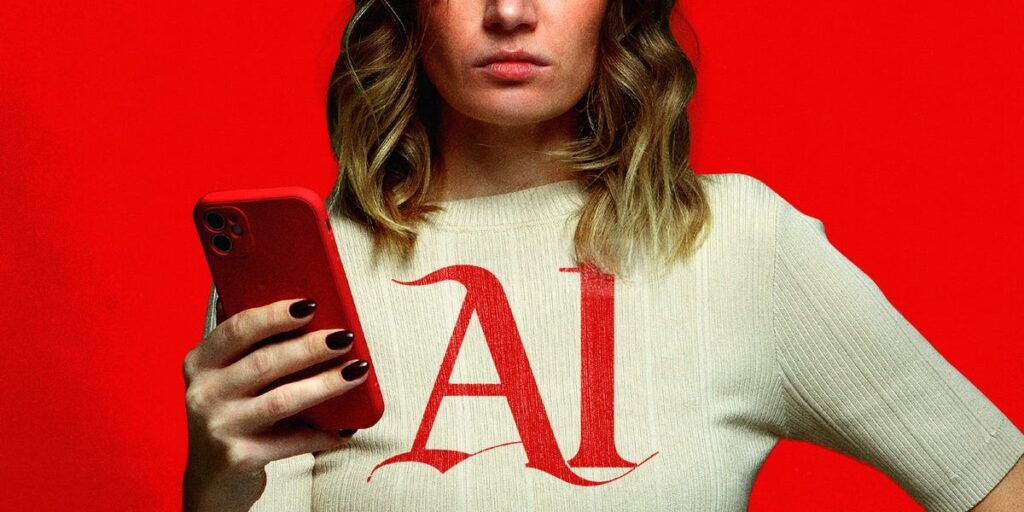
“It’s literally the Scarlet Letter,” creator Lissette Calveiro said about AI labels and accusations of producing AI-assisted work. Some brands have begun adding stipulations in campaign briefs that creators can’t use generative AI.
In recent weeks, AI has been thrust into the center of the creator conversation. Substack’s CEO took a shot at AI-generated LinkedIn posts while debuting a new AI detection partnership. Days later, LinkedIn announced a button to flag suspected “AI slop.” YouTube has been pulling down channels that host “low-quality” AI content, and Snapchat has made videos wholly generated by AI ineligible for recommendation in its short-form video feed, Spotlight.
Both openly using AI and promoting AI companies are increasingly seen as risky in creator economy circles. The concern is warranted. Influencers who attended a recent luxury retreat hosted by OpenAI faced immediate online backlash.
Screenshot/Instagram/BI
“There’s a PR issue with AI as it relates to taking people’s jobs and environmental concerns around data centers,” said Eric Bogard, CEO of the talent firm UnderCurrent Management. “Creators are hesitant to promote AI companies as a result.”
At the same time, there’s no real path of purity as an influencer traversing content creation in 2026. Nearly every platform automatically uses or pushes AI tools, from Adobe Photoshop to TikTok’s CapCut. In many ways, AI tools have helped creators balance the workload of managing their social media accounts and brand deals, as well as brainstorming.
Companies like OpenAI want creators to be more open about their use of AI.
Charles Porch, who OpenAI poached from Meta this year to lead creative partnerships, recently told Business Insider that part of his job is getting creators to “come out of the closet” about using AI.
“Whether creators choose to share how they use AI publicly is entirely up to them,” an OpenAI spokesperson said.
AI’s ‘PR issue’
AI is infiltrating many aspects of modern life — and content creation is no exception.
A May survey of 16,000 creators conducted by Adobe, in partnership with The Harris Poll, found that 75% of creators who had used or tried creative AI described it as “integrated or essential to how they work.”
Not all creators want to admit that publicly, though, lest they wear the AI “Scarlet Letter” on their chest.
YouTube creator Billy Yue, who goes by 8illy, isn’t shying away from AI. He even made a promotional video for Anthropic’s Claude in November. Still, the creator, who regularly features hand-drawn animation in his videos, added a disclosure at the end of his most recent YouTube upload that “no AI was used” in the production. He wanted fans to know that he’d drawn 1,800 illustrations for the project.
Broader public opinion is shifting, and creators feel it.
The influencer marketing agency Billion Dollar Boy found that the share of consumers who viewed generative AI as a “negative disruptor” increased from 18% in 2023 to 32% in 2025. Those who saw it as a “positive disruptor” declined from 34% to 31%. The firm surveyed 4,000 consumers ages 16 or older in the UK and the US.
“Part of this backlash is every platform is filled with slop,” said Max Spero, CEO of AI detection startup Pangram. “It feels like the algorithms are shoving it in your face. It feels like it’s harder and harder to find things made with craft by real people.” Pangram recently partnered with Substack on an integration that detects whether — and how much — AI was used in writing newsletters and comments.
Concerns about “AI slop” have become a focus on platforms like TikTok, Instagram, and YouTube, which all have automated AI detection tools that help identify content that is either entirely AI-generated or substantially edited with AI.
Lawmakers have also gotten in the mix. The European Union and New York state recently developed laws requiring brands to inform viewers when AI-generated characters appear in ads.
AI labels aren’t foolproof
As platforms have rushed to ramp up their AI labeling, creators like McGrady say they have become the victims of false positives.
Lindsey Lee Lugrin, a content creator and model, recently posted some paintings she had made by hand. However, her Instagram posts included a label that said they were “likely created or modified with AI.”
In some instances, using popular editing tools like Canva or Adobe’s Lightroom resulted in content on Instagram, Threads, and TikTok being flagged as potentially AI-generated.
Screenshot/Instagram/BI
While third-party platforms like Pangram can assist with AI identification, none are completely accurate. (Substack added options in its AI detection feature for creators to dispute a Pangram assessment, explain how and why they used AI, and even disable the tool altogether.)
Slip-ups can be a risk for both creators and brands.
McGrady said that if a post made in partnership with a brand was flagged as AI, it could “harm your relationship with the brand.”
Advertisers are well aware of the public backlash an AI-heavy ad can bring.
Brands are taking proactive action to prevent this. Five creators and talent managers said there had been an increase in clauses in partnership briefs and contracts that explicitly state that creators cannot use AI in parts of the content process — particularly in scriptwriting, captions, and visual edits.
“If you’re a brand, you obviously don’t want to see an influencer you hire have a 100% negative comment section,” said Jack Appleby, a relatively AI-positive creator and social media strategist. “If you’re not an AI brand, you probably avoid AI right now, just because there’s no reason to risk it.”
There is no escaping the AI era
Despite the blowback, AI pervades many aspects of content creation.
Photo and video editing apps use it, whether loudly or under the hood. If you use Instagram’s fancy font tools when making a Story post, it will trigger a tag that says the text has been “restyled with AI.”
“It’s really difficult to have a fully AI-free experience right now, no matter what line of work you’re in,” Calveiro said. “I think a lot more people are using it than they want to admit.”
There are real benefits to some tools, too.
“I very frequently tell my audience that there are ethical and moral reasons to use AI. When I do, it’s from an accessibility perspective,” McGrady said. “But I am a person who proudly says that I do not use generative AI.”
The backlash against creators’ use of AI may ease in the coming months as AI-powered creative tools become ubiquitous. Labeling efforts could shift toward flagging only fully AI-generated posts.
More transparency about how AI is used could reduce headaches for creators and platforms alike, making room for them to explore how the tech can expand their creativity.
“I’m very honest about how I use AI,” Appleby said. “I don’t really run from it. If a piece of content entertains or educates or provides value to somebody, for the most part, they shouldn’t really care.”