


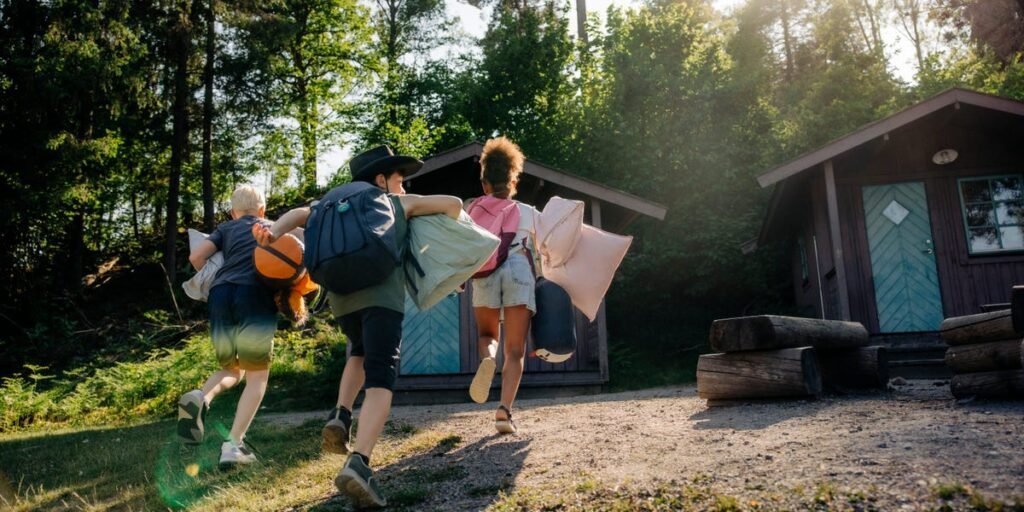
My kindergartner is currently signed up for a summer camp without a location, a backup one without a starting date, and three waitlist lotteries. One organizer described our odds as “a fat chance.”
And it’s only March. Summer is still several months away.
Across the country, parents like me are in our annual scramble to piece together summer plans that balance affordability, availability, and, if we’re lucky, advancement.
Scheduling out 10 weeks for my children in the summer is difficult
My wife and I are raising two young kids in Philadelphia, relying largely on city-supported programs. These are reasonably well-run and relatively accessible.
Parents across the country face a familiar puzzle: navigating a fractured landscape of camps, lotteries, and deposits to keep kids safe and enriched. Programs with excess availability often lack resources. Programs in high demand often lack space.
For one week this summer, our preferred low-cost neighborhood arts camp had a lottery whose deadline had not yet closed. A similar program farther away required payment sooner. Not wanting to miss out, we applied for both. We got into the farther-away camp first, which required an immediate nonrefundable deposit — about $300. A few days later, we learned we’d gotten into our preferred neighborhood camp after all. The result: we simply lost the money.
That’s one week out of the roughly 10 weeks of summer we have to cover between the end of school and the start of the next year. As kids age, pressure mounts to stuff the summer with extra-curriculars, though there’s value in giving them unstructured independence. But young kids need to be minded while mom and dad are working.
This annual scramble has a structural cause
American schools typically close 10 to 12 weeks each summer, a calendar that dates to agricultural schedules and single-income households. But today, more American couples are dual earners, meaning both are working during the summer.
Few summer programs cover the full break. Parents must build their own patchwork system to bridge that gap.
The costs add up quickly. The average camp costs $80 per day, and twice that for overnight camps, according to the American Camp Association, though prices range widely.
Multiply $400 or more a week by several weeks per child, and the numbers climb fast. Even relying on city-run programs, we’ll spend several thousand dollars programming our kindergartner this summer, and that’s on top of our youngest, who is still in daycare.
The scramble hurts both kids, their parents, and the wider economy. Last fall, the Bipartisan Policy Center estimated a looming $329 billion loss over the next 10 years due to workforce shortages, driven by a childcare gap that deepens when schools close.
In other wealthy countries, the problem is often less acute. Many have shorter summer breaks or integrate childcare more directly with school systems. In the US, the burden falls largely on parents.
So every year, at the beginning of the year, families start playing a strange logistical game: mapping out calendars, tracking lottery deadlines, comparing deposits, and trying to avoid the weeks that might otherwise collapse into childcare chaos.
In our house, that process is still underway
After missing out on multiple lotteries for the most in-demand, nearby programs, I paid a registration fee for a different day camp while we wait to find out where that camp will be physically located. Another week is covered by a family vacation, and we’ve decided to shift a long weekend with friends into weekdays — my wife and I will be using scarce time off from work.
And we’re lucky. The city programs are relatively affordable, neighbors exchange tips, and we can cover the other costs. The real toll is logistical stress — the spreadsheets, the lottery calendars, the backup plans — and the occasional marital bickering that comes with them.
My wife and I recently exchanged icy updates as we evaluated our five-year-old’s summertime calendar as if we were planning an already-delayed product launch. Some costs of the summertime schedule scramble are clearer than others.