


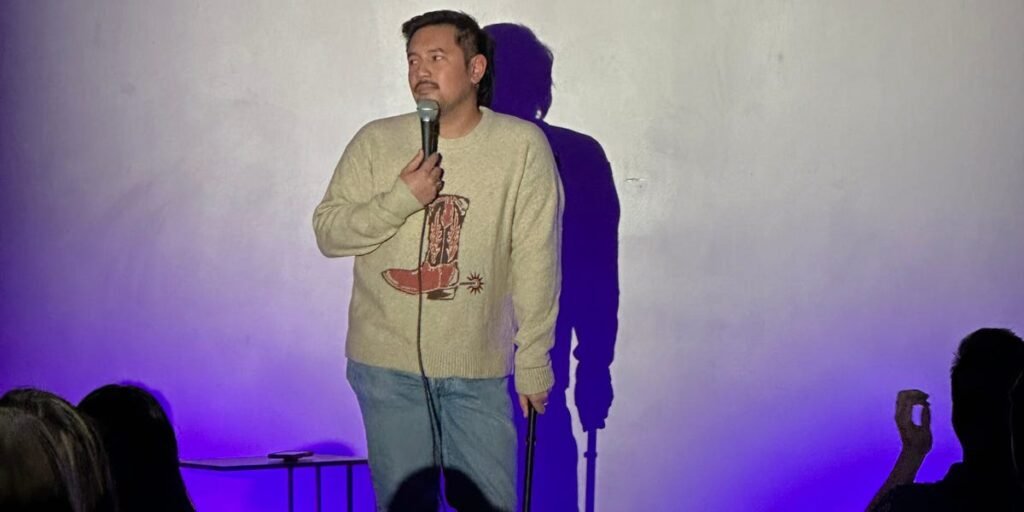
This as-told-to essay is based on a conversation with Ricci Armani, a 33-year-old comedian based in Seattle. It’s been edited for length and clarity.
In late 2022, I remember randomly telling my boyfriend, “There might be a time when I make less money because I’m going to choose comedy over corporate.” The next day, I got laid off from my job at Amazon, and I had to be like, “Well, that time might be sooner than we even talked about.”
It was terrifying, but it felt like a huge sign that I was meant to take this path to become a comedian.
I had to take on a part-time retail job to pay the bills, and there are still moments where self-doubt creeps in, but if I ever have to go back to corporate America, or if I don’t achieve my dream of being a nationally selling stand-up comic, I can look back and know I gave it my all.
This journey has been worth the risk.

Every time Tess publishes a story, you’ll get an alert straight to your inbox!
Stay connected to Tess and get more of their work as it publishes.
I used my severance package to launch my next career
I first got hired as a contractor at Amazon in 2020 and was then brought on for a full-time role. I later started going to open mics as just a fun thing I loved doing, and gained some popularity in the Seattle area, but it was just a side hustle.
Amazon gave me the opportunity to search for another internal role, but I took the layoff package. I decided I was going to throw myself fully into comedy, using my severance package to propel my career.
I was absolutely terrified, and I didn’t know if it was a smart move, especially since everyone had been talking about how bad the job market was. I had been working in a nearly full-time capacity since I was 16, and here I was at 30, not knowing what was next for me.
It was scary, but it also felt like a burden lifted off my shoulders when I realized I didn’t need to return to the corporate rat race. I felt very empowered that I was using this moment to choose my own path.
I felt foolish for pursuing comedy, but my delusion propelled me
At the time of the layoff, I think I had 2,000 followers on Instagram and none on TikTok. For stand-up comics these days, followers are the path to making money, so if I’m being honest, I felt a bit foolish for thinking, “I’m a full-time comic now.”
However, I felt like if I kept at it and worked hard, something good would come of it. I believed in this path so much, and I was ready to risk everything to make it happen.
I created a posting regimen for social media content, started performing locally as much as possible, and spoke with established comedians to learn from their advice. I’m very lucky that I have some amazing mentors in the comedy world who taught me that it’s going to be hard, but encouraged me that I get to be my own boss and experiment.
My live show didn’t do well at first, but over time, it got better
I quickly found out that performing locally wasn’t going to pay the bills, so I got a retail job to supplement my income. My advice would be for other people to get a part-time job that doesn’t require them to take work home.
About six months after I was laid off, I created my live show, “My Straight Friends,” where a straight comedian does standup and then I quiz them on gay culture.
I did a test run at a local venue, and it was so bad. I barely sold any tickets, but there was something about it that just felt right. I kept running with it, and it’s what has propelled me to tour across several states.
Reality has created moments of doubt, but I know I’m on the right path
I don’t think I truly started experiencing self-doubt until last year, when I realized there’s some scarcity to this career path. I’m at a level where it feels so much harder to break through to the next. My income can be inconsistent, and there have been times when I’ve lost money putting on a show.
I’m at a point where I’ve been going back to my roots and seeking mentorship from people who are at the place I want to be. It’s so easy to be delusional in the beginning, but there are moments of creeping doubt.
I’m still working on my stand-up show and working my hardest to get into some new national and international comedy festivals this year.
If you’re going through a layoff, get a mentor and trust the process
Talk to people and seek mentorship from those who are doing what you want to do. One of the most valuable things I did after my layoff was learn from other people, rather than just fumbling in the dark, trying to figure it out myself.
The words of encouragement I would’ve wanted to hear at that time of my layoff are to trust myself and trust the process. I know it’s so corny, but there’s truth to it. Trust the process and look at what the data from the outside world is telling you. Is it showing you that this is working? If not, pivot and figure out how to make it work. Keep going and don’t give up.
Do you have a story to share about being laid off from Amazon? If so, please reach out to the reporter at tmartinelli@businessinsider.com.