


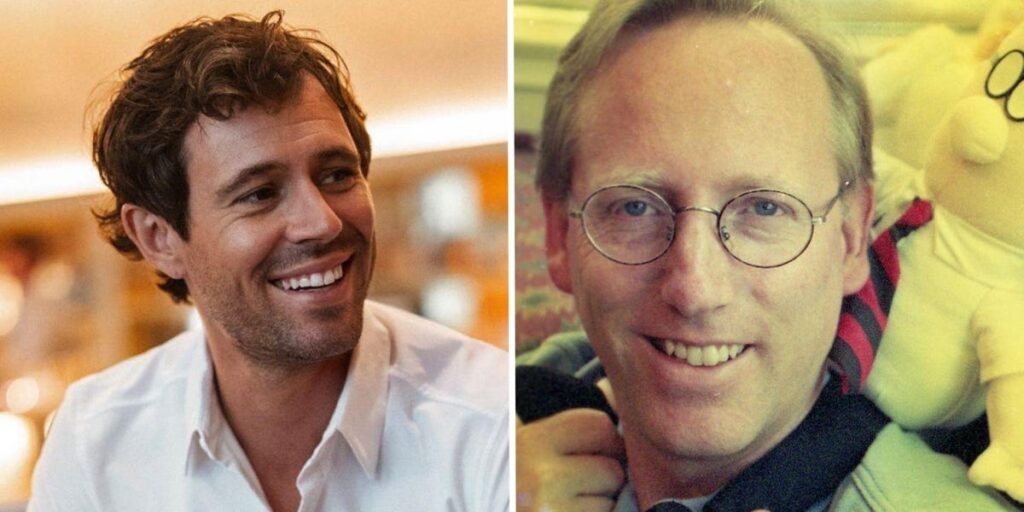
This as-told-to essay is based on a conversation with John Arrow, the AI venture capitalist and entrepreneur behind the “AI Coffee with Scott Adams” project, which posts AI-generated podcasts using a deepfake of the deceased Dilbert cartoonist. It’s been edited for length and clarity.
There are very strong emotions on both sides of the question of whether my project, AI Scott Adams, should exist. I understand the arguments for and against it — and I have no plans to stop.
I grew up with Scott Adams’ work. My dad would read the “Dilbert” comic strips to me at night as bedtime stories. Later, I became a devout listener of the “Coffee with Scott Adams” podcast. One theme I heard over and over was that Scott was mesmerized by AI. He said repeatedly that he wanted to give back to the world by becoming AI after he died.
There’s no hyperbole in that. There are at least a dozen instances where he pledged his likeness — all of his episodes, everything he’s written, anything he’s said — to becoming an AI. He explicitly granted everything necessary to do this in the public domain.
That’s something I took to heart.
When I first heard about his cancer diagnosis, I started working on this project with my brother, Zach. As soon as he died, we took it into high gear and started posting AI-generated podcasts of what Scott might say now about current events.
I recognize everybody is mourning, and I want to send my condolences to his family. I can only imagine what they’re going through. At the same time, I believe this is something he wanted.
I’m not trying to predict what he was thinking — I’m going by what he said publicly, over and over again. I’ve looked and can find no evidence of any revocation. If there was anything suggesting he didn’t want this, I’d stop.
I feel for his family. I know they’re upset about this, and we’ve created something that makes some people who cared about Scott uncomfortable. I’ve attempted to reach out to have that conversation, to work together on this project with them. My direct messages are open — but they blocked me, and I took that as a signal to stop trying to reach out.
But, even when it’s uncomfortable, I think we have to take seriously what someone says about their own legacy.
If you want to donate your existence to AI and become an AI, how else can you ensure your wishes are honored? Scott said it, repeatedly, on video and in written tweets. I don’t know how you could be clearer than he was.
That public acknowledgment was the hinge point for me. We wouldn’t have done this unless we were sure Scott wanted it done. We spoke to counsel beforehand and wouldn’t have moved forward if we weren’t confident we were on solid legal ground.
The costs are worth it to preserve my hero
My goal is to let AI do as much of the work as possible and not interfere more than absolutely necessary. I haven’t tried to hide that my brother and I are behind the project, but we don’t watermark or label the content as our own. When we post videos, they’re generated almost entirely from what the model was trained on — Scott’s written and spoken work.
The model we use was trained on transcripts from every existing episode of “Coffee with Scott Adams.” The system looks at news sources and accounts Scott followed, then references what he previously said about those topics. At each stage, there’s a little bit of art versus science — we check that something feels in line with what Scott would have chosen — but it’s not a human scripting his opinions.
Each episode takes many hours to produce. Between rendering, lip-syncing, and labor, they cost over $1,000 apiece. I run a venture capital business called Age of AI, where we do different AI experiments, and this falls under that umbrella. Monetization or brand partnerships are not on the road map. The goal is permanence — not profit.
When a great mind passes away, we lose that person forever. Now, AI gives us a chance to preserve at least some essence of how someone thought. Scott was, to our knowledge, the first notable person to explicitly said, “I want you to do this.” That’s why we started with him.
I understand that some people feel uncomfortable. I’ve spoken with people who were unsure — until they watched Scott’s own videos talking about this. After you hear the videos, they’re kind of unequivocal.
We get private messages every day from people saying, “This is no replacement, but it makes grieving easier.” That matters to me. Even though critics have been more vocal, others have shown real gratitude.
This project is far from perfect. But Scott used to say it’s better to take action now than to wait until something is 100% ready. So we launched knowing it would improve. After every episode, we feed comments back into the model to keep refining it. The tone and cadence have already evolved significantly.
We’re not claiming this is Scott. It’s definitely not a replacement.
However, if someone says, very publicly, that they want their voice and likeness used this way — and AI makes that possible — I believe we should take that seriously.