


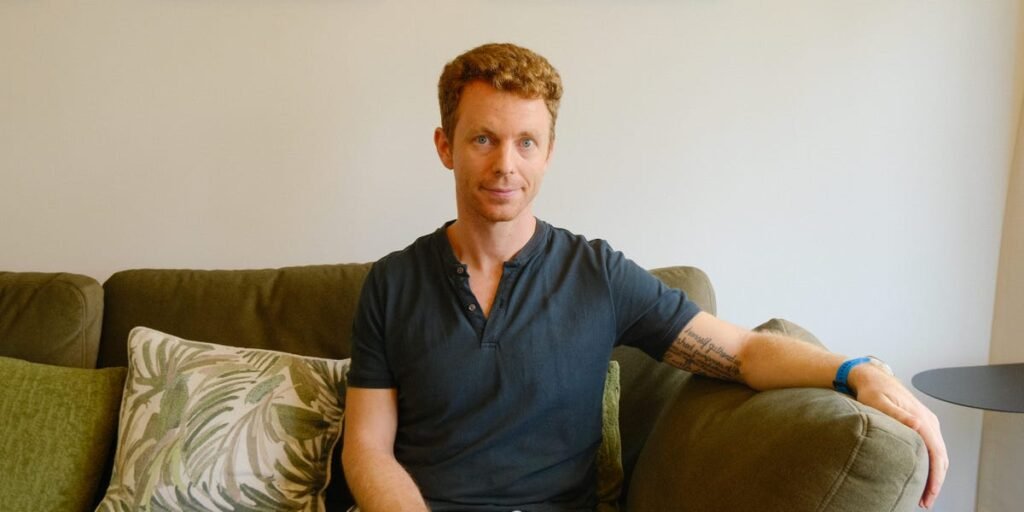
Nick Burns was making six figures in the US and still finding it hard to save.
Burns, now 35, grew up in Connecticut and served in the Navy. It was during that time that he first visited Singapore.
Impressed by the country’s clean and fast public transport system, he began to imagine what it might be like to live there one day. “But it felt impossible, like a crazy idea,” Burns told Business Insider.
After leaving the Navy in 2017, Burns moved to San Francisco for work and eventually ended up in the semiconductor manufacturing industry.
He lived in downtown San Francisco and commuted an hour and a half each way to Silicon Valley. He said it wasn’t uncommon to pass dark alleys and see people openly using drugs.
Amanda Goh/Business Insider
“Even as a single man, I felt unsafe walking around,” Burns said.
Between his rent, steep taxes, and safety concerns, the city did not feel worth the cost.
In January 2020, Burns took a lateral transfer to relocate to Singapore with his company.
“I don’t want to go back to the United States,” Burns said.
Housing costs: renting in San Francisco vs buying in Singapore
Singapore is often ranked among the world’s most expensive cities — not an obvious choice for someone looking to cut costs. But for Burns, it made financial sense.
In San Francisco, Burns’ two-bedroom apartment costs $5,728 a month, inclusive of a $300 reserved parking fee. Buying property there didn’t feel within reach.
Burns spent several years renting in Singapore, both before and after marrying his wife in 2023. In 2025, the couple bought a four-room public housing apartment on the city fringe for 1.01 million Singapore dollars, or about $790,000.
Amanda Goh/Business Insider
Known as HDB flats, these government-built homes make up the majority of housing in Singapore and are primarily reserved for citizens. Burns was able to buy one with his wife, who is Singaporean, while he holds permanent residency.
The stamp duty and down payment totaled about SG$280,150. They paid the majority in cash and about 20% from their CPF — Singapore’s mandatory savings account, used for things like housing, healthcare, and retirement.
The remaining amount was financed through a bank loan. Today, their monthly mortgage is about SG$3,520.
Amanda Goh/Business Insider
Taxes: Moving abroad worked out in his favor
Taxes also played a big role in how his finances changed after the move.
In 2025, Burns earned about 6% less than he did in San Francisco in 2019, but his overall tax burden is significantly lower.
In California, his taxes were around $41,200 in 2019. In Singapore, his latest tax bill was about SG$13,300.
Lower tax rates have allowed him to keep more of his income, though, as a US citizen, he still has to file US taxes.
Americans living abroad can exclude roughly $120,000 to $130,000 of foreign-earned income, which helps reduce what they owe, but doesn’t eliminate it entirely. The US is one of the few countries that taxes its citizens abroad.
Amanda Goh/Business Insider
Day-to-day expenses: A less expensive life abroad
His day-to-day expenses have also gone down. In Singapore, affordable food is easy to find at hawker centers, where you can have a meal for just a few dollars. A plate of chicken rice, a common local dish, is often less than $5.
Getting around is cheaper, too. In San Francisco, he owned a car and says he spent about $400 a month on gas. In Singapore, he relies on ride-hailing services and public transportation, spending about SG$300 a month.
Amanda Goh/Business Insider
With a hybrid work arrangement and a shorter commute, he’s also been able to reclaim much of his day.
“Day to day, I have more time to exercise because I’ve got three to four hours back. I run a lot now and usually go before work,” he said.
Burns said his quality of life has improved significantly for what he spends. More importantly, he’s finally able to put money aside.
A life he chose
Still, it took Burns some time to get used to life in Singapore — especially the city’s hot and humid climate, with temperatures between 80 and 90 degrees year-round.
“When I first moved here, I’d walk to the bus stop in my work shirt, and it would be a sweaty mess,” he said.
He also misses Mexican food and pizza from back in the US, adding that while they’re available in Singapore, they’re not quite the same.
Amanda Goh/Business Insider
While some family members have visited him and been impressed by the city-state, Burns says others don’t get his decision to leave the US. They worry about what might happen in the event of a war or another pandemic, he said.
“I try to tell them I’m safer here than you guys are in the US, but they don’t understand that,” he said.
He added that Singapore’s strict gun laws and low crime rates contribute to that sense of safety. In the US, he felt he had to pay more attention to his surroundings.
Those differences have only made Burns more certain about staying.
He applied for citizenship in December and is now waiting to hear back. If approved, he plans to renounce his US citizenship — a decision he said he’s ready for, and one required in Singapore, which does not allow dual citizenship.
“I’ve always been proud to live here,” he said.