


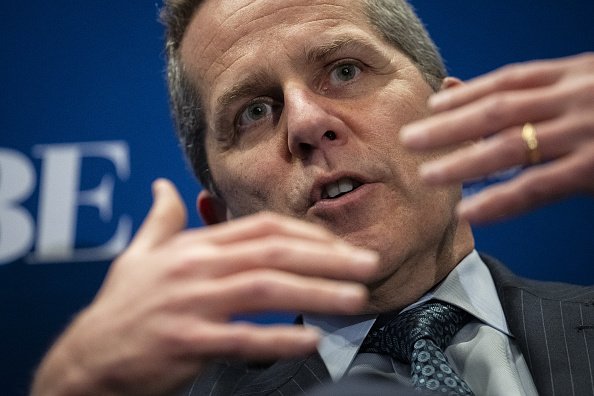
Since Silicon Valley Bank’s failure last March, Federal Reserve bank examiners have been “conducting additional targeted examinations for firms with large unrealized losses or other vulnerabilities,” said Fed Vice Chair of Supervision Michael Barr on Friday at a speech at Columbia University Law School.
The Fed has issued more supervisory findings and downgraded firms’ supervisory ratings at a higher rate in the past year, he said.
When they identify weaknesses in how banks are managing risks, examiners are requiring them to take steps to address those weaknesses and encourage them to increase their capital position, reduce liquidity risk, or mitigate their interest rate risk, he said.
For a small number of banks with a risk profile that could result in funding pressures for the firm, “supervisors are continuously monitoring these firms.”
For supervision of commercial real estate risk, “supervisors have been closely focused on banks’ CRE lending in several ways: how banks are measuring their risk and monitoring the risk, what steps they have taken to mitigate the risk of losses on CRE loans, how they are reporting their risk to their directors and senior management, and whether they are provisioning appropriately and have sufficient capital to buffer against potential future CRE loan losses.”
SVB’s failure triggers some soul-searching for the Fed. As the bank regulator increased its scrutiny on the sector, it has been striving to improve its agility in supervision.
“We have been looking to enhance our supervisory programs so that we correctly balance a strong process with the need to act based on imperfect information, and tools that speed up and strengthen the consequences for supervisory findings,” he said.
Barr also said it’s important that the Fed looks beyond current risks. “Supervisors should be encouraged to consider a range of potential shocks and vulnerabilities, so that they think through the implications of unlikely ‘tail’ events with severe consequences,” he said.