


Author
Ahmed Barakat


Author


Share


Fact Checked by
CryptoNews Editorial Team
Author


In climate change crypto news, Bitcoin miners have spent years pitching hydropower as proof the network can run clean. Ethiopia just showed what happens when the water backing that pitch stops showing up on schedule.
The state utility slashed electricity supplied to Bitcoin and other data-mining companies by roughly 75%, leaving them with about 23% of contracted power.
The question worth asking isn’t whether climate change killed Bitcoin mining in Ethiopia; it didn’t, but whether this is an isolated dry spell or a preview of what hydro-dependent mining hubs should expect more often.
This news dropped as BTC USD trades for $76,850, down -1.2% over the past 24 hours, following a -2.2% drop over the last seven days. Daily trading volume sits at $31.9Bn.


Climate Change Crypto News: Why Ethiopia’s Hydro-Powered Mining Bet Is Under Stress
Bitcoin-mining companies accounted for 35% of Ethiopian Electric Power Corp.’s revenue in the past financial year and consumed almost a third of the country’s total electricity production of 9,730 megawatts, according to Bloomberg.
That’s not a rounding error in a national power system; it’s a customer segment large enough to move the utility’s balance sheet and its dispatch decisions in the same breath.
EEP’s installed generation capacity grew 23% to that 9,730 MW figure over the past year, yet capacity utilization still fell to 60% against a 67% target, according to the Ethiopian Business Review. Data mining alone generated 50.37 billion birr in the last fiscal year, more than any other customer category.
The 23% figure making headlines is easy to misread. It’s the share of contracted mining supply that EEP is currently delivering, not 23% of Ethiopia’s total electricity consumption.
That distinction matters for anyone trying to size the real exposure here: mining’s slice of national output is still material, but the cut is a curtailment of one customer class, not a systemwide blackout.
For traders watching how operational risk feeds back into sentiment, it’s worth pairing this against the broader macro risks already weighing on BTC’s price action.
Never Miss a Swing Again: Use AI Copy Trading Bots From CryptoHopper
Cheap Renewable Power Is Still Weather-Dependent
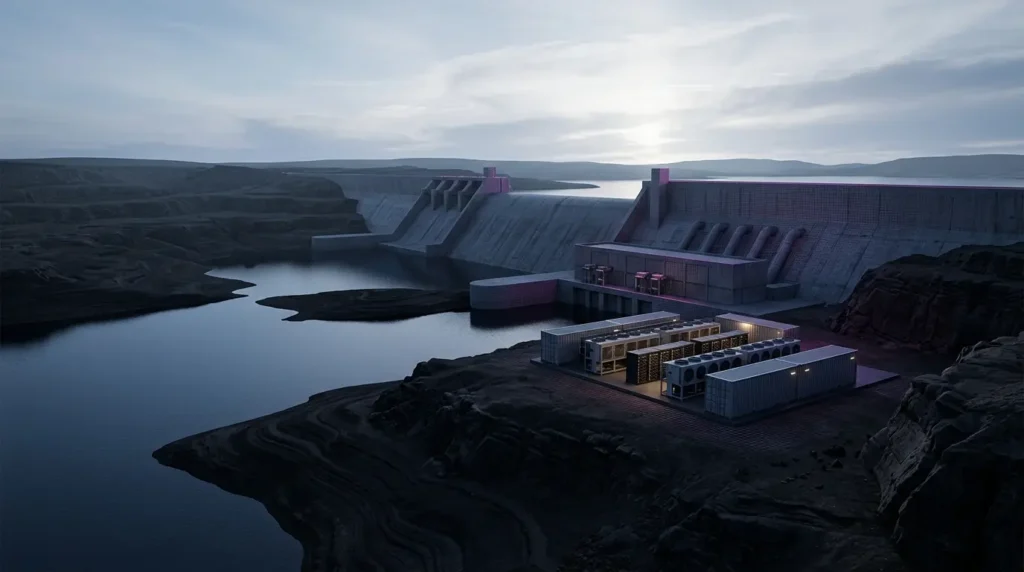
The cut in power supply is primarily due to reduced inflows into Ethiopia’s hydroelectric dams, which generate about 95% of the Ethiopian Electric Power (EEP) output.
CEO Ashebir Balcha said the reduction was a pre-emptive measure ahead of a dry period, with incoming water levels tracking at least 20% below expectations.
Consequently, EEP adjusted its revenue and supply forecasts and reported losses of up to 50 megawatts per generating unit as reservoir levels declined.
While the situation highlights seasonal hydrological changes rather than direct climate change impacts, it underscores that a low-carbon power source isn’t always reliable. This distinction is important when considering Bitcoin price forecasting tied to stable global hashrate growth.
Earn $50 and Enter $300K Prize Draw on EdgeX
The Strongest Case Against Reading This as the Climate Change Crypto Reckoning
It’s tempting to read a 75% power cut as evidence that hydro-powered mining is fundamentally unsound. That reading overshoots what’s actually documented.
EEP said it plans to reassess its position in October, once clearer data on generation capacity for the new water year comes in – this reads as a seasonal management decision with a defined review point, not an announced phase-out.
The primary evidence describes a utility responding to declining inflows by protecting public supply, then explicitly planning to revisit the decision once the picture clarifies.
Broader claims circulating about a 2025 permit freeze, tariff reform, or a formal transition plan for crypto mining in Ethiopia sit outside what’s verified here and should be treated as separate reporting threads rather than confirmed facts tied to this event.
Discover: The Best Token Presales