


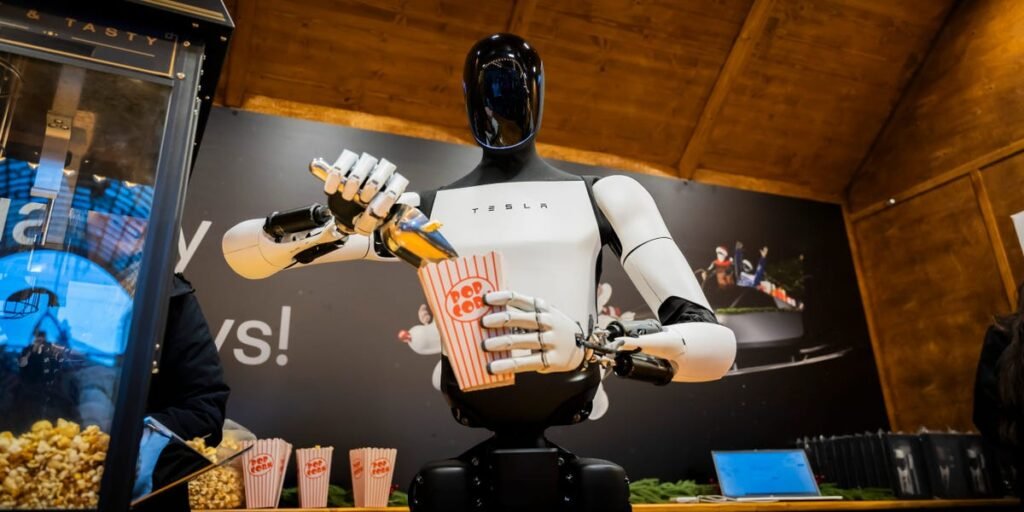
We have boxing robots, but can they screw in a nail?
Designing a useful human hand for humanoids is recognized as one of the more difficult engineering challenges within the robotics industry.
Elon Musk, the man who wants to put data centers in space and colonize Mars, can also admit that.
“The hands and arms and the fine motor skills are incredibly difficult to get right,” Musk said in a virtual interview with Tesla Owners of Silicon Valley. “Like shockingly difficult.”
Musk cited different basic skills, such as screwing a nail into a piece of wood or opening a jar of pickles, that he said are much harder to replicate through robot hands because they require the right application of force, precision, and sensors.
“There’s no hand design that I’ve seen, not even sort of a demo that does that,” Musk said of screwdriving a self-tapping screw into wood. “But that’s what we’re trying to achieve with Optimus.”
There’s no standard for how best to design a human hand for robots capable of dexterous manipulation. Design choices can include where to place the motors — directly in the hands or within the arms — and which sensors are appropriate for reliable manipulation.
Those choices also come with tradeoffs. Placing motors in the hand means smaller motors that may be more prone to breakage and produce less force. Musk pointed to the challenge of knowing where to put the sensors.
“If you put them too close to the surface, they’re going to get damaged,” he said. “And the touch sensors — can they elastically deform like our fingers? Well, actually, it’s kind of hard to get touch sensors that elastically deform and can handle high cycle life and won’t just break after a few thousand cycles.”
Want more Business Insider in your news feed?
Add BI in Google so our reporting is easier to find when you’re searching for what matters.
Some robotics companies have opted not to mimic the human hand, while others continue to tackle the problem.
1X, the Palo Alto-based humanoid maker, told Business Insider’s Rya Jetha earlier this year that it has achieved “the closest hand to human-level dexterity” with its NEO robot, developing a hand with 25 degrees of freedom and waterproofing.