


If you’re trying to reduce your personal risk of developing dementia or Alzheimer’s, the answer might be right in front of your eyes — or within earshot.
Dr. Kellyann Niotis, a preventive neurologist and assistant professor of neurology at Weill Cornell Medicine, said vision and hearing loss are two risk factors for cognitive decline.
“They’re two big ones that people don’t often think about as related to their brain,” Niotis said at a June salon dinner with Julianne Moore to promote Brain Health Matters, a public health campaign from Lilly to encourage brain health awareness. “So if you are not up to date on your annual screenings, please, please, please do that.”
Niotis, who focuses on diseases like Alzheimer’s, told Business Insider that she hopes more people will take risk factors like sensory loss more seriously as they age. A 2024 Lancet study found that nearly half of all dementia cases worldwide could potentially be prevented by mitigating risk factors, including vision and hearing loss.
Niotis shared why our eyes and ears are so linked to brain health — and what to watch out for.
Why sensory loss may be connected to cognitive decline

Milamai/Getty Images
Niotis said researchers are still trying to figure out exactly why hearing and vision loss are tied to neurodegenerative diseases like dementia. As of now, there are some hypotheses.
One is related to brain stimulation. A big part of brain health preservation is challenging your brain, be it through puzzles, learning a new language, or playing an instrument, Niotis said.
Sensory loss can make it harder to activate certain parts of the brain. “There’s a thought that as someone loses their sight, they aren’t being provided with that sensory stimulation that that region of the brain needs,” Niotis said.
Another theory is more straightforward: losing your sight or hearing has downstream effects on other brain-healthy habits. “If you can’t see well, are you less socially engaged? Are you more socially isolated? Are you less willing to engage in activities, like exercise, that otherwise are keeping your brain active?” Niotis said.
Watch out for halos or other people complaining about your hearing
Toa55/Getty Images
When it comes to sensory loss, there are a few red flags to watch out for.
For vision loss, conditions like cataracts are common in older adults and reduce visual sharpness. Even so, “if that’s significantly impacting your ability to see, it could be putting your brain at risk,” Niotis said, whether the loss of vision weakens signals in the brain or changes how you socialize.
You should consider getting an eye examination if you experience signs of glaucoma (a group of eye diseases that damage the optic nerve), changes in how you perceive colors, seeing a lot of halos (such as when you’re driving), and words “jumping” around the page, she said. These are not, on their own, direct symptoms of dementia or cognitive decline, and do not necessarily influence dementia risk. However, untreated, they could become risk factors down the line, Niotis said.
Hearing loss is a little more subtle: “It’s often recognized by people around you,” Niotis said, so if you’re suddenly fielding complaints from friends and family, it might be a sign to get your hearing checked — and not delay it. “Most people I find are not able to appreciate that loss the same way they are able to appreciate vision loss,” she said, making it easier to dismiss.
A few simple lifestyle tweaks can reduce your risk
Goodboy Picture Company/Getty Images
Thankfully, there are some ways to preserve your hearing and vision.
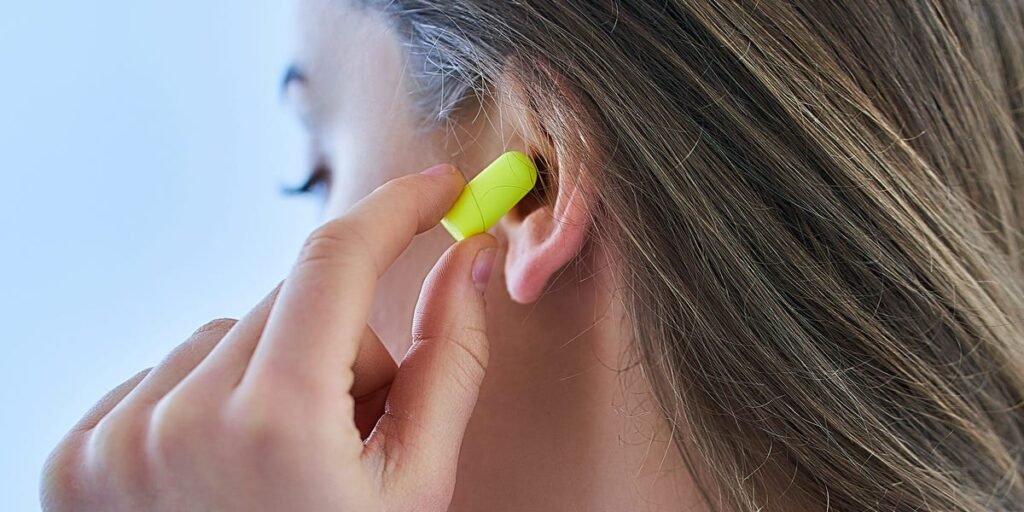
One of the biggest preventable causes of hearing loss “is completely in our control,” Niotis said. “It’s exposure to loud noises.” She said taking precautions such as wearing earplugs at concerts or proper hearing protection when working loud machinery is very important.
When it comes to vision loss, Niotis said wearing sunglasses and reducing direct sun exposure to the eyes can protect the eyes from ultraviolet radiation, which contributes to cataracts and some other UV-related eye damage.
And while there’s no research that links permanent vision loss to screen time, Niotis said it can still be a good idea to take screen breaks. “If you’re someone who’s staring at a phone or screen all of the time, you’re training your eyes to do one particular task, which is to converge and look in front of you,” she said, potentially leading to temporary eye strain or eventual nearsightedness.
For that, she recommends taking a break and going for a walk — an already brain-healthy habit.
This article is not a substitute for professional medical advice, diagnosis, or treatment. Always consult your qualified physician or healthcare provider.