


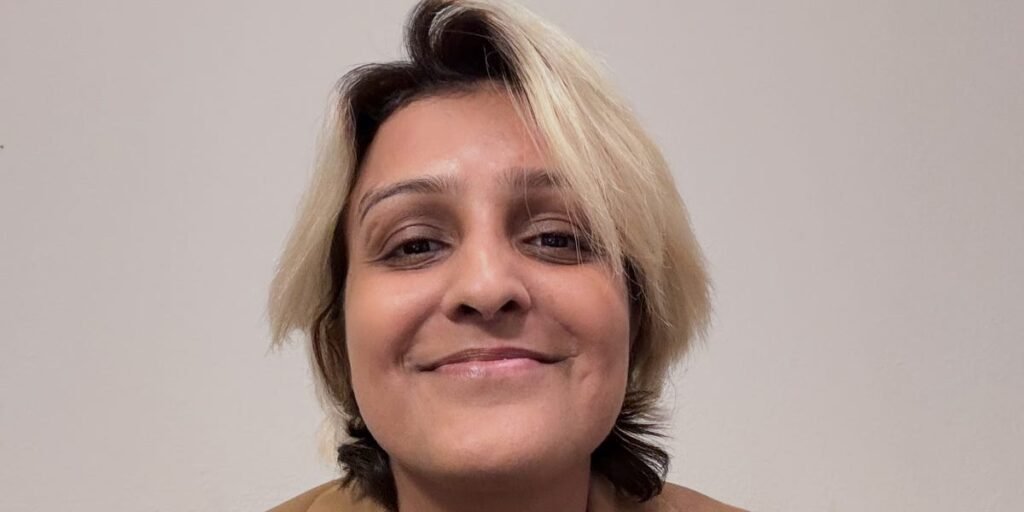
This as-told-to essay is based on a conversation with Tina Nenshi Gada, a 31-year-old user experience designer based in Washington, DC, who has worked at Citibank, Vanguard, and as a contractor for the World Bank Group. The following has been edited for length and clarity.
When I started reading “Never Eat Alone” by Keith Ferrazzi in 2023, I wasn’t looking for a networking manual.
I’ve always been drawn to psychology, and the title of the book stopped me immediately because it matched something I already believed deeply: If you have enough — whether that’s food, wealth, time, or knowledge — you shouldn’t keep it to yourself.
What I found inside was a philosophy that gave language to something I’d always felt but hadn’t yet articulated: that the most meaningful professional growth happens not in spite of other people, but through them.
I moved to the US from India in August 2018 to pursue my master’s degree, and my UI/UX career has included working at Citibank, Vanguard, and as a contractor with the World Bank Group. The connections I’ve formed have helped me land roles and supported my visa applications.
Here are the four most valuable lessons I learned from “Never Eat Alone,” and how I implemented them to help me reach my personal and professional goals.
1. Nurture genuine relationships
In “Never Eat Alone,” Ferrazzi emphasizes the importance of cultivating authentic and meaningful relationships: getting to know people on a deeper level, understanding their needs, and offering support.
It’s not about transactional networking, but about creating bonds that are mutually beneficial over the long term. He stresses that you shouldn’t keep track of what you’re giving and getting; the moment you start keeping score, the true spirit of generosity and connection is lost.
Previously, I always thought about how someone might be helpful to me in the long run, so my intentions weren’t always genuine. The book completely transformed the way I approach relationships.
I realized it wasn’t just about what I could gain from someone else; it was about how I could support them and offer something of value.
2. Learn how to present yourself to build a brand
The book gave me the direction I needed to start content writing on LinkedIn in March 2023. I shared about what I was learning about design, AI, and navigating a career as an immigrant woman in tech.
Before, when people recommended building a personal brand, I thought only about how I should present myself online — but I realized it’s more about truly building your values, like kindness, ethical behavior, and putting people first.
This shift in mindset had an immediate impact on my approach to LinkedIn content writing and how I interacted with my network. Slowly, people started opening up, engaging with my content, and reaching out for advice. My brand — which I’d never thought of in those terms before — started taking shape around the principle of kindness.
The response to my LinkedIn content surprised me. I grew to over 19,000 followers and was recognized as a LinkedIn Top Voice. None of it was the product of a content strategy — it was from showing up, sharing generously, and believing, as Ferrazzi says, that giving is the only sustainable form of networking.
3. Embrace your failures and learn from them
When I first moved to the US, I felt completely lost and isolated. I barely understood anything and had difficulty speaking English, as it’s my third language.
It was my first time being away from my family, and I struggled with homesickness, adjusting to a new culture, and finding my professional footing. I had moments of doubt where I questioned my abilities and the choices I’d made.
After reading Ferrazzi’s advice, I started sharing more online about the times when I stumbled — whether it was a professional setback or a personal challenge — and how I got back on track. In one post, I wrote about mental health challenges I’d faced in 2024.
This openness and vulnerability not only helped me grow but also fostered a deeper sense of community and trust with my audience. People told me that my openness made them feel less alone in their challenges.
4. Find a mentor, be a mentee, and repeat
The book encourages people to be on the lookout for mentors who can offer guidance and challenges, while also seeking opportunities to pay it forward and mentor others.
Early in my career, I sought mentors with experience in areas like professional networking and navigating workplace challenges. The guidance I received wasn’t always easy to hear, but it was essential for my development.
One mentor told me I needed to learn the sandwich approach to feedback: lead with something genuine, deliver the hard truth in the middle, and close with encouragement. My instinct had always been to be direct and honest, and I had to learn that diplomacy isn’t dishonesty; it’s how you make sure the message actually lands.
I’ve also found fulfillment in mentoring other young women seeking advice on building confidence in their careers, which both helps them grow and also increases my own sense of purpose.
The beauty of this mentor-mentee cycle is that it creates a continuous flow of learning and development, as well as a community of people who support and uplift each other.
Do you have a story to share about a book that played an important role in your career? Contact this editor, Jane Zhang, at janezhang@businessinsider.com.