


Self-driving cars have spent years learning the rules of the road. Now, several Waymo veterans are trying to apply those lessons to a far less predictable environment: construction sites.
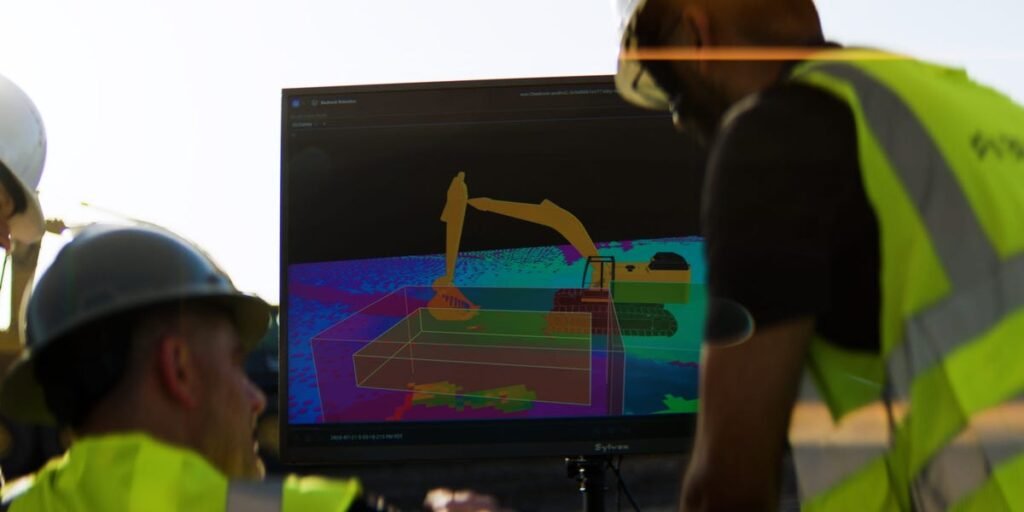
San Francisco-based Bedrock Robotics said Monday that excavators equipped with its autonomous AI system are now working without human operators on three commercial sites in Texas and Nevada. Machines equipped with Bedrock’s technology are digging and moving earth on multiple projects, including a water treatment facility.
The appeal of automating construction is clear. The industry faces labor shortages, high rates of worker deaths, and chronic delays. More than 40% of the construction workforce is projected to retire by 2031, according to the National Center for Construction Education and Research.
A construction site, however, is less predictable than a factory floor. Terrain, crews, and tasks can change by the day on construction sites, and it remains unclear whether autonomous machines can reliably adapt to changing conditions reliably and cheaply enough for contractors to embrace them.
Bedrock’s technology remains in early stages. For now, its autonomous AI system works only on excavators, which are deployed on three sites.
“It would be fair to say it’s a limited test,” Vineet Kamat, a University of Michigan construction management professor, told Business Insider.

Bedrock Robotics
Bedrock, valued at $1.75 billion, was founded in 2024 to automate construction and accelerate housing, data center, and other infrastructure projects.
Bedrock’s founders learned from Waymo’s early days
Bedrock’s cofounder and chief technology officer, Kevin Peterson, compared the company’s progress to Waymo’s early days, when its autonomous cars operated within just a few city blocks.
“If you look at the scaling Waymo did year by year, we think our scaling will occur in the same way,” he told Business Insider.
Bedrock retrofits excavators with sensors and onboard computing, enabling them to perceive their surroundings, plan their movements, and carry out tasks set by a site manager. The next technical test is whether the same system can transfer to other equipment, including bulldozers, dump trucks, and loaders.
“There are open questions about that transfer,” Peterson said. “We think it will work, but it will be hard.”
In the near term, Peterson expects humans to remain on construction sites. He said that humanoid robots could eventually take on more work if the technology matures and fewer people enter the industry.
“The physical economy is the next great frontier for machine learning,” cofounder and CEO Boris Sofman, who spent nearly five years bringing Waymo’s autonomous cars to freeways and leading its trucking division, said in a press release.
Autonomous systems in construction are designed for narrow, repetitive jobs. Bedrock is betting that lessons from Waymo can help it build more adaptable AI that eventually works across multiple types of construction equipment and coordinates entire fleets.

Bedrock Robotics
Bedrock faces some hurdles in the construction industry
A major hurdle for Bedrock and its competitors will be convincing contractors that the technology is worth the money, University of Michigan’s Kamat said. Construction companies often operate on thin margins and win work through competitive bidding, leaving little room for costly experiments.
“For a contractor to take a leap and invest a few hundred thousand dollars in robotics equipment, they need to be sure it will generate a return on investment,” he said.
Once autonomous construction companies prove themselves, “everybody will want in,” Kamat added.
Bedrock’s competitors include both startups and heavy-equipment giants. Companies like Built Robotics deploy autonomous machines on solar and data-center projects, including at Meta’s Hyperion data center in Louisiana.
Another giant, Caterpillar, has more than 800 autonomous haul trucks, while AIM Intelligent Machines retrofits machinery to operate autonomously at construction, mining, and defense sites.
Fernanda Leite, a civil engineering professor and vice president for research at the University of Texas at Austin, expects construction sites to look more like airports in the near term — where highly automated systems operate alongside skilled workers.
“The robot is competing against a highly flexible, general-purpose system,” she said, “which is a highly trained human.”
Have a tip? Contact Rya Jetha via email at rjetha@businessinsider.com or Signal at rjetha.07. Use a personal email address and a nonwork device; here’s our guide to sharing information securely.