


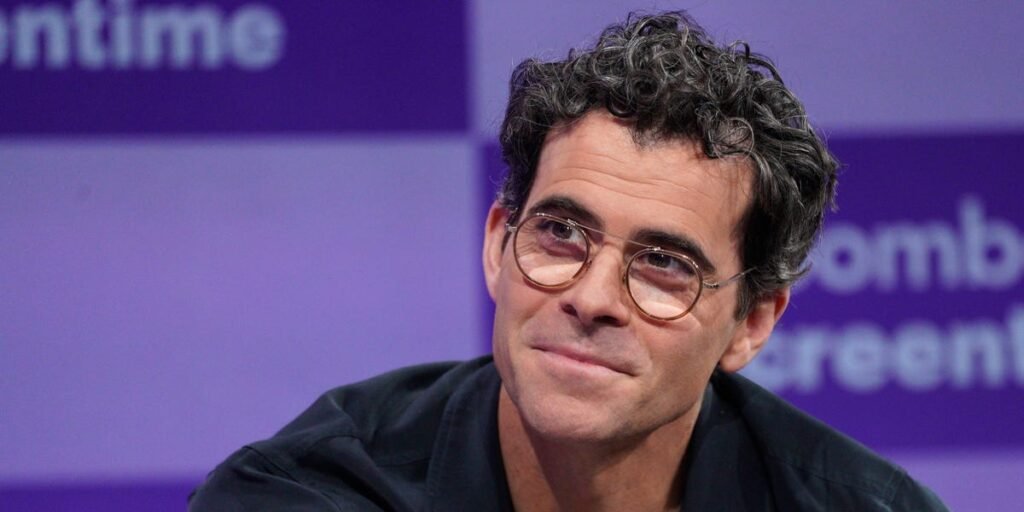
Instagram CEO Adam Mosseri says it was relatively easy to cut down on his division’s AI spending.
“We’ve managed to get the costs reined in a little bit by shutting down the silly things that we were doing,” Mosseri said during a recent episode of “Lenny’s Podcast.”
Mosseri did not elaborate on what those “silly” projects might have been, but added, “It is not that hard to build a token incinerator.”
When host Lenny Rachitsky asked Mosseri about token leaderboards, the kind that pushed the early rise of tokenmaxxing, he said, “It’s a terrible idea.”
Meta was one of the largest companies to reportedly implement a token-consumption leaderboard during the early tokenmaxxing craze, a line of thinking that many in Silicon Valley have turned against. Tokens are units of data that serve as the building blocks of large language models that power tools like OpenAI’s ChatGPT. Most AI providers price at least some of their usage based on token consumption.
Mosseri’s comments come as enterprises of all sizes grapple with rising AI bills due to both higher adoption rates among their employees and the more complex tasks workers are asking AI to complete, thanks to the rise of agentic AI. Uber’s chief operating officer, Andrew Macdonald, drew significant attention to the discussion after he recently raised concerns about Uber’s rising AI bills that came with meager results.
Like others in tech, Mosseri said AI costs should eventually decline as companies jockey for position. He said his division’s costs may still go up as workers consume more tokens.
“I think costs will go up because we’ll just be using more tokens, not because prices will necessarily go up, but then I think prices will come down because all of these frontier models are going to be in a bit of a pricing war,” he said. “So we’ll see. I think it’ll be a bit of a roller coaster.”
In the meantime, Mosseri said AI tokens have become part of the budgeting and allocation process, like how he determines how to spread GPUs, storage, and RAM, or payroll for head count.
“I think that you can imagine, at least in a year or two coming, that the burn rate of a strong engineer might be the same as their salary or their cost of employment,” he said.
If token spending becomes this large, Mosseri said it would make sense to implement some sort of cap.
“The caps should probably be proportional to the company’s sort of trust in your ability to use them in an ROI positive way,” he said. “But I can imagine caps being healthy. Right now, we’re not there.”

Getty Images
Budgets aren’t the only thing changing at Instagram
Mosseri said that the size of an average Instagram team used to be roughly “a baker’s dozen,” roughly in line with Amazon founder Jeff Bezos’ famous two-pizza rule.
The Instagram chief said his company is no different from other tech companies that are reducing team sizes in the age of AI. Now, Mosseri said a typical team is a “pod” consisting of just “six or seven” employees.
“That is a very big shift that’s just happening to us this year,” Mosseri said. “But just by virtue of having less people to coordinate, they can often move faster and make better decisions, a little bit less designed by committee.”
In the past, Mosseri said a team might have had two or three Android engineers, two or three iOS engineers, and two or three server engineers, and perhaps a more generalist employee, a project manager, a data scientist, “and a researcher, if you were lucky.”
Now, Instagram pods consist of “four to six engineers who are a bit more generalists” and a member of the product staff, reflecting how the division has changed the definition of a project manager. The last member, he said, is often a very specific specialist who best fits whatever the pod is working on.
The end result, Mosseri said, is “a much smaller core” made up of more generalized roles.
“What’s clearly happening is all of the functions are starting to bleed into each other, and the whole industry’s wrestling with what that means,” he said.