


An astrophysicist is giving Elon Musk’s dream of life on Mars a reality check.
The SpaceX CEO has long set the ambitious goal of building a self-sustaining city on Mars as a backup for human civilization if Earth suffers a catastrophe.
Astrophysicist and science journalist Adam Becker says the biggest obstacle to Musk’s dream isn’t rockets or distance — it’s dust.
“The dirt on Mars is toxic,” Becker, author of “More Everything Forever,” a nonfiction book examining ideas of immortality and space colonization, told journalist Taylor Lorenz on her “Power User” podcast. “It’s very fine dust, and so it will be there, and it’ll get into your water. It’ll get into your food, and it’ll get into your body.”
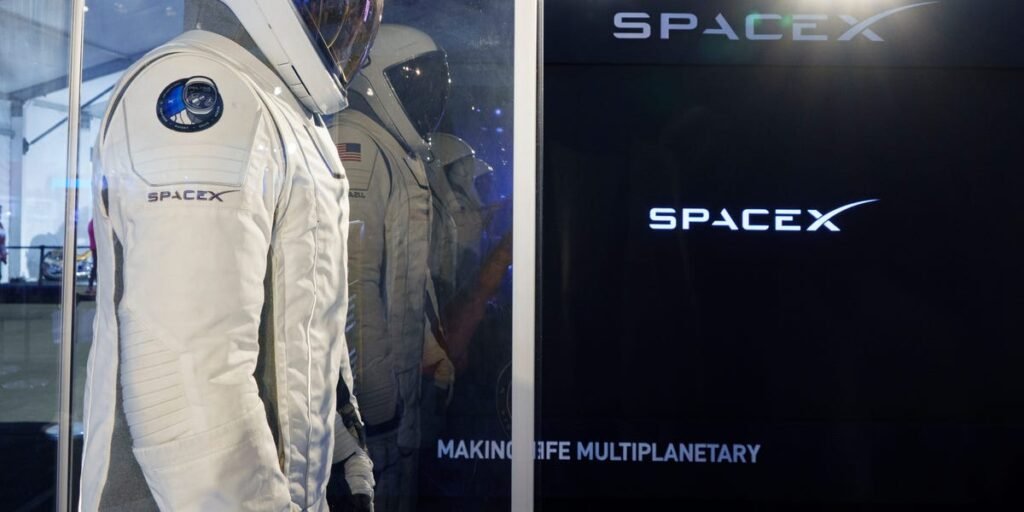
The problem, Becker said, is that Martian dust would cling to astronauts’ spacesuits and inevitably contaminate any habitat they built. Underground shelters, one proposed way to protect colonists from radiation, wouldn’t solve the problem.
“It’s just the one that sort of shook me out of my complacency that we were going to Mars,” Becker added of the Martian dust issue. “I saw that, and I was like, wait a minute, I don’t think this is going to happen.”
Becker said there’s already a long list of challenges before contending with dust. A trip to Mars would take roughly six to nine months, exposing astronauts to radiation and prolonged weightlessness. Once there, colonists would face low gravity, a virtually non-breathable atmosphere, and the enormous logistical challenge of constructing a permanent settlement.
A Martian colony is ‘not theoretically impossible’
Those challenges could be bad news for SpaceX, which has the explicit goal of making humanity a “multi-planetary species.” The SpaceX board has also pledged to grant $1 billion in SpaceX shares if Musk can create a colony of 1 million humans on Mars.
Musk has repeatedly described Starship as the vehicle that will eventually transport cargo and settlers to a self-sustaining city on the red planet, a vision he said is necessary to safeguard civilization’s future. In the past, he’s also floated ideas such as terraforming Mars by releasing gases trapped in the planet’s ice caps to make the environment more Earth-like.
Alexei Filippenko, a professor of astronomy at the University of California, Berkeley, told Business Insider that a self-sustaining Mars colony is “not theoretically impossible,” but it will be far more difficult than Musk imagines, and it will take way more time.
“It’s not clear whether various obstacles can be overcome, including biological ones — for example, giving birth, and growing up in a low-gravity environment,” said Filippenko.
“He is far too optimistic and not well-versed in many of the technical challenges,” Filippenko added, citing major issues like the lack of a thick atmosphere and the absence of a magnetic field to block particles — the aforementioned dust — from the solar wind on Mars.
Becker echoed the sentiment that there simply isn’t enough material on Mars to create a breathable atmosphere, making the planet a remote research outpost at best.
“You would need to basically bring in massive amounts of air and water in order to make Mars a place that you could live on the surface of without a space suit, even temporarily,” Becker said. “There’s not really a good way to bring that stuff from Earth in the quantities needed.”
“It would be a few dozen people living in tunnels underground that never really go outside,” Becker added of what life on Mars would actually look like. “It would be incredibly depressing.”